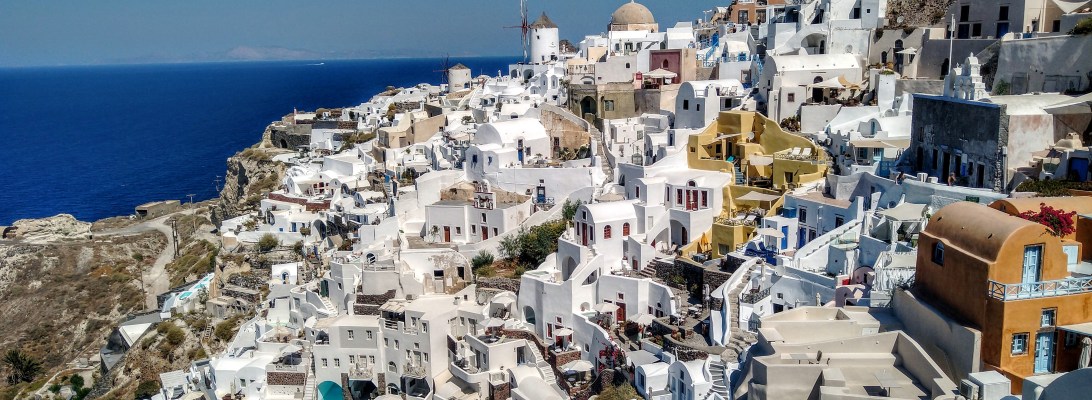
Where to Stay in Santorini

Santorini’s jaw-dropping vistas and viewpoints rarely disappoint (see our Cyclades island itinerary for more info), but finding the right accommodation in one of the most popular island destinations in all of Greece, can certainly be a challenge.

Oia

Oia (pronounced ee-a) is the postcard perfect town that you will have seen all over the internet and it is one of the most desirable (and expensive) areas to stay in. The caldera facing side of the town is littered with small boutique hotels, sun lounger covered balconies and tiny cyan plunge pools.
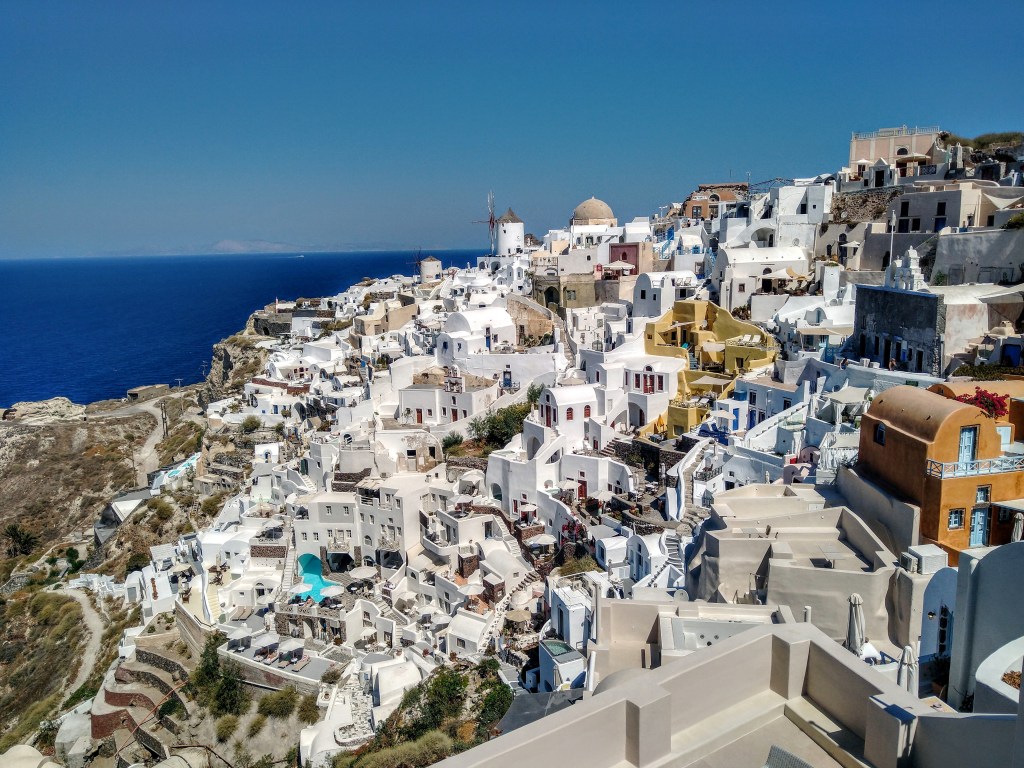
Oia

Although these may look great at first glance, there are a few downsides which may affect your decision:

  • Hordes of tourists from all over the world flock here for their selfies and sunset pictures. This of course means the accommodation is at a premium. Everyone is vying for the same hotels and the same AirBnBs driving the prices to extraordinary heights during the summer months. The most affordable rooms in the town don’t have the views and often don’t even have windows (look out for these as hotels don’t always make this obvious in the descriptions!).
  • Everyone who comes to Santorini takes photo after photo of the beautiful town and its remarkable caldera setting. If you’re sat on your balcony or in your plunge pool, you’re likely to feature in several thousand photos per day. Some of the more relentless posers and selfie-takers will go to great lengths for the perfect shot, including climbing on roofs, balancing on walls and clambering down private staircases. Privacy simply doesn’t exist here.
  • If you fancy popping out for a nice quiet dinner or a trip to the shops to pick up some drinks and some snacks, you will have to weave your way through the crowds. In the heat of summer, the crowds can be quite overwhelming even for a short errand.
  • Due to the year-round popularity of the caldera facing accommodation, there is never any time for the owners to update the property. In many places the bathrooms are tired, the interior is old fashioned, and the exterior needs a fresh lick of paint. In fairness, if the demand is there and it doesn’t put people off, why should the owner change anything?

If you’re all about the magnificent view it’s probably worth it, but there are some other options worth considering.

Finikia

Oia town pretty much joins onto the adjacent town of Finikia, in fact, it’s not always clear where Oia stops and Finikia starts. Finikia still boasts the same views across the caldera and the same sugar cube architecture built into the cliff but with a noticeable drop in price tag and crowds. It is well worth investigating accommodation options here, as you will only be a 15 minute down hill walk from the centre of Oia and you could save a pretty penny.
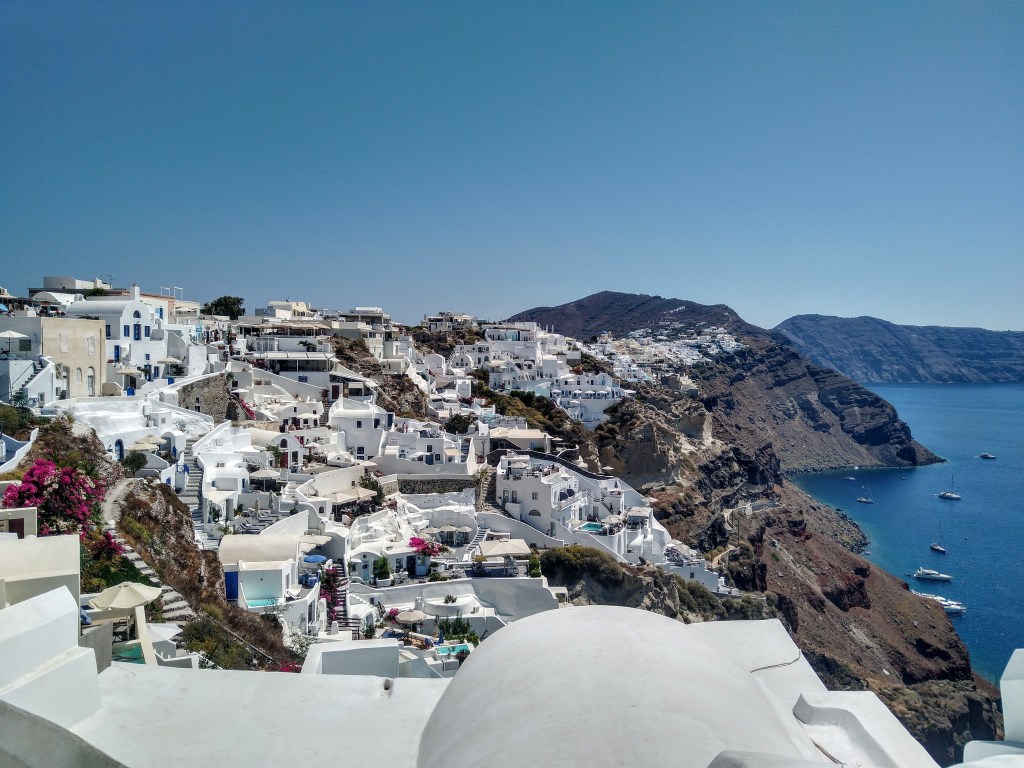
Finikia

Fira

The other popular base on the island is Fira, the capital, which is where we chose to stay. Here you are halfway along the island, a half hour bus from Oia or a 3-4 hour walk. Fira is widely considered to be a just a bigger version of Oia – which we feel isn’t quite correct. The stretch along the caldera side of the town still has great views over the caldera and the sunset over the town is extremely pretty but the rest of the town is busy, noisy and altogether less pleasant than Oia. The road is packed with topless blokes revving their ATVs and the main square feels a little bit tacky. Perhaps because of this, the accommodation is cheaper than Oia and so many people base themselves here if they have no luck in Oia.
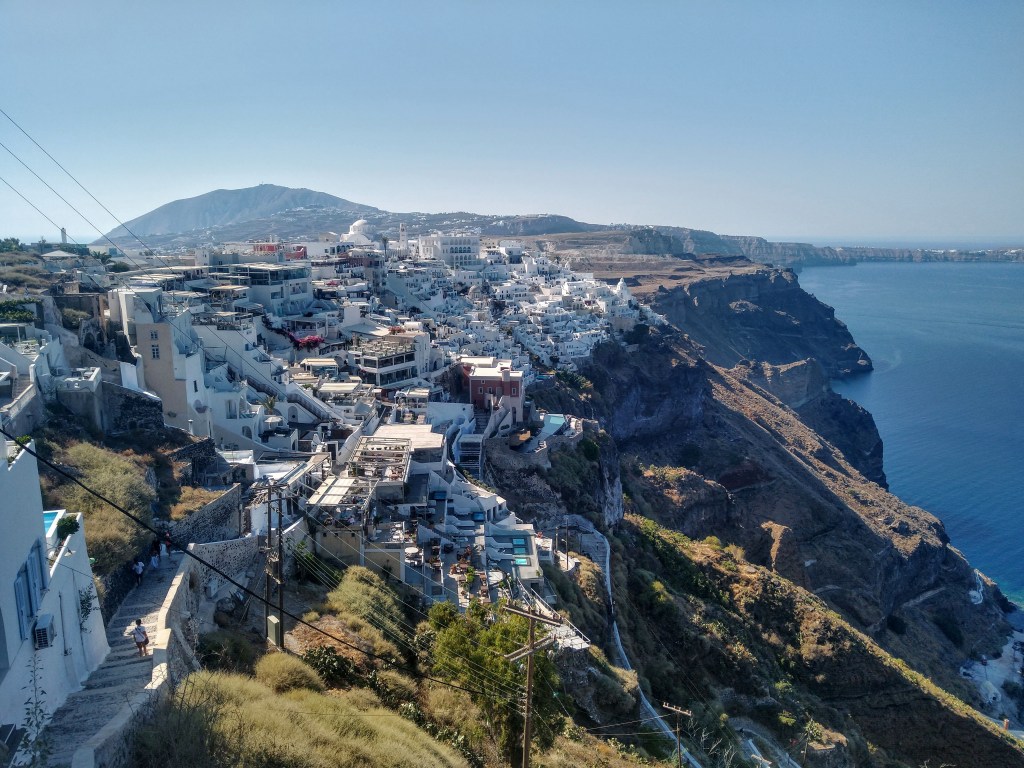
Fira

Firostefani

If we were to go again, we’d recommend staying in Firostefani, the town adjoining Fira. Here the town is cleaner, brighter, quieter and altogether much nicer than Fira. You’re still only a 15-minute downhill walk from Fira if you feel the need to go there. There are many different options for accommodation here, most of which are on a par with the prices in Fira.
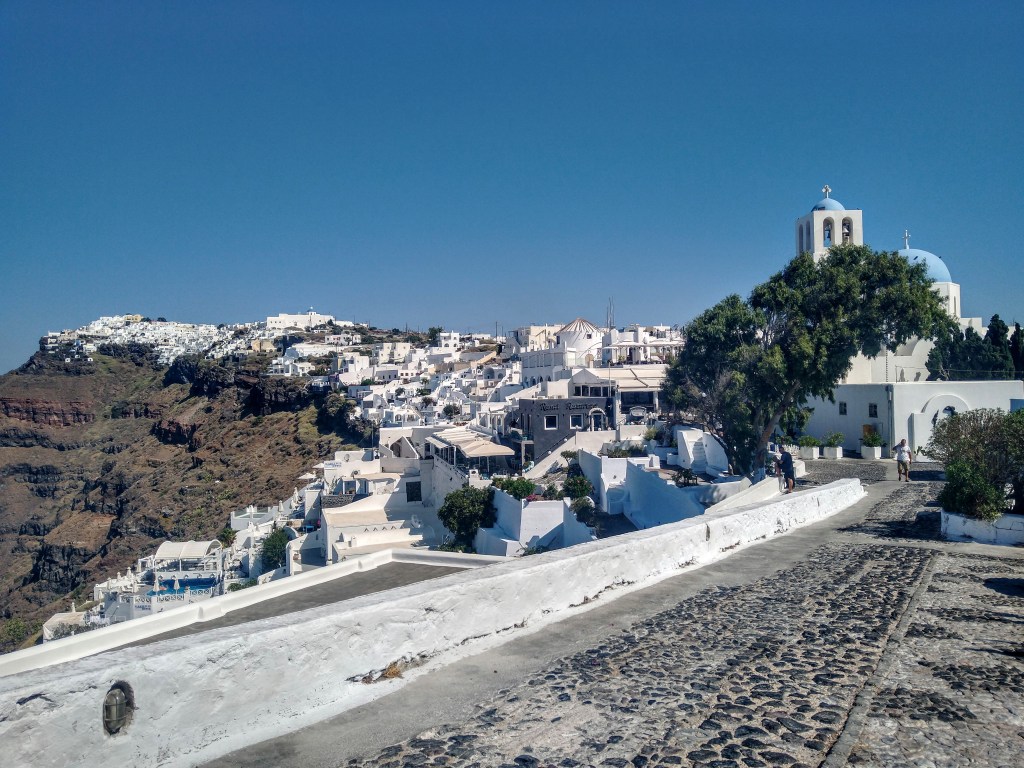
Firostefani

Imerovigli

Imerovigli is another town which is worth considering. Here you have stunning views looking back towards Firostefani and on to Oia perched on the northern end of the island. Again, the town is almost inseparable from the stream of white buildings that make up Firostefani and Fira. Being at the far end of the three towns, the walk to the centre of Fira is slightly further so it can be slightly less convenient.
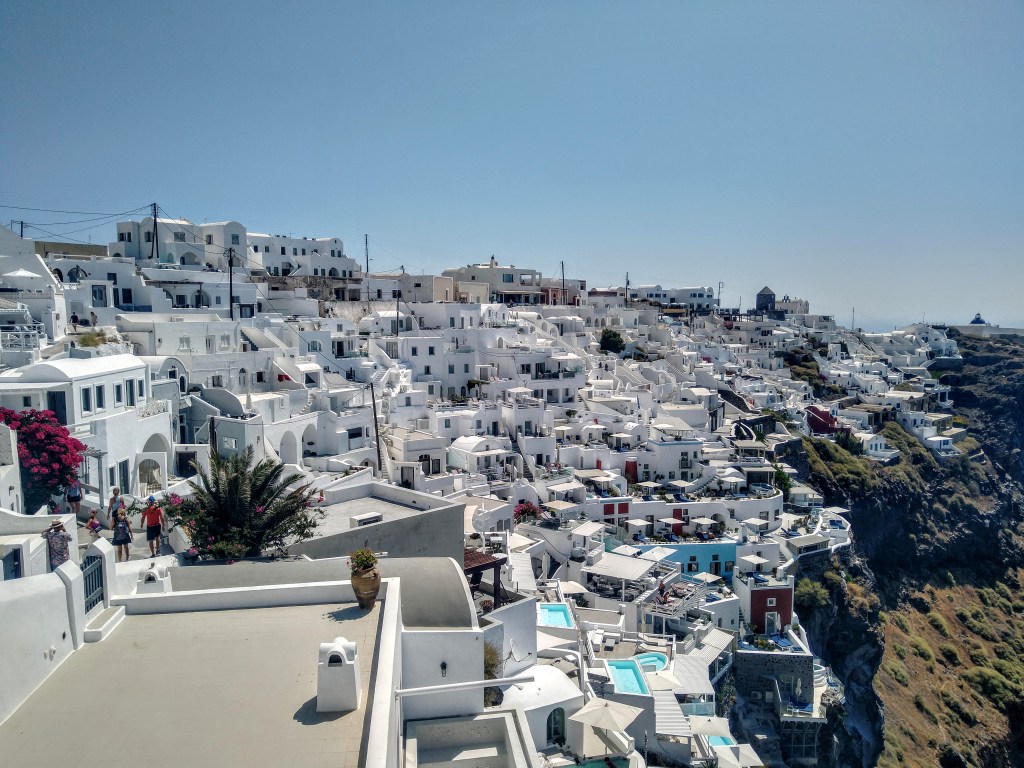
Imerovigli

If you are looking to move around the island and visit the main sites, the public buses are a very useful, regular and reliable connection between all the towns. If you have booked a tour, the tour operator will likely pick you up at your hotel as well, so location is not as important as it may seem.

Getting a driver in Sri Lanka

Although the public transport is pretty good in Sri Lanka, with the rail network connecting the majority of tourist hot spots together with useful bus services and tuk tuks (or Bajaj’s as they are called in Sri Lanka) filling in the gaps, we would recommend a private driver, particularly if you are short on time, for the following reasons:

  • Sri Lanka is a relatively small island, so each of the main places to visit are rarely more than a couple of hours’ drive from each other. Having a private driver allowed us to move around regularly without taking up large amounts of the day organising and sitting on public transport.
  • Connecting noisy tuk tuk rides and crammed bus journeys to get from town to town can take it out of you if you’re moving around regularly. Reclining in the back of an air conditioned sedan offers some time to relax and replenish your appetite for the next part of the trip.
  • Yes, public transport will be cheaper, but a private driver won’t bankrupt you either. We managed to hire a driver for a week of our trip for about £40 a day and it was definitely worth it.
  • If you get a good driver like we did, he/she almost doubles up as a tour guide. Ours stopped off at many different sites & attractions en-route to our main destinations, which we would never have known to visit otherwise. He had an excellent knowledge of the sites, restaurants and hotels and we often just followed his lead, trying restaurants we wouldn’t normally have braved and staying in hotels we would never have found.
The busy streets of Kandy

Getting around Lake Atitlan

A few days at Lake Atitlan should certainly be on your itinerary for a trip to Guatemala. We have put together a two week itinerary in Guatemala which includes a reasonable stint at Lake Atitlan (for more information on how to get around Guatemala in general, check out our blog Getting Around Guatemala which discusses several transport options for travellers to join up the main tourist hubs of Tikal, Antigua and Lake Atitlan.) One of the main things to do is to at Lake Atitlan is visit the delightful little towns dotted around the lake. There are many parts of the lake with no or poor road access, so the best way to hop from town to town is by boat.

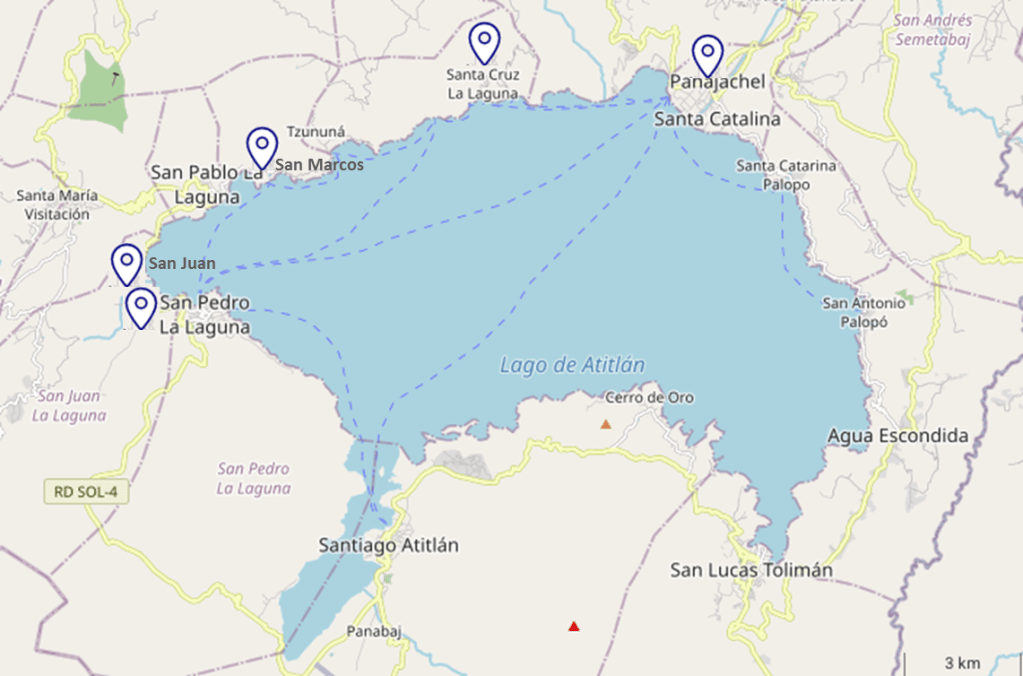
Lake Atitlan water taxi routes

Panajachel is the gateway to the lake and acts as the main transport hub. For that reason, many visitors decide to stay here, although we opted for the smaller, quainter towns of Santa Cruz and San Marcos. The boat service starts early in Panajachel at around 6.30am and there is a boat approximately every 20-30mins thereafter. We say approximately because the captains prefer to wait until the boat is full which can mean you sit on board for 20 minutes or so before departing. The service does end quite early in the evening, however, so it is worth checking when the last boat leaves the town you are in (e.g. the last boat from Panajachel leaves at 7.30pm but from San Pedro it is 5.00pm). The service consists of several identical motorboats, or lanchas, with basic wooden bench seats in an open ended cabin. You board from the back and climb over the benches and other passengers to get to a spare seat.

San Marcos dock

Depending on how far you are going, the price per trip varies from Q10 to Q25 and it goes without saying that they accept cash only. You will find that tourists generally pay twice as much as locals. We were told that this is normal as locals use these lanchas for their daily commute, so don’t worry, you’re not being ripped off! There are some small towns and even hotels which have docks off the usual water taxi route, the captain will normally deviate his course if you ask him to in advance – in return be prepared to pay an extra Q5. Try and pay either the exact fare or close to it, as you’ll be unlikely to get change from Q10.

FromToFare price
PanajachelSanta CruzQ10
PanajachelSan MarcosQ25
PanajachelSan PedroQ25
San MarcosSanta CruzQ10
San PedroSanta CruzQ20
San PedroSan MarcosQ10
Table of approximate water taxi fares

The mornings are generally much calmer here than the afternoons, when the lake tends to become quite choppy. This means the journeys are much quicker and more comfortable in the mornings. In the afternoons, some captains take the waves slowly which adds time on to the trip, whereas others prefer to launch their boats from one wave to the other, slapping it into the lake surface and sending spray flying.

Panajachel docks – note the captains sitting on the left wearing white polos with orange trim

One thing to watch out for on your first few trips across the lake, is to make sure to get a public lancha, rather than the more expensive private service. The public lanchas can be identified by the captain’s uniform which is always a white polo with orange trim and a ships wheel logo. It is always quite a clamour at the docks in Panajachel, as captains vie for customers by creating a sense of false urgency to pressure first-timers into making a split second decision to jump on their boat.  It can be quite an intimidating experience when you’re new to the area, but you do get used to it after a few journeys. When we arrived at the docks on our shuttle from Antigua, one of the captains even picked up our bag and loaded it on his boat in an attempt to guarantee our service and our money. Luckily we were wise to scams such as this and simply went and took our bag back, preferring to take stock of the situation, before being rushed onto one of the lanchas without knowing what was going on. We would recommend taking your time at the docks to make sure you feel comfortable before engaging with one of the captains.

Getting Around Uganda

Uganda is a fascinating country that we highly recommend visiting (see our Uganda itinerary for more information), but Uganda’s public transport network is not something which can be relied upon and the rules of the road are rather seen as guidelines, so driving yourself is not recommended. One of the first masterpieces of driving I witnessed was a chap on a motorbike driving into oncoming traffic on a dual carriageway which had a central reservation. Not sure what happened to him!

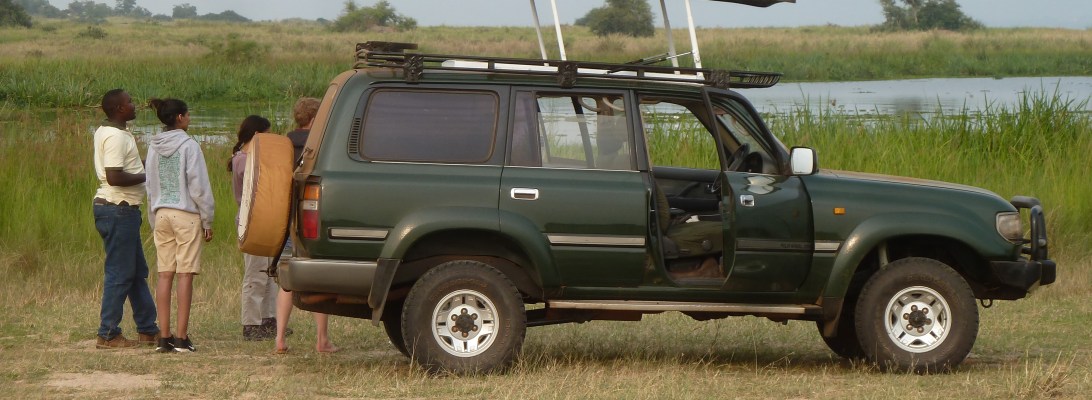
Private transfers can be organised extremely cheaply and are by far the best way to get around Uganda. Many of the tour providers will pick you up at your hotel in Kampala and Jinja and transfer you in 4x4s to the main National Parks, so that is all easily dealt with. We were picked up from our accommodation in a Toyota Land Cruiser which had been modified with a fold out canopy mounted to the roof designed to shade you from the sun while sitting on the roof watching the wildlife on safari. Brilliant.

A modified 4×4 used for safaris in Murchison Falls National Park.

The one thorn in your side which is unavoidable is the road infrastructure. Very few of the roads are properly metalled and the road surface is at time almost bone breaking. You won’t be catching much sleep on your transfer to one of the National Parks.

Outside of Kampala (where the traffic is awful) cars on the road might not be the kind of traffic causing hold ups. The roads are used by farmers to transport their livestock around and we got stuck behind this herd of cattle for a while.

Stuck in a traffic jam

If you’re a not a particularly risk averse traveller, the best way to get around inside Jinja itself is by Boda Boda, a motorbike with a driver who will chauffeur you from place to place for prices of less than 50 pence. This is by far the best ride hailing service I have ever used, with no need for an app, very short waiting times and prices that Uber would never even dream of competing with. There is always a Boda loitering at a street corner near you and all you need to do is whistle and one will arrive within the minute. Yes, no helmets are provided and you are sharing a bike with the driver (which can take some getting used to) so don’t get one unless you feel comfortable. Also there is no need to double up on a Boda, fitting two of you plus a driver is not worth the extra risk of dropping off the back of the bike vs spending an extra few shillings on another one. Most Bodas will require a brief period of haggling over price, but you will soon get a feel for how they price for the length of the journey.

Where to Stay in Sri Lanka

We visited Sri Lanka for a couple of weeks after we graduated from University (see our two week itinerary in Sri Lanka). Having not started working in the corporate world at the time, we weren’t blessed with bags of cash, so the aim of this blog is to show how easy it is to stay somewhere really nice, on a small budget in Sri Lanka. Of course there were some places where we got it wrong and found ourselves without air conditioning or in the right location, but there were a good number of places we booked which hit the nail on the head.

Panorama Rock Cafe – Rekawa

The main attraction at Rekawa, near to Tangalle in southern Sri Lanka, is to watch the turtles clambering up the beach to lay their eggs and bury them in the soft sand beaches. Because this marvel of nature occurs at night, we wanted to stay near to the Turtle Watch Rekawa site so that could easily get there and back without losing too much sleep.

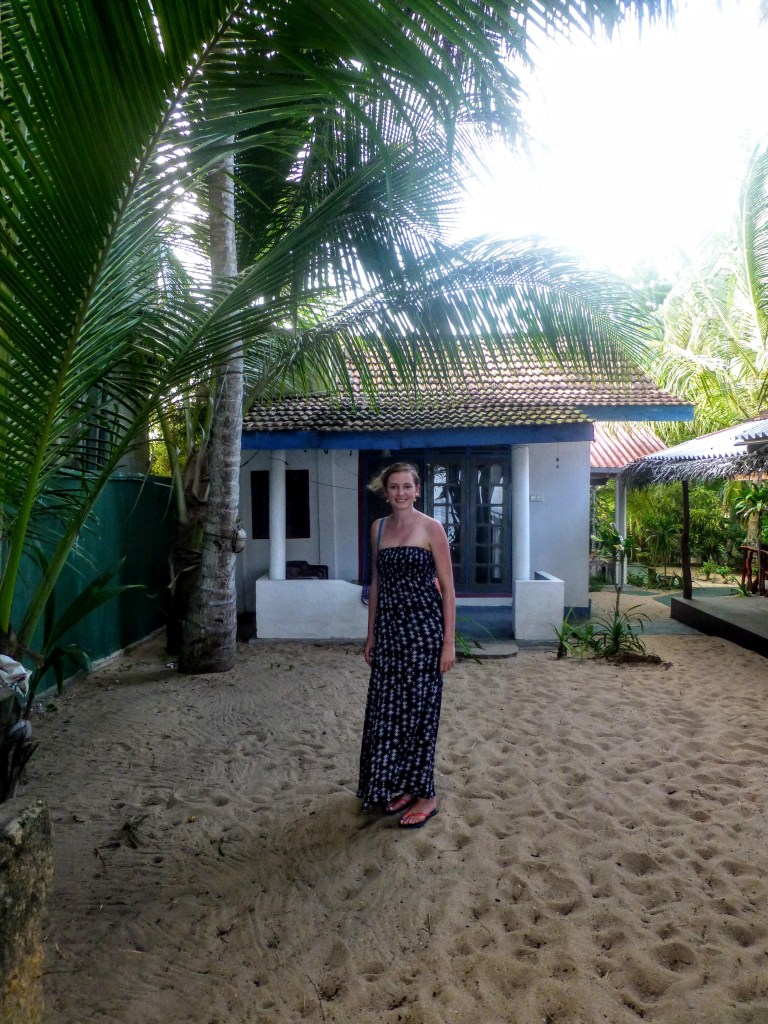
Panorama Rock Cafe is a beautiful little hotel found on the quiet and extremely pretty spit of beach between the sea and Rekawa lagoon. It is made up of a cluster of cute little cabins nestled among the palms right on the beach front. For around £25 a night, you can’t expect luxury, but the cabins certainly do the job and there’s not many places with a better location and outlook.

One thing to bear in mind is that the waves here (and on the south coast in general) are extremely powerful and swimming in this little paradise is not quite so blissful as you might think.

Panorama Rock Cafe

Siraii Village – Wirawila

We based ourselves in Wirawila to visit Yala National Park which is famous for its Leopards. The park itself is a short drive from Wirawila and Tissamaharama, the largest town in the area.

Saraii village was one of our favourite hotels on the trip. This amazing hotel is made up of several thatched tree houses perched high in the trees – it’s every kid’s dream! The bedroom is situated on a large wooden platform, which can be reached by a couple of fairly steep, but pretty secure wooden ladders. It certainly makes lugging your baggage up there quite a challenge, not to mention clambering down in the middle of the night to go to the loo. Each treehouse has it’s own private bathroom on the ground floor which is kept remarkably clean, though as you are staying in and amongst nature don’t be too surprised to find one or two tree frogs hanging out in the toilet!

There is a restaurant onsite which serves some great food for breakfast and dinner, and features regular visitors in the shape of monitor lizards (which we huge but completely harmless).

We managed to bag this beautiful tree top room for only £40 a night – an absolute bargain for such a cool hotel experience.

Little Folly – Ella

Ella is an extremely pretty town in the highlands, just south of central Sri Lanka. A stop here is a no-brainer on your tour of this beautiful island. It is a small town but there are still a fair few accommodation options available, ranging from wooden cabins to some swanky, balconied hotels overlooking Adam’s Peak, Ella’s Rock and with a view all the way down to the sea in the south.

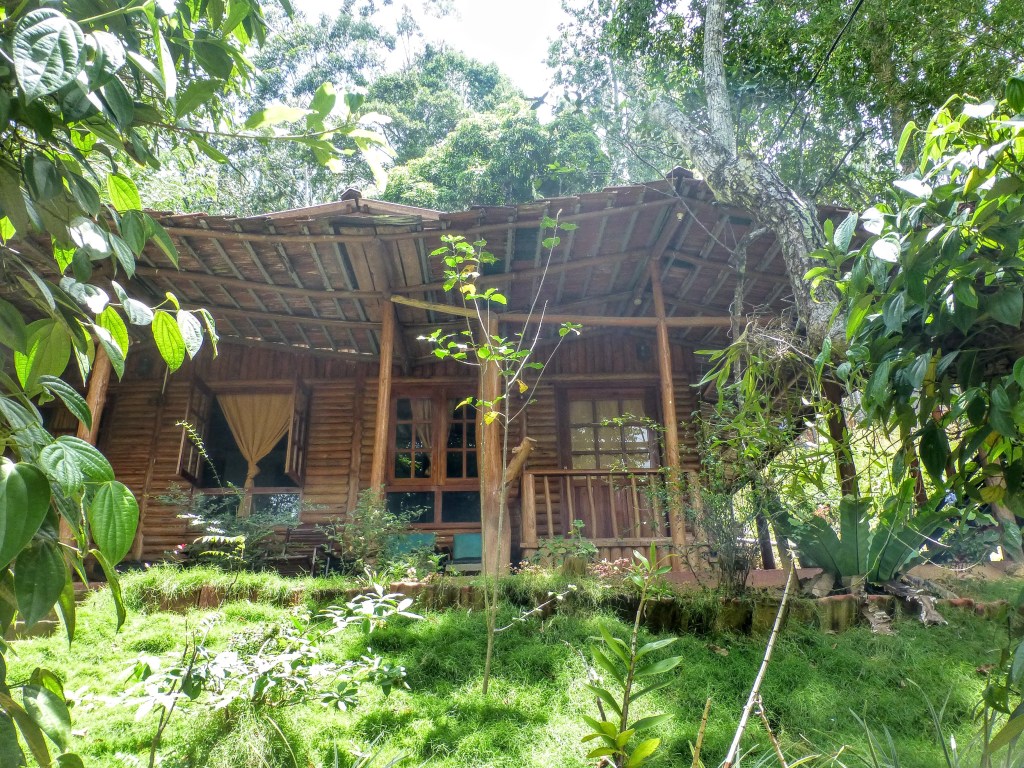
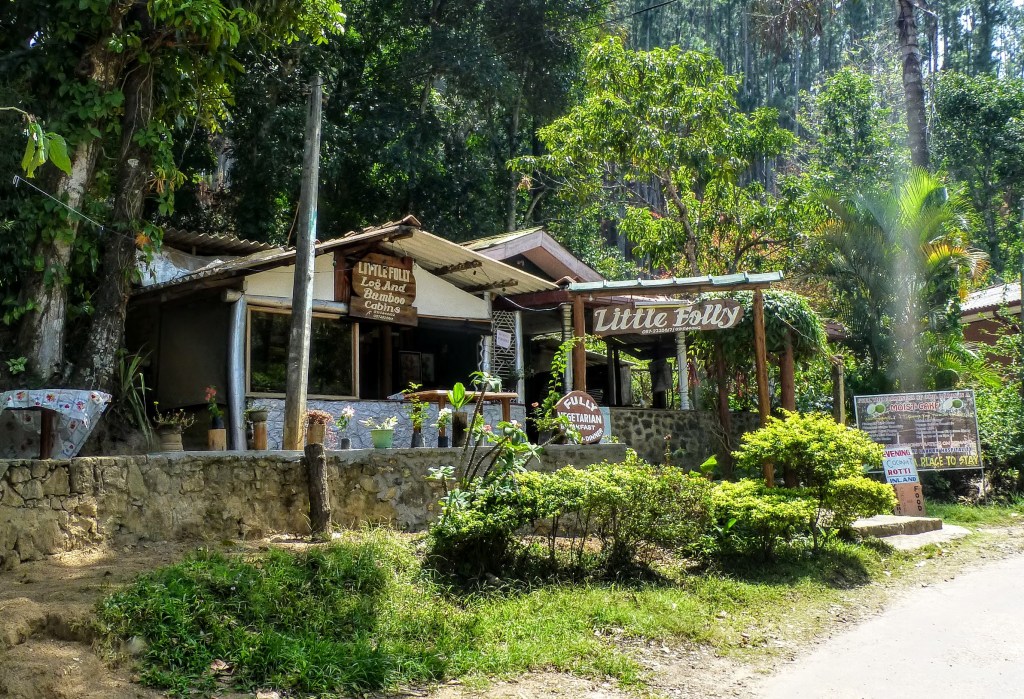
We chose a rustic log cabin just on the edges of Ella, called Little Folly. This bed and breakfast, poking out from a pine forest on the road to Adam’s Peak serves excellent cakes, so even if you aren’t staying here, it is certainly worth popping in for some afternoon tea on the way back from the peak.

For as little as £20, you can get a spacious and rather characterful cabin for the nigh, including breakfast in the morning.

Back of Beyond (Pidurangala hotel)- Sigiriya

Sigiriya is an unmissable stop on your Sri Lanka trip. Basing yourself around here for a couple of days allows you to visit Sigiriya Rock, Dambulla Cave Temples and our favourite part of the whole trip, Minneriya National Park.

We went with our driver’s recommendation for accommodation here – a great perk of having a driver was his knowledge of where to go and where to stay (see our blog Getting a Driver in Sri Lanka for more reasons if you’re not yet convinced it’s worth it). The accommodation was another rustic hotel hidden away in the jungle out in the sticks, called Back of Beyond. The hotel was made up of several thatched, terracotta coloured, mud walled, cabins and some tree houses, joined together by a maze of paths. We opted for a room on the ground this time (though again our bathroom was very popular among the tree frogs). The cabins were extremely well decorated considering how cut off from the outside world they were and how rustic they appeared from the outside.

The Pidurangala hotel is part of the larger Back of Beyond chain of rustic hotels which spans across some of the major tourists hot spots in Sri Lanka such as Yala National Park. This was one of the more expensive hotels on the trip, at £55 a night, but it was certainly worth it and was a great base for the sites in the area.

Unfortunately we were so excited by the Elephants of Minneriya National Park and Sigiriya Rock, that we completely forgot to photograph this lovely hotel.

COlombo COurtyard – Colombo

On our trip we spent a couple of days in Colombo, Sri Lanka’s captial city. Colombo is home to the main international airport and so depending on the times of your arrival and departure flights it may be necessary to stay here.

We splashed out at Colombo Courtyard on the last night to end our trip in style. This 4 star hotel in the heart of the city is certified as a carbon neutral hotel and has an extremely contemporary design and atmosphere.

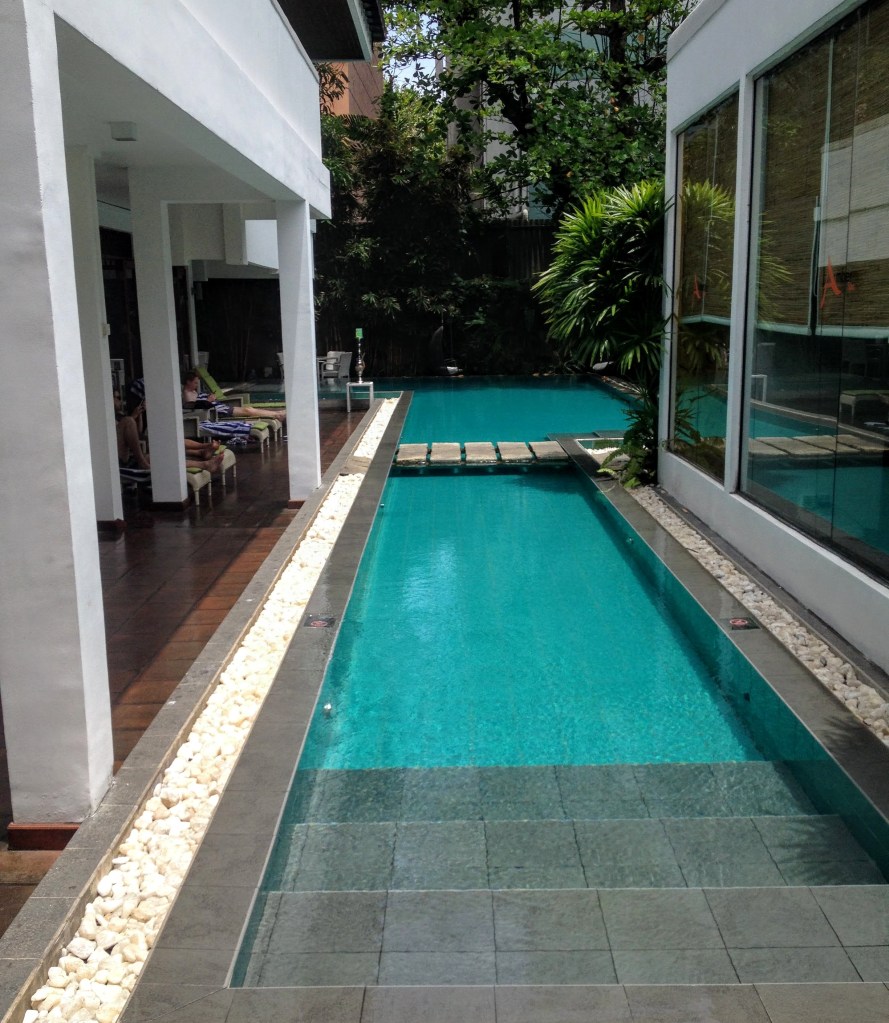
The hotel has a wide range of amenities including a restaurant, a roof terrace bar, a gym & spa and a pool. The pool isn’t particularly large but its good enough for a quick dip and a splash around.

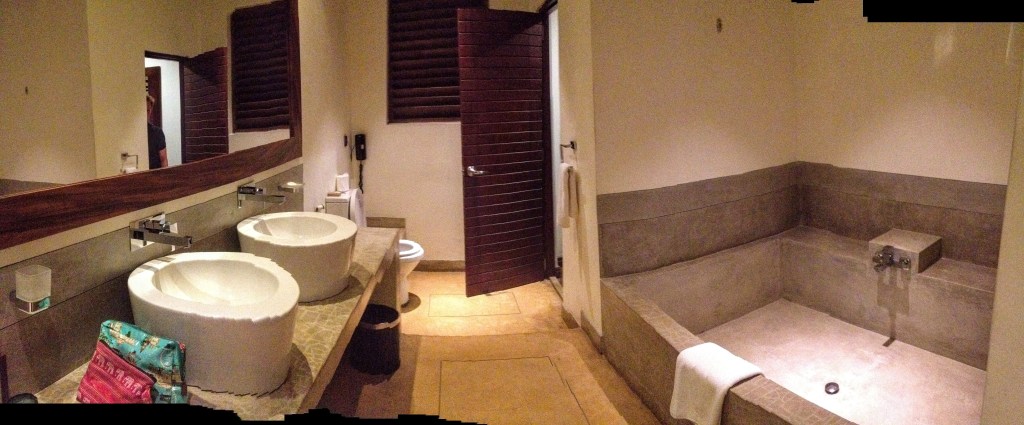
We stayed in a superior deluxe double room which was extremely nice, with a large amount of floor space, four poster bed a bath the size of a small plunge pool. This was only for £75 a night, which we thought was pretty good value. The other perk we cashed in on was the breakfast in bed service on the day of our flight. This was excellent.

Galle Face Hotel – COlombo

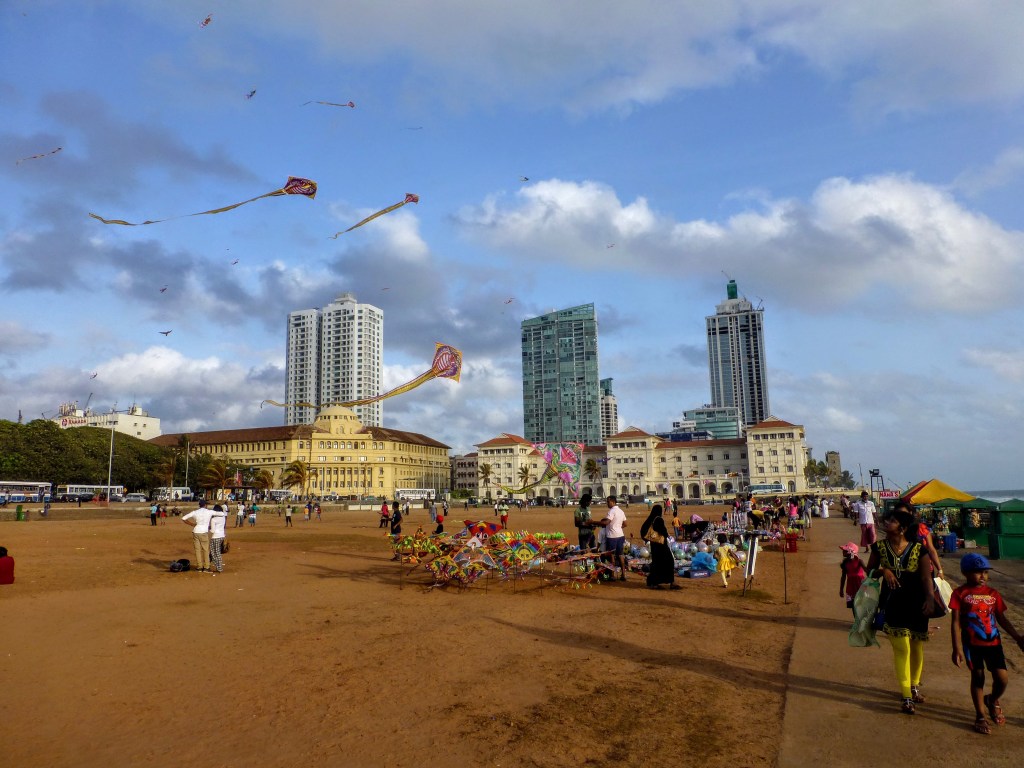
For a more traditional hotel steeped in history we would recommend the Galle Face Hotel in Colombo. The hotel is perceived by many as the most elegant and prestigious place to stay in the city. The building certainly has a sense of grandeur and the decor transports you back in time with its cavernous rooms, its tasseled cushions and its heavily patterned rugs. It sits on the sea front with beautiful views out to sea and across Galle Face Green, the kilometre long stretch of land running parallel to the sea which once was a popular place to go for a walk in Victorian times. Now the green is full of local kids playing football and flying their kites.

The hotel has a very grand courtyard with perfectly manicured lawns reaching down to the sea which make it a very popular wedding destination. It is also very well equipped with a number of facilities including a spa and a decadent wine cellar.