

Spain, Tenerife
WHY WE LOVED TENERIFE…
Whilst Tenerife may have a bad rep, with images of sun burnt Brits and all inclusive resorts coming to mind, what many do not realise is that this is largely confined to the southern part of the island. Venture instead to the hilly north, and you’ll find it is a completely different story. Topped with the majestic Mount Teide and scattered with tiny, colourful towns, the north of Tenerife has beautiful coastlines, a great range of outdoor activities, and is well worth visiting for those looking for a more authentic holiday experience.

Adventure
Chill
Culture
Nature
Our one week itinerary
This trip focuses on northern Tenerife, away from the overcrowded resorts in the south. Tenerife is best explored by car which can be easily hired from either of the island’s airports. This trip can easily be extended with a visit to one of the other Canary Islands, we hear La Gomera is particularly stunning and more off the beaten-track.
☆Don’t miss: A trip to Mount Teide, the volcano visible from any spot on the island.

DAY 1: Garachico & ICOD
We based ourselves near to Icod de los Vinos because it is well located in the centre of all the places we wanted to visit on the island. We eased ourselves into the trip with a potter around the nearby towns of Garachico and Icod.
Garachico, once the most important town on the island due to its strategically placed port, before it was destroyed in a volcanic eruption, is known as Tenerife’s most unfortunate town. It has a history straight out the Old Testament, plagued by eruptions, locusts, disease, fire and flooding. The lava which destroyed the harbour is now one of Garachico’s main attractions – it has formed a network of large natural rock pools which draw people to the town to swim in. In a way, the town has benefited from its fall in status, as unlike other areas of the island, it has retained its authenticity and old colonial architecture.

Icod, home to the famous Dragon Tree (a gigantic Dracaena tree rumoured to be over a thousand years old), is another authentic little town nestled amongst banana plantations higher up the slopes of Mount Teide. The main thing to do here is to visit the Parque del Drago and the surrounding historic centre of the town. We would recommend popping into Casa Del Drago for an atmospheric drink and piece of cake directly under the Dragon tree. For more details on Casa Fel Drago and other places to eat and drink see our blog Where to Eat and Drink in Tenerife.

We spent the rest of the afternoon relaxing by our pool, but you could head further up the coast to explore La Orotava, another pretty town not too far away.
DAY 2: La Laguna & Anaga
We headed to the very northern part of the island and spent the morning wandering up and down the pristine and colourful streets of San Cristobal La Laguna and popping into some of the shops. The historical centre of the city is a Unesco World Heritage site and is well worth a visit. It is worth bearing in mind that the northern parts of Tenerife, particularly this part, experience a more Mediterranean climate, with cooler temperatures and more rainfall than the southern parts of the island.


Heading further north from La Laguna you enter Anaga Rural Park, a mountainous region etched with deep ravines separated by sharp, steep ridges. The jagged peaks are coated with an ancient laurel forest, which absorb the sounds of the outer world and feel like a trip back in time. Take one of the many hikes in the area, we opted for the Trail of the Senses which is a short loop from Cruz Del Carmen. On the journey through the park there are a few viewpoints which afford fantastic panoramas over northern Tenerife.

There are also a number of viewpoints that are not to be missed. Mirador de Jardina offers views across the city of La Laguna and the surrounding countryside with the vast (but often clouded) peak of Mount Teide behind it. Mirador Pico del Ingles is also worth stopping off at for views of the rugged scenery extending down towards both sides to the coast.
Continue north to the coastal town of Benijo where you can relax on the black sand beach.

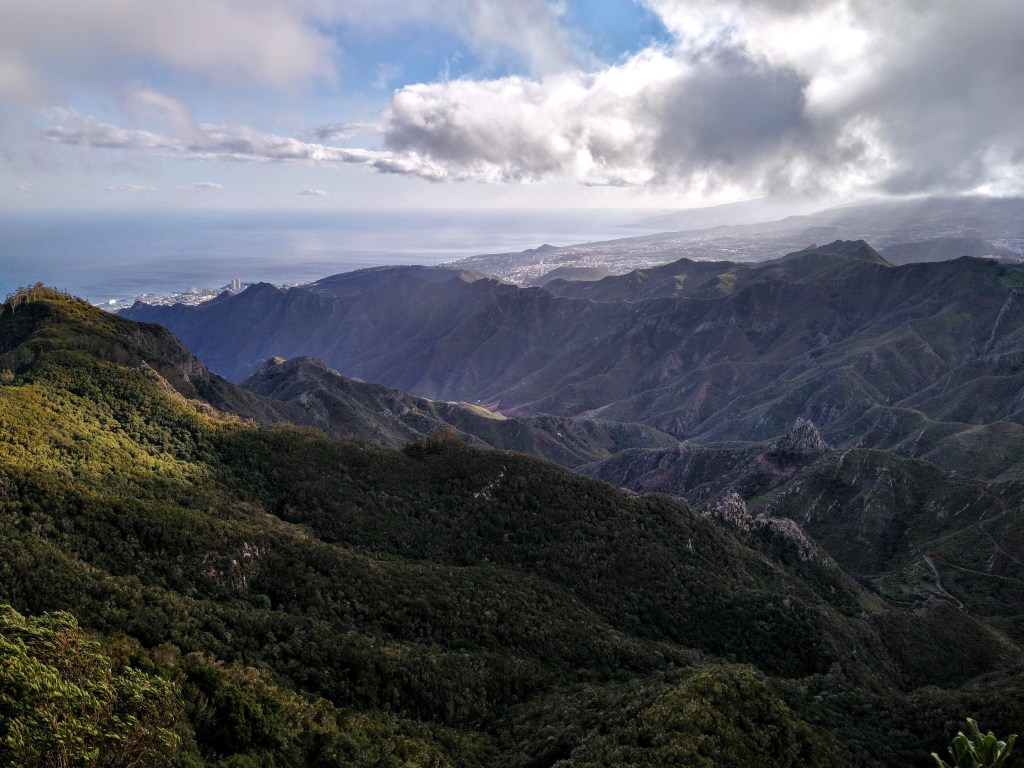
Day 3: Mount Teide
At over 3700m, Mount Teide is Spain’s highest mountain and one of the tallest volcanos in the world. It looms over you wherever you are on the island. The Teide National Park surrounding the volcano is a Unesco World Heritage site and is a stunning, other-worldly area to visit.
Pack a picnic and set off early to Mount Teide to avoid the bus tours that will start rolling in throughout the day. The volcano is accessed by one road which runs from Santiago del Teide in the west though to La Oratava in the north. And what a road! It takes you up 2300m from sea level to the base of Mount Teide where you can get a cable car which takes you (almost) the rest of the way up. The cable car (as we unfortunately found out) does not always run due to high winds and snow which can fall at the peak of the volcano. We used the Volcano Teide Experience website to check whether the cable car was running or not. If it isn’t running don’t fret, you’ll save yourself 37 euros and still have a brilliant day hiking around the national park below the peak.
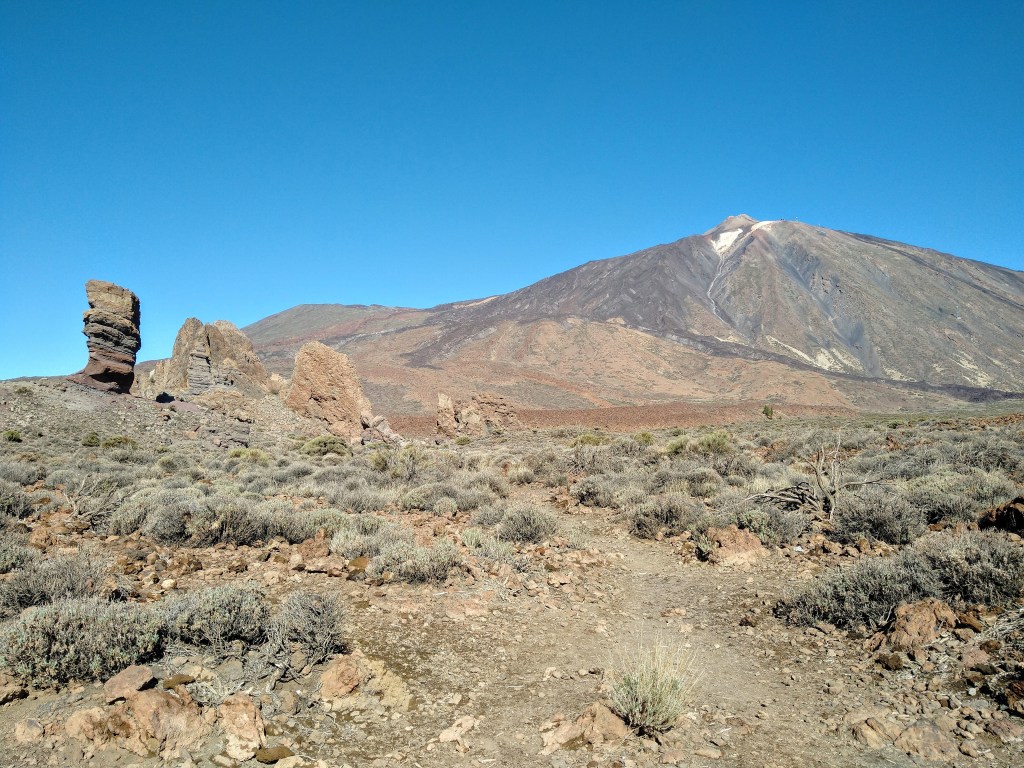
There are many hiking trails around the national park, we chose a 2 hour hike which started at the tall stack-like rock formations or dykes known as Los Roques de Garcias and looped around them with stunning views of Mount Teide’s peak and the plain known as Llano de Ucanca. The hike is fairly flat with a gentle descent behind Los Roques where you can clearly see La Cascada (the Waterfall) where lava has solidified whilst flowing over the lip into the plain. At the end there is a short climb past La Catedral (a large volcanic chimney) back up to the starting point. For those looking for an adrenaline rush, climbing La Catedral is an option if you book ahead, but this is only for experienced climbers!
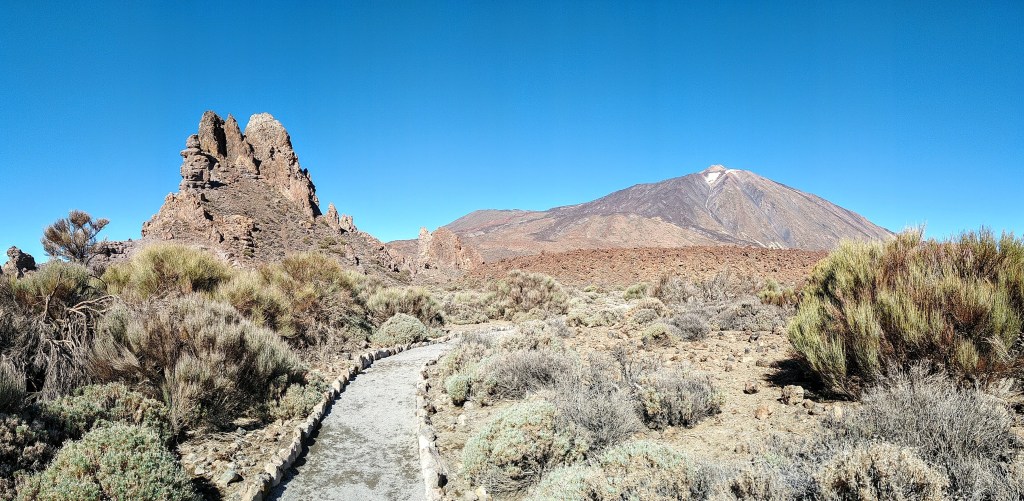
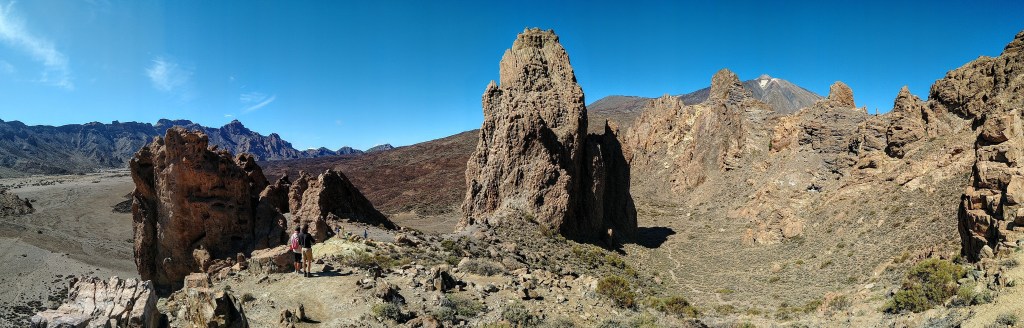
For keener hikers, there is a fork after passing the Roques de Garcias which takes you up to Pico de Viejo, the other major volcanic peak in the park.
If you follow the road further west towards Santiago del Teide, there is another small peak, Montana Samara. The short climb up to the crate is worth it, because it gives amazing 360 degree views from Mount Teide’s peak to the coast and across to the island of La Gomera. There is another 2 hour circular hike from here to Montana de la Botija, this can also be extended for a longer hike.
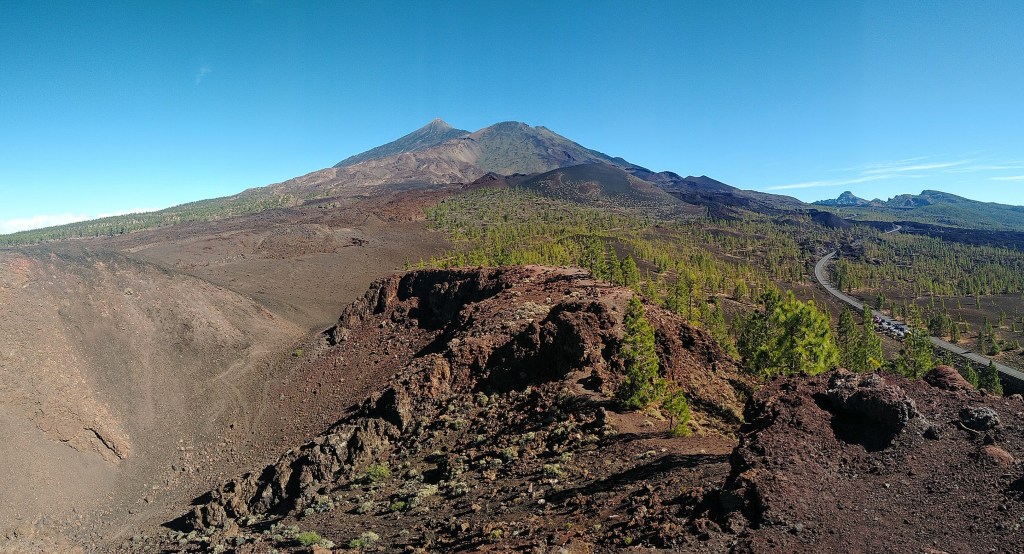
There is also the possibility to book paragliding experiences which will give you an unparalleled aerial view of the volcano and the the surrounding national park.
Day 4: Los Gigantes
Los Gigantes is a small coastal resort town in western Tenerife which gets its name from the vast 600m high cliffs which tower over the the surrounding sea. Los Gigantes means “the Giants”, an apt name for such mighty cliffs.

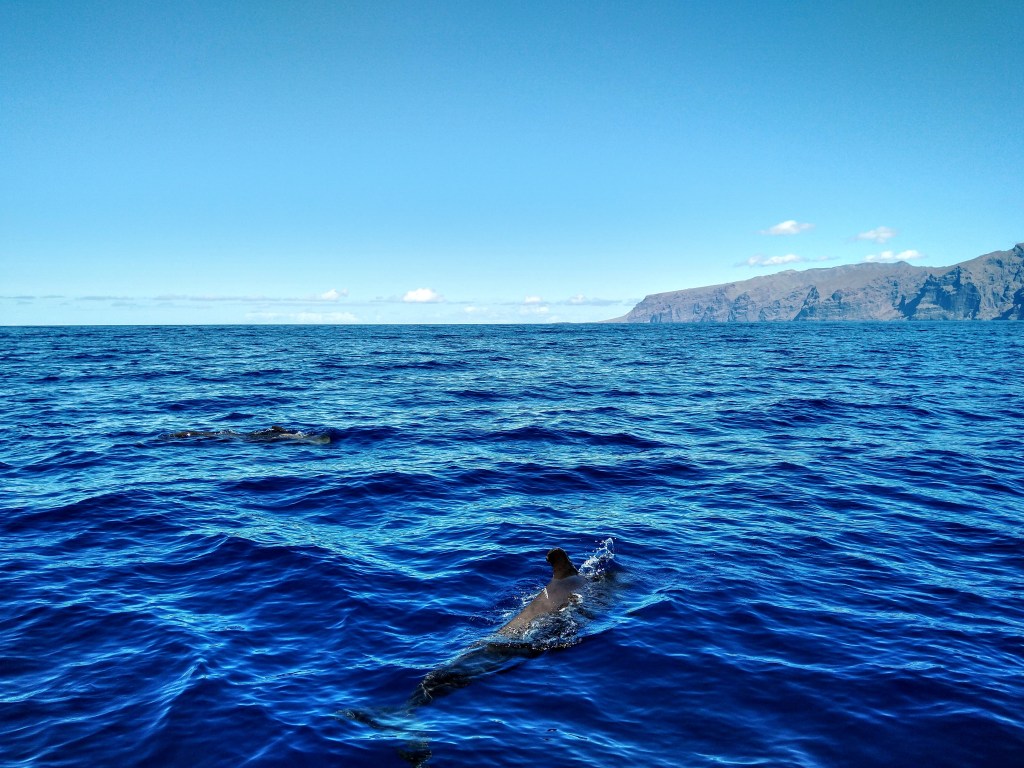
The town itself isn’t particularly special by any means, but head here for some whale watching with one of the many tour companies based here. The huge cliffs of Los Gigantes are a tell-tale sign that the channel between Tenerife and La Gomera is extremely deep and this makes for the perfect environment for whales. Because of this, there are whales here all year round, making it almost guaranteed that you will have some form of sightingon your boat tour.
We went with Flipperuno, who have three different boats running slightly different tour packages. We went on the Masca Express 2 hour tour with one hour of whale watching and one hour admiring the cliffs and swimming in the clear waters beneath them in Masca bay. We saw Bryde whaless (which can be up to 16m long the crew told us) and a very friendly pod of pilot whales with their young calves.

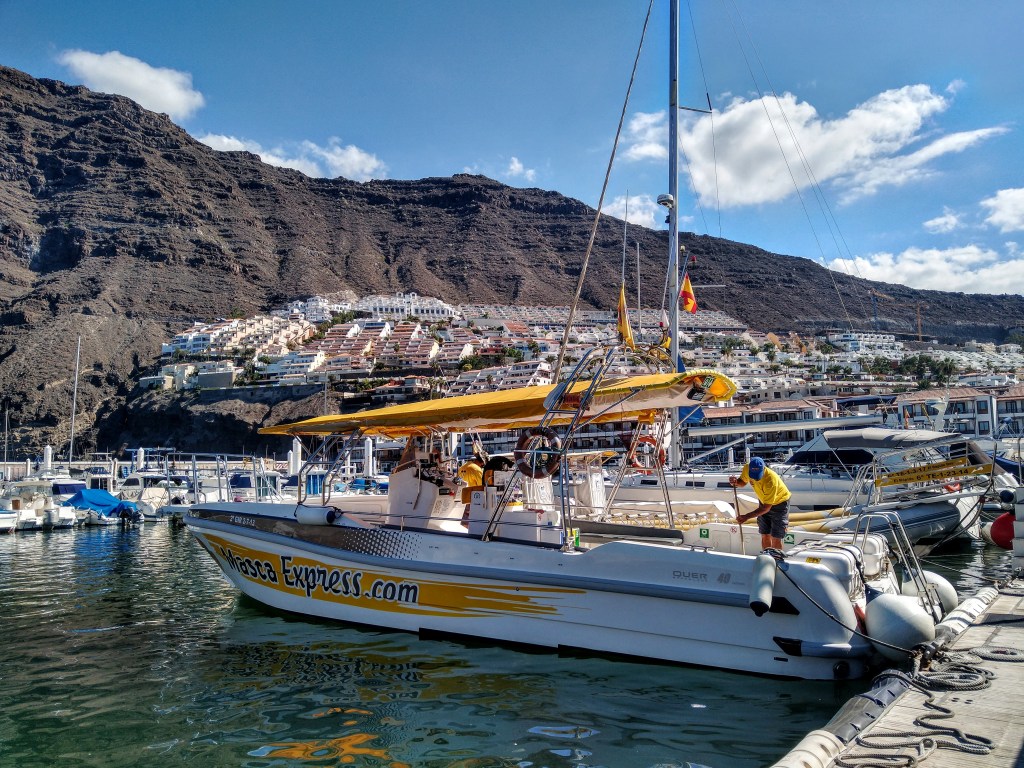
After the whale watching, head slightly further south to Alcala, a pretty fishing town (and the furthest south we dared to venture on our trip!). There are a few nice little cafes and restaurants which serve authentic Canarian food such as Patatas Arrugadas (wrinkled new potatoes – which are considerably better than they sound!). The sea front is great for swimming, with a small black sand beach and a stone harbour which is usually busy with leather skinned locals absorbing the rays. We wandered north along the coastal path and found a secluded cove where we could swim by ourselves with only the company of a few scuttling crabs.

Day 5: Masca
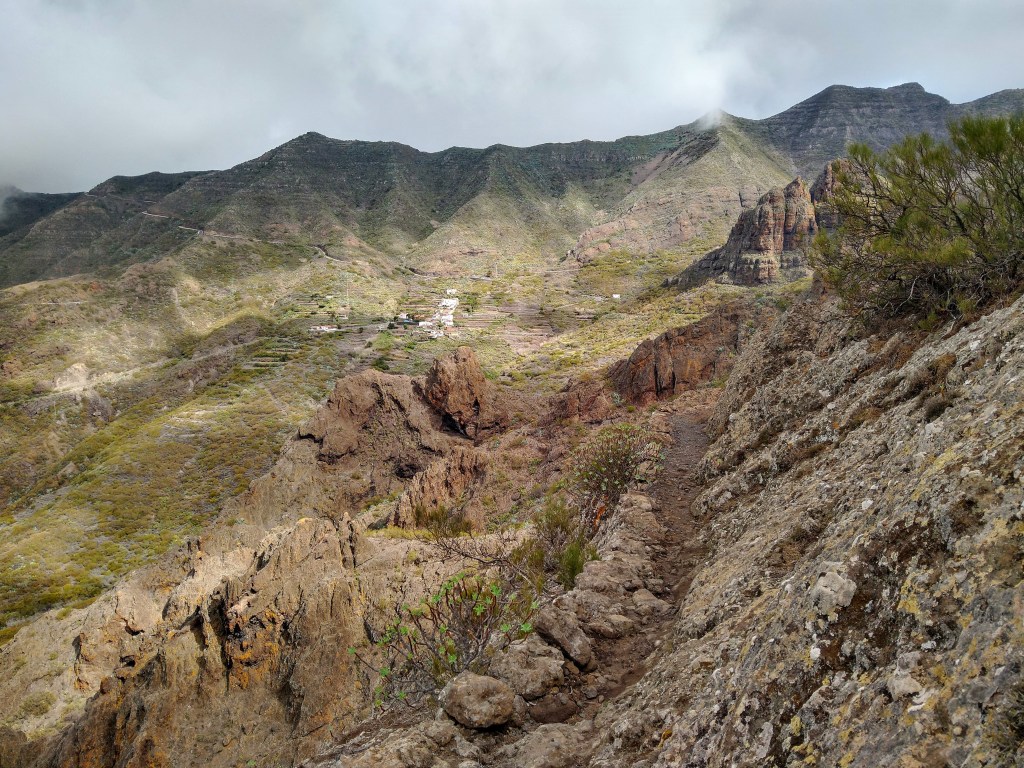
Known as Tenerife’s version of Machu Picchu, Masca is a little village perched on a ridge surrounded by the stunning craggy scenery of the western Teno mountains. It is widely regarded as one of the prettiest villages in the Canary islands. Cut off from the rest of the island, the only access point to this remote little village is down a hair-raising single track road with an almost vertical drop on one side and more hair pin turns than you can count. Unfortunately, it has now made its way onto the tourist radar, so you can find yourself having to make room for a few buses defying the laws of physics and swinging round the endless twists and turns. It is important to get to Masca early so that you can enjoy this peaceful little village before any crowds arrive. The parking is also pretty minimal.

The well-known Masca trail begins from the village, a three hour hike through the ravine down to the Masca bay. From there you can take a water taxi to Los Gigantes. It is a popular route, but it can be underestimated and there have been reports of tourists ignoring weather warnings and ending up in a tricky situation. As a result the trail has been officially closed for the moment.
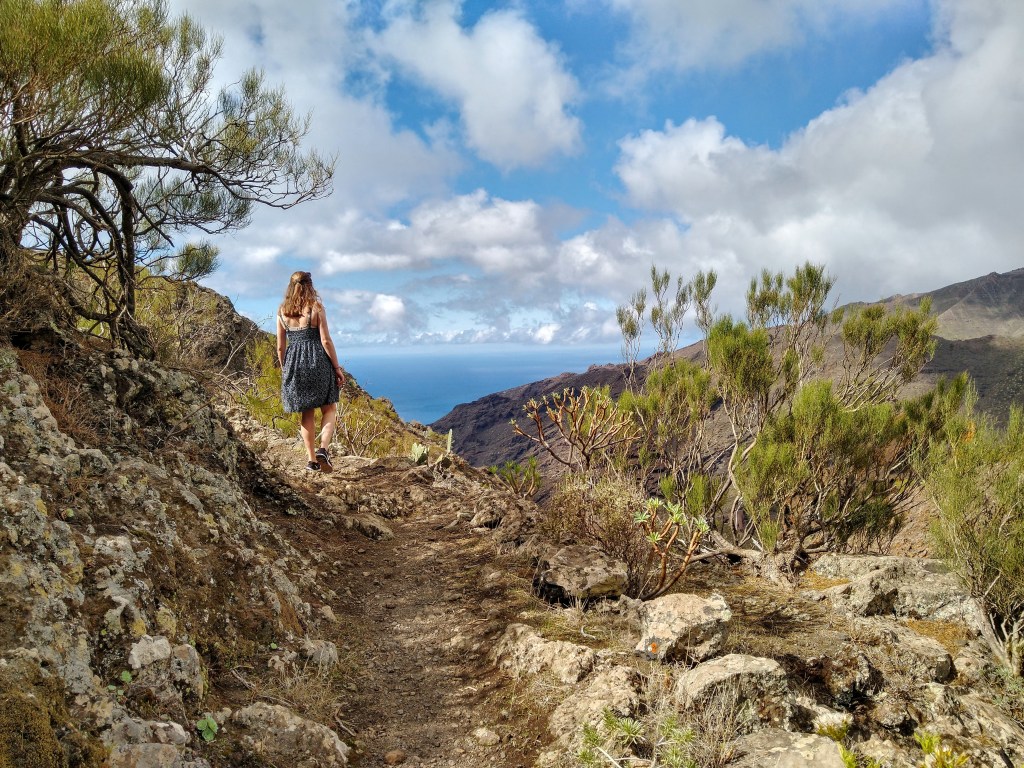
The trail was still closed when we visited so instead we opted for the trail a little further into the mountains called Los Carrizales. This atmospheric trail is perched on the side of the ridge, often running along a traditionally built dry stone wall, offering stunning views across the valley and out to the Atlantic and La Gomera. Many of the people we spoke to actually recommended this trail over the famous Masca hike and we were not disappointed.

Day 6: Puerto De la Cruz
When in Rome. Spend your last morning at the beach. Puerto de La Cruz is the original tourist destination on Tenerife, when wealthy noblemen and women used to come here for its connection to nature and its tranquility. Although it is now not such a prestigious destination as it once was, it has a little more to it than the resorts in the south.
Blog posts on Tenerife

Where to Eat and Drink in Tenerife
Where shall we go for dinner? Those staying in one of the many all inclusive resorts lining the south coast of Tenerife may not need to ask that question. But if like us, you’ve opted to stay in the beautiful hilly north of Tenerife, then you are in for a wonderfully authentic island experience, and…
 Sunburnt Zebra Travel