

Egypt
WHY WE LOVED EGYPT…
Egypt, home to the magnificent River Nile, the sand-covered secrets of the Royal Tombs and the mighty Pyramids of Giza, is certainly full of history, culture and eye-opening marvels. The big-hitting sites combined with the year-round hot weather and the affordability of travelling round the country, make this a great destination for curious travelers.
Adventure
Chill
Culture
Nature
Our 10 Day Trip
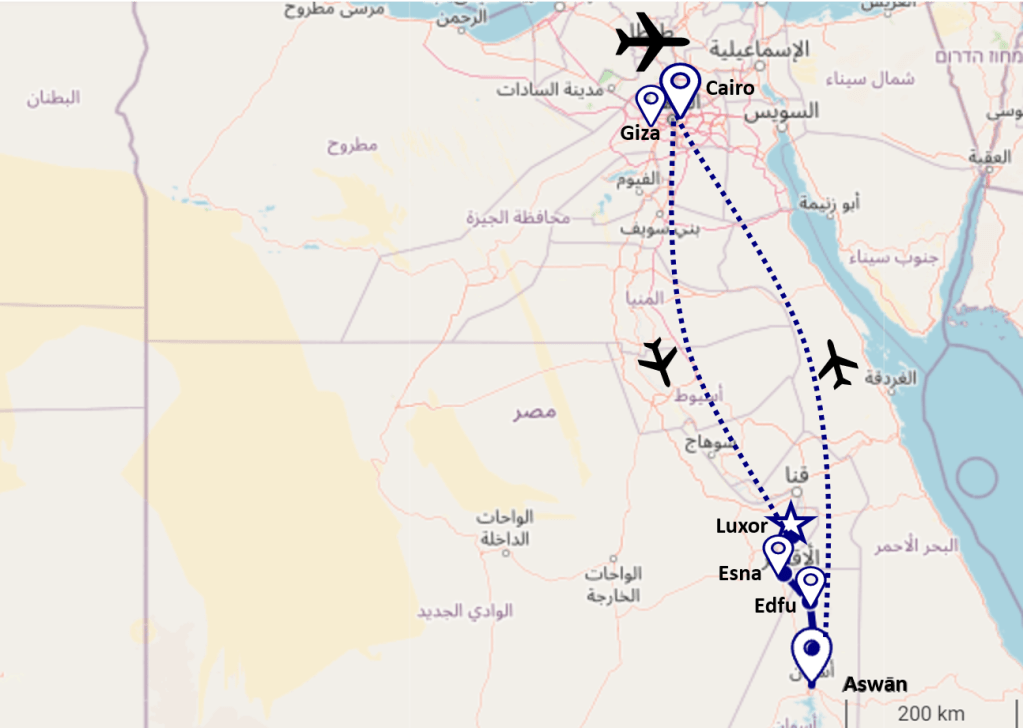
This trip follows the Nile, hitting up the famous Ancient Egyptian sites of the Pyramids of Giza, the Valley of the Kings and a cruise down the River Nile itself.
☆Don’t miss: Luxor, the World’s greatest open-air museum.
day 1 – The Pyramids of Giza
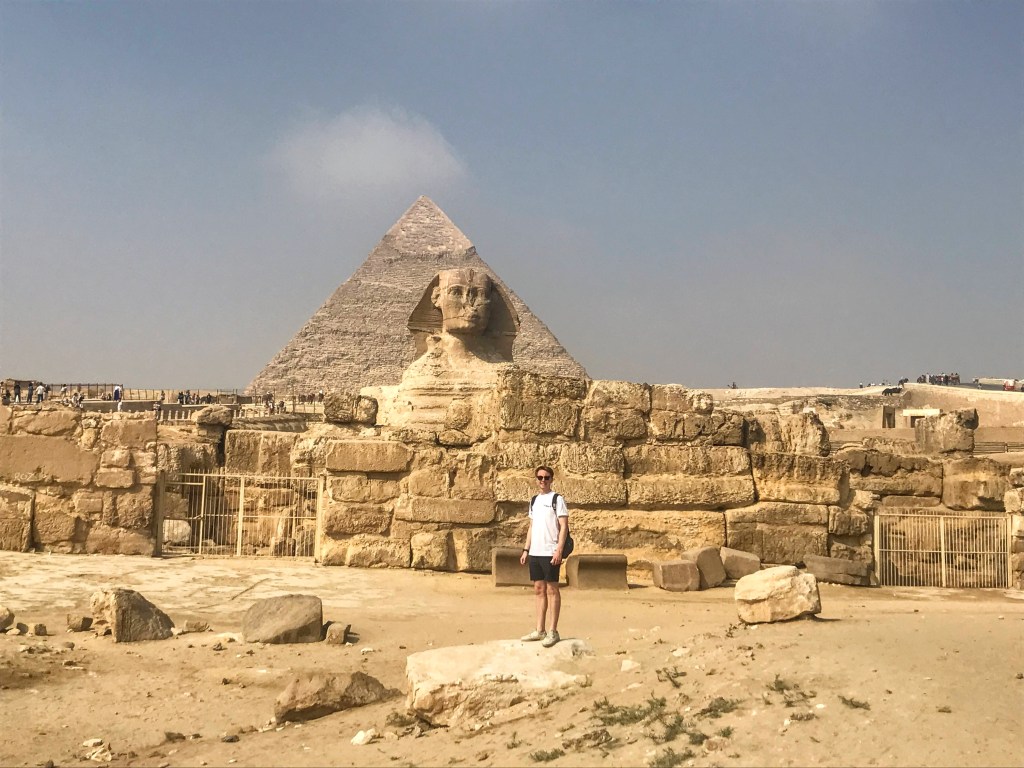
First stop on the itinerary is the Pyramids of Giza. These monumental Pyramids, guarded by the Sphinx, have stood tall on the Giza Plateau for over 4500 years. Due to their colossal size and the sheer precision of their design, the exact details of how the Pyramids were built still remains a mystery to this day.
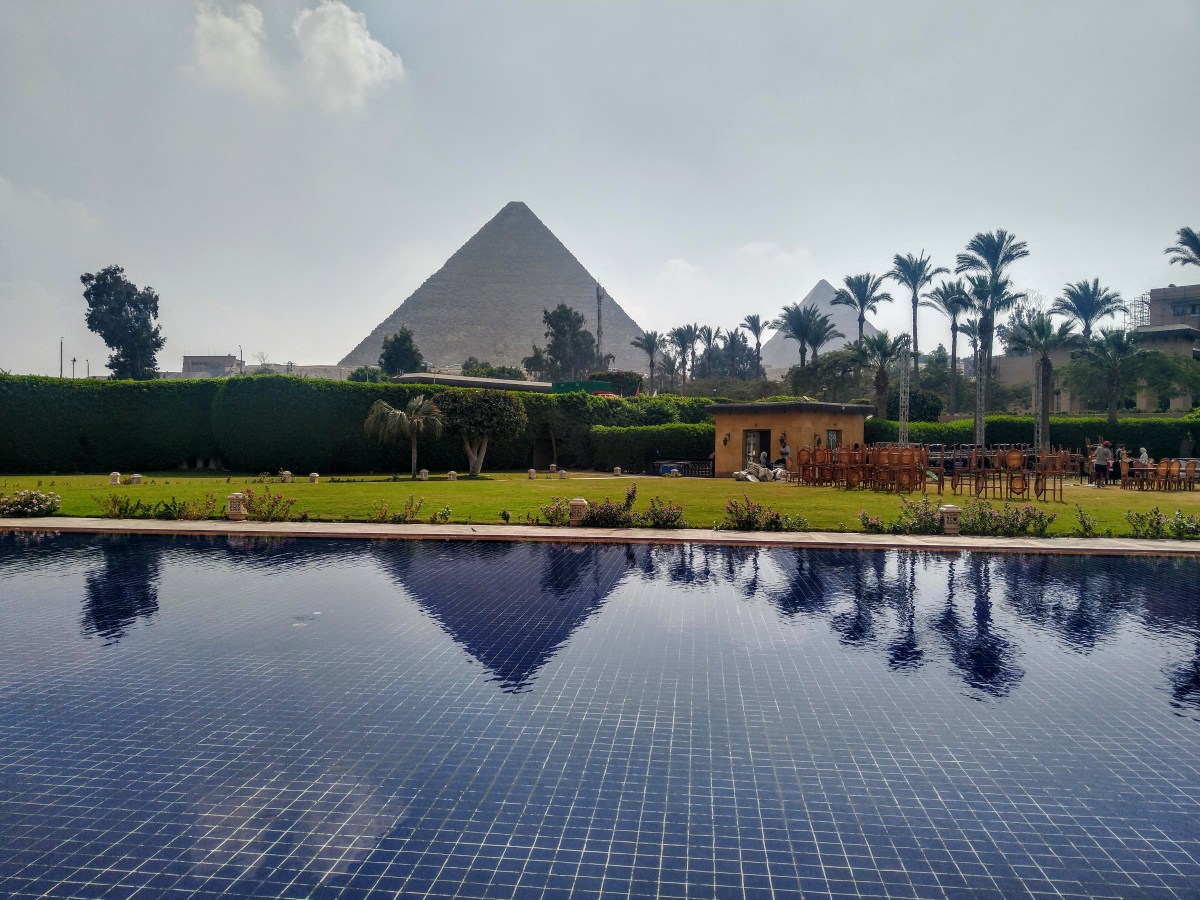
Make sure to book a hotel in Giza, close to the Pyramids, so that you can wake up to the magical view of the Great Pyramid looming through the early morning haze (see our blog where to stay in Egypt for more on this). The Pyramids open up for visitors at 8am and staying close by also allows you to enter the site before the tour buses roll up.
Before coming to Egypt we had read a lot about the locals being very persistent in their efforts to get tips or “Baksheesh” from tourists and had prepared ourselves mentally for a day of being hassled. This turned out not to be necessary, the locals are no more persistent than in other countries in the Middle East or Asia that we have travelled to. That said, the entrance to the Pyramids was the one exception to this. We were visiting on a Friday, a popular day with the local school children and so there was a throng of locals clamouring at the ticket office. Surrounded by the throng of locals, there was no way to say “no thank you” and move on when several touts began offering to help us buy our tickets. We quite quickly consented to one tout who squeezed round the front of the “queue” and bought us our tickets, leading us through a side gate and onto the site. This queue jump was thoroughly worth the small Baksheesh we gave him and we were pleased at how quickly he left us to our own devices after we said we could manage by ourselves from here on in.
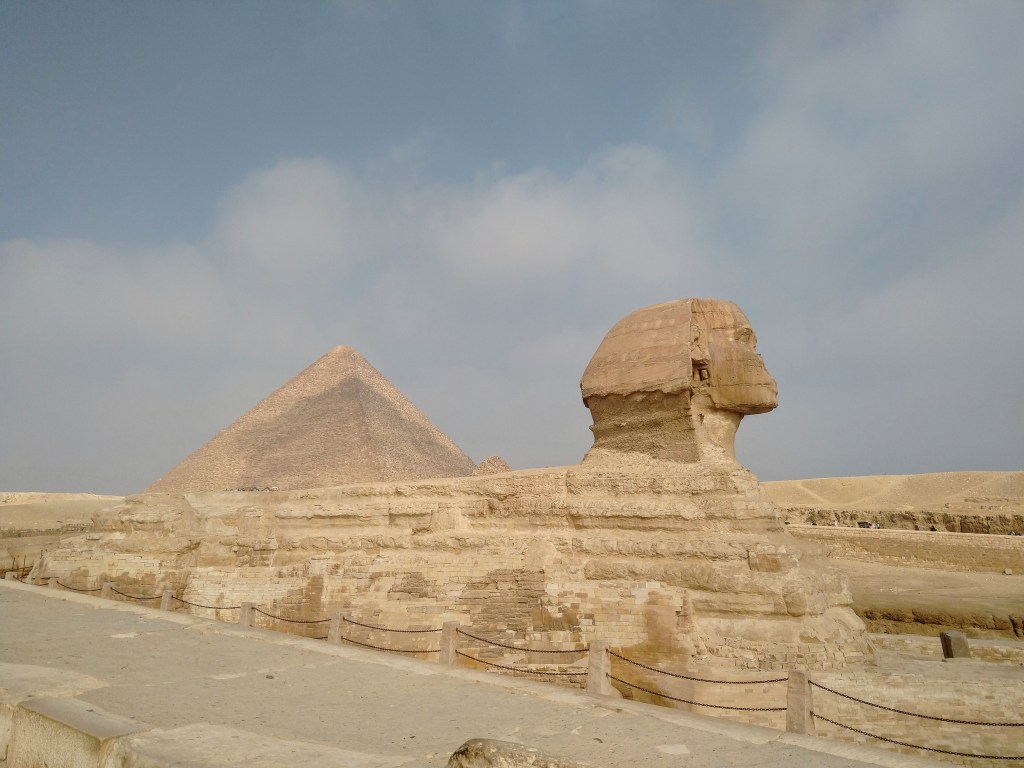
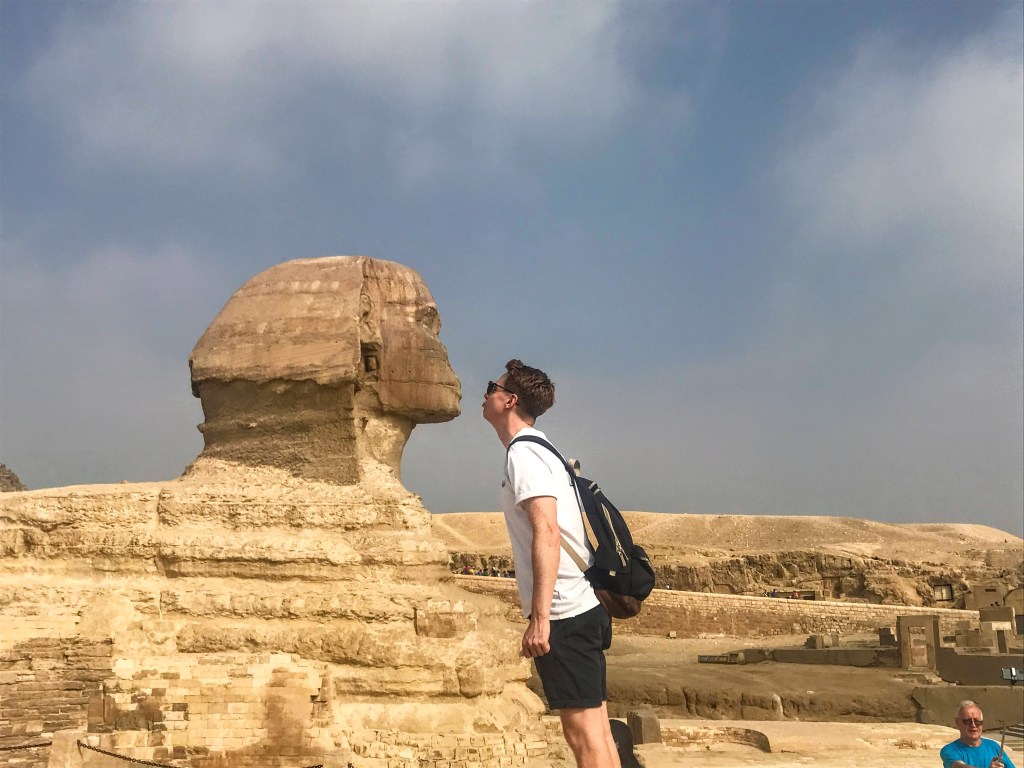
As soon as you enter the site you are greeted by the regal Sphinx, a lion with the head of a Pharaoh (thought to be the head of Pharaoh Khafre). Enter the Valley Temple of Khafre to the left of the Sphinx to get a close-up view and the famous “kissing the Sphinx” photo.
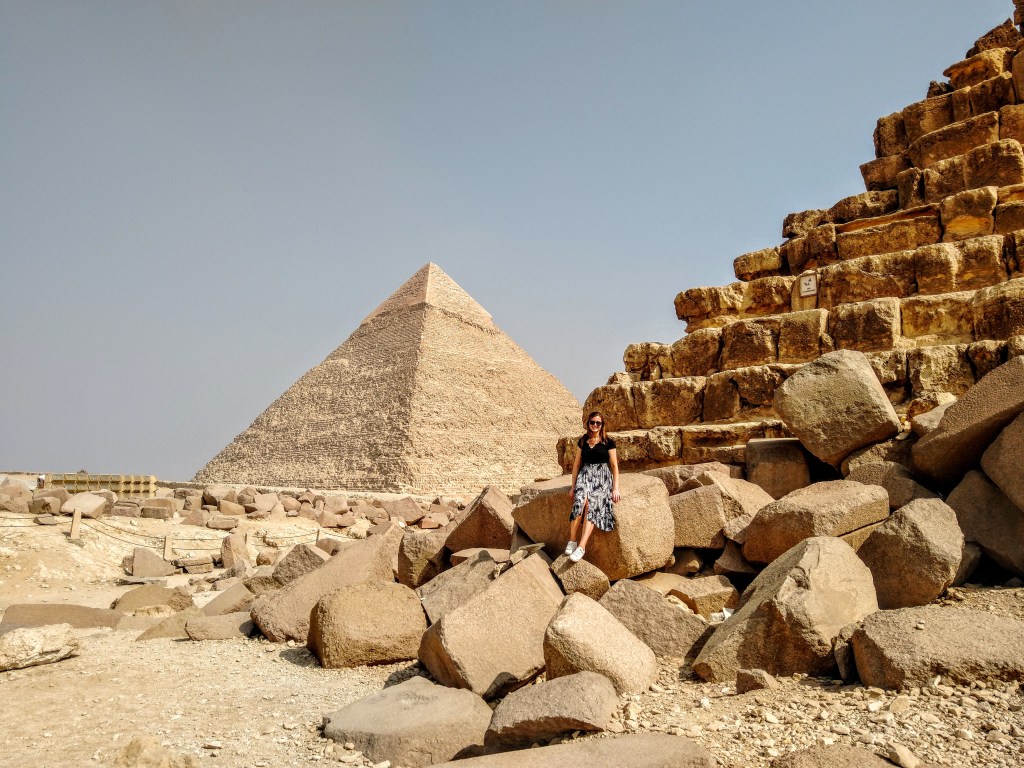
From here, head up onto the Giza Plateau where the three Pyramids tower above you. The Great Pyramid of Khufre will be your right and the Pyramid of his son, Khafre, straight ahead. We spent a good while walking around them gawping at their truly immense size. The furthest pyramid, built by Menkaure, Khafre’s son, is much smaller in comparison, but is still as geometrically perfect as the other two.
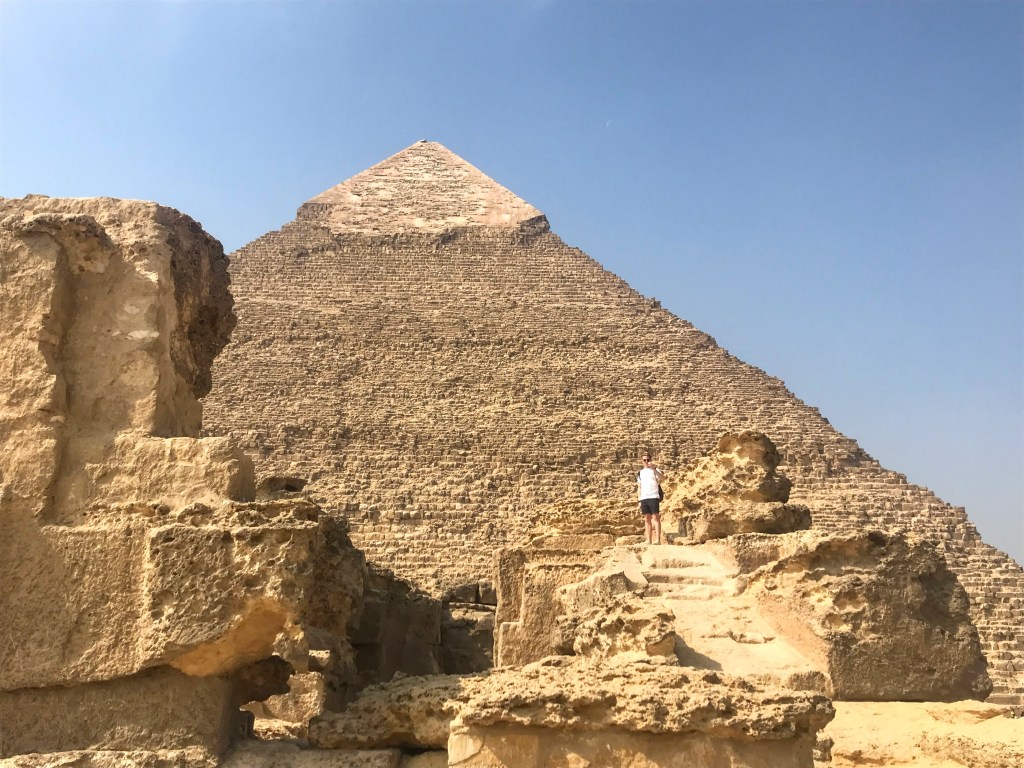
The Great Pyramid is open for visitors to go inside and only one of the other two pyramids is open at any one time to go inside as well. The entry to the pyramids themselves requires an entry ticket at extra cost to be bought at the entrance to the plateau. We chose not to go in them as we had planned a trip to the Valley of the Kings later, where the tombs are glamorously decorated and preserved, whereas the interior of the pyramids is rather claustrophobic and bare.
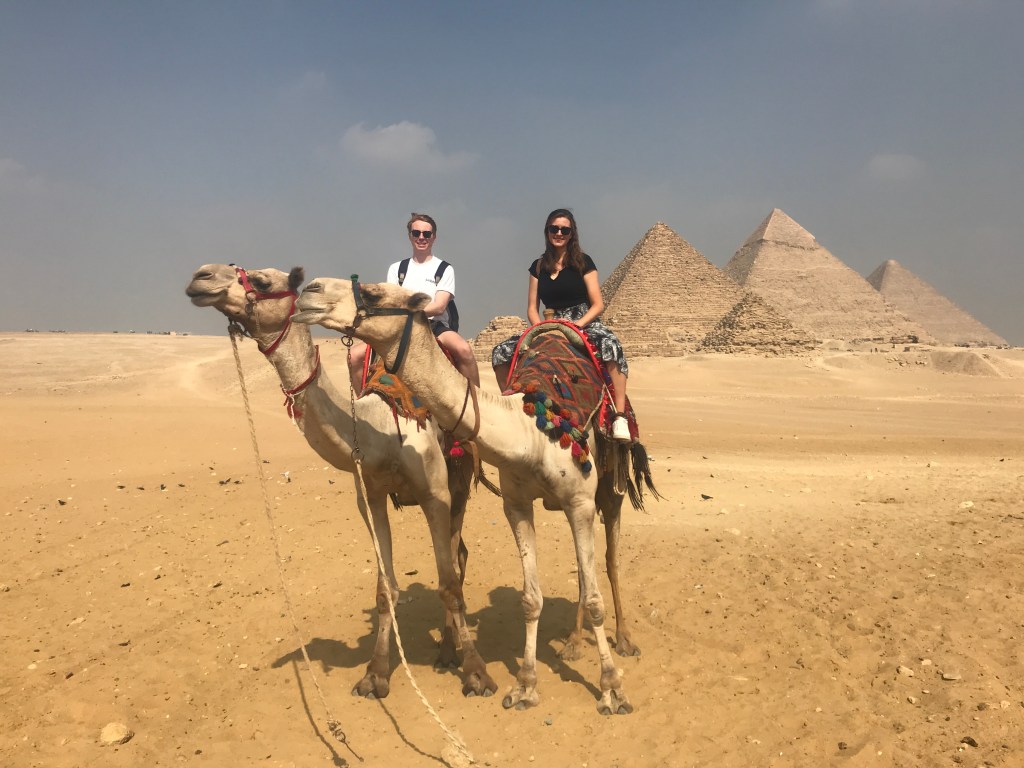
Although it seems a bit cheesey, we would recommend getting a camel ride while you’re here. Locals will offer you camel rides or horse rides throughout your visit, especially at the bottom near the Sphinx, where they can capitalise on lazy tourists who would prefer to avoid walking up the hill to the plateau. The slope up to the plateau really isn’t very steep or far, we would seriously recommend you wait until you’ve got to the Pyramid of Menkaure at the far end of the site, before relenting to a camel ride. If you manage to stay strong, a camel will take you from the final pyramid into the dunes where you can see all 9 pyramids on the plateau at once. It’s a breath-taking view.
After 3-4 hours in the heat of the unshaded plateau, it’s time for lunch, and there is no better place for this than the Marriott Mena, a luxurious oasis right next to the Pyramid of Khufre. On the way back from the Pyramid of Menkaure, turn left past the Pyramid of Khufre and go out the other entrance gate, rather than walking all the way round from the Sphinx gate.
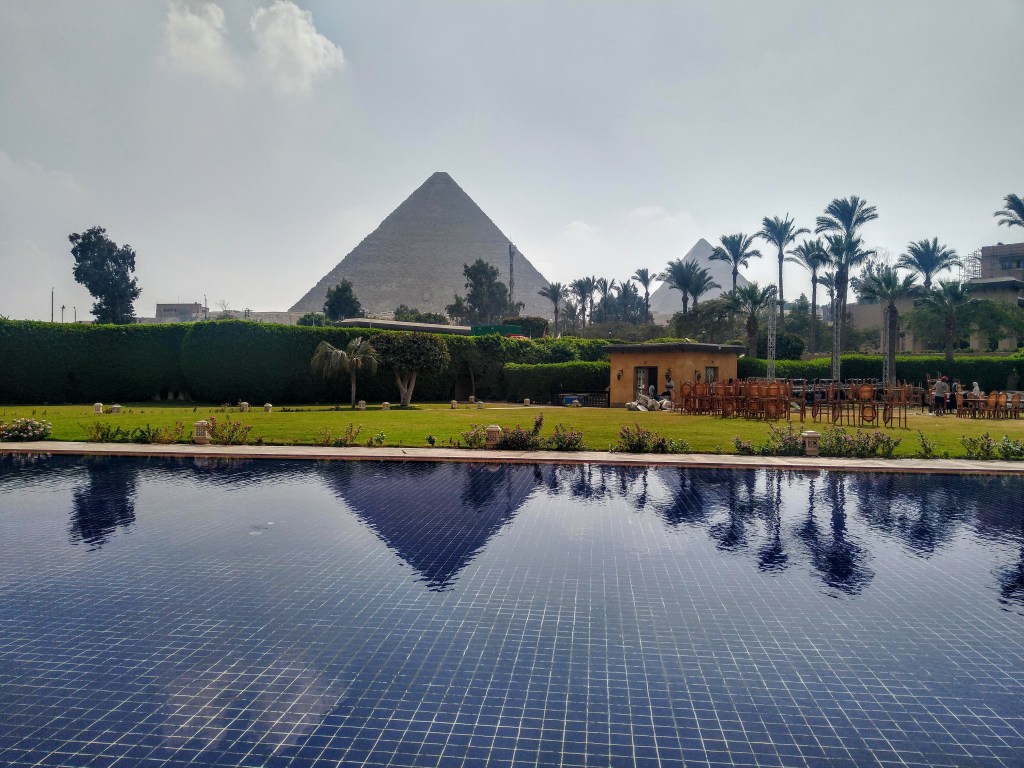
Catch a taxi to Cairo Airport after lunch for a flight to Luxor.
Day 2 – Luxor’s East Bank
The UNESCO World Heritage Site of Luxor, once called Thebes, was once the capital of Egypt and hence it is rich in ancient Egyptian sites. Luxor city sits on the East Bank of the Nile, which apart from its two marvellous temples: Karnak Temple and Luxor Temple, is on the whole rather unremarkable. On the West Bank are the many royal tombs, most notably the Valley of the Kings where many of the Egyptian Pharoah’s secrets have been unearthed. These tombs are Ancient Egypt’s best art galleries and were designed never to be seen, but since the famous discovery of Tutankhamun’s treasure trove of a tomb, these miraculously well-preserved tombs have been on show to the world and should be number one on your list in Luxor.
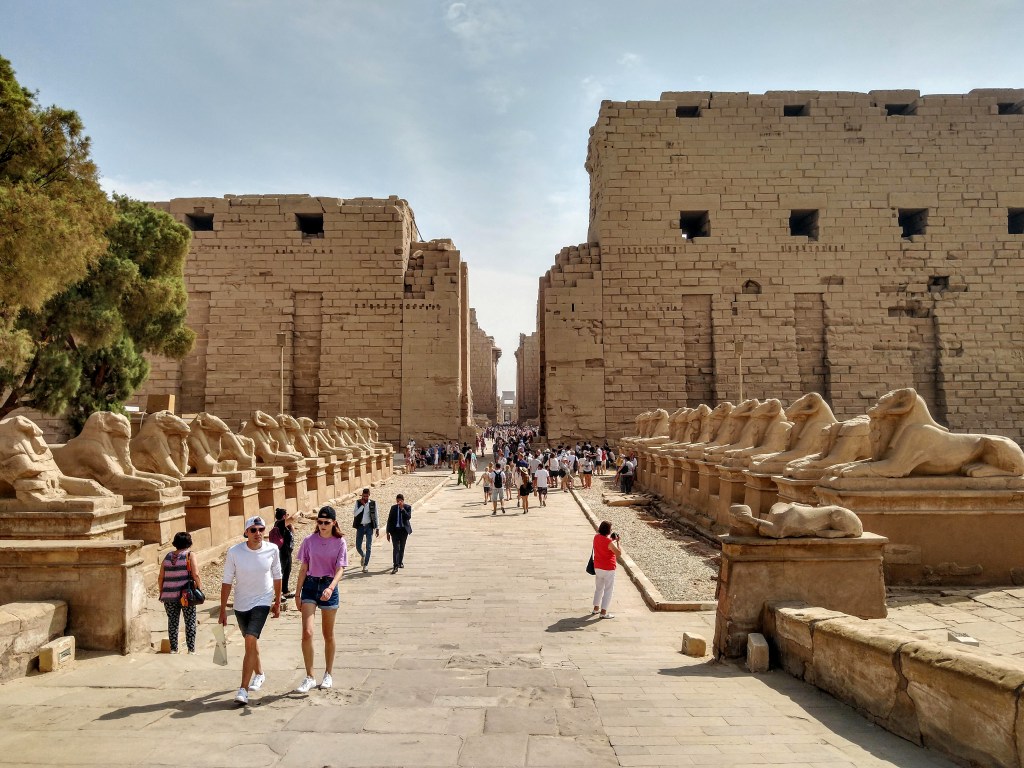
To avoid being “templed out”, we recommend spending a day on the East Bank exploring the Temples or Karnak and Luxor and a day on the West Bank exploring the Valley of the Kings, the Mortuary Temple of Hatshepsut and the Colossi of Memnon. You can spend days visiting all the sites on the West Bank, such as the Valley of the Queens, the Tombs of the Nobles and all the temples such as Medinet Habu, but this itinerary includes a fair number of temples as part of the Nile Cruise.
Spend the morning at Karnak Temple in the north of the city. As usual, try to get there early before the tour buses arrive. Dedicated to the god Amun-Ra the temple construction was started around 2000 BC and continued for 100s of years as an estimated 30 Pharaohs added to the temple, building it out into one of the largest temple complexes in the world (second only to Ankar Watt in Cambodia). Although it’s not completely necessary a guide will help explain this huge complex for you; we would recommend Horus.guide, a very knowledgeable and experienced Egyptologist.
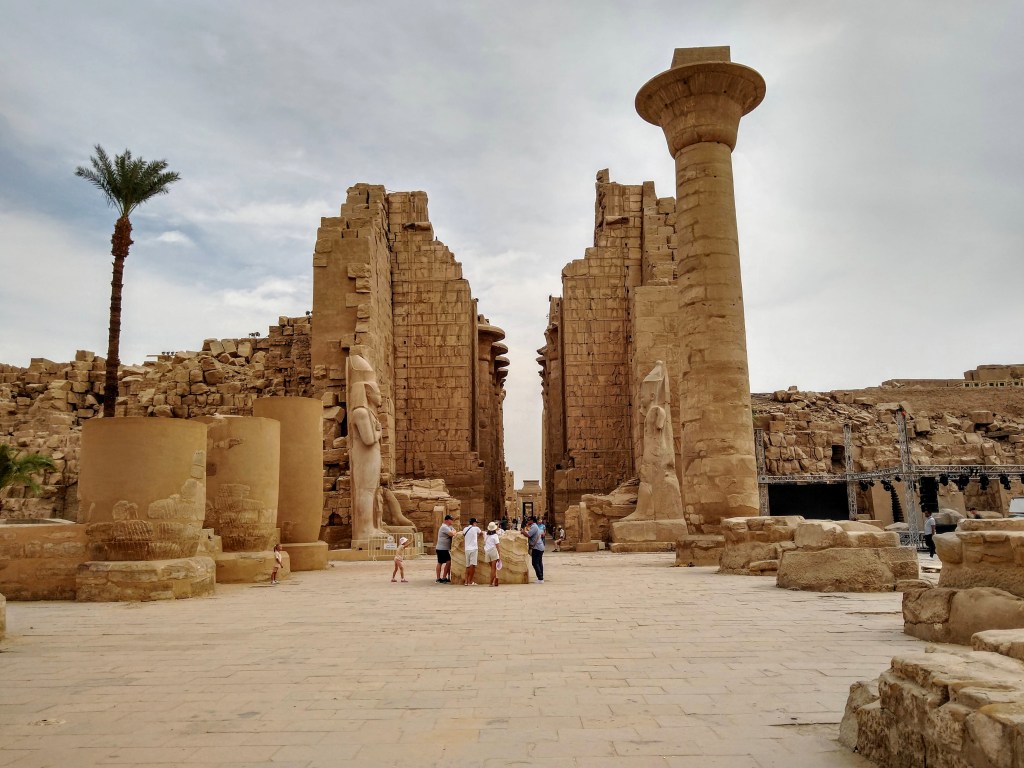
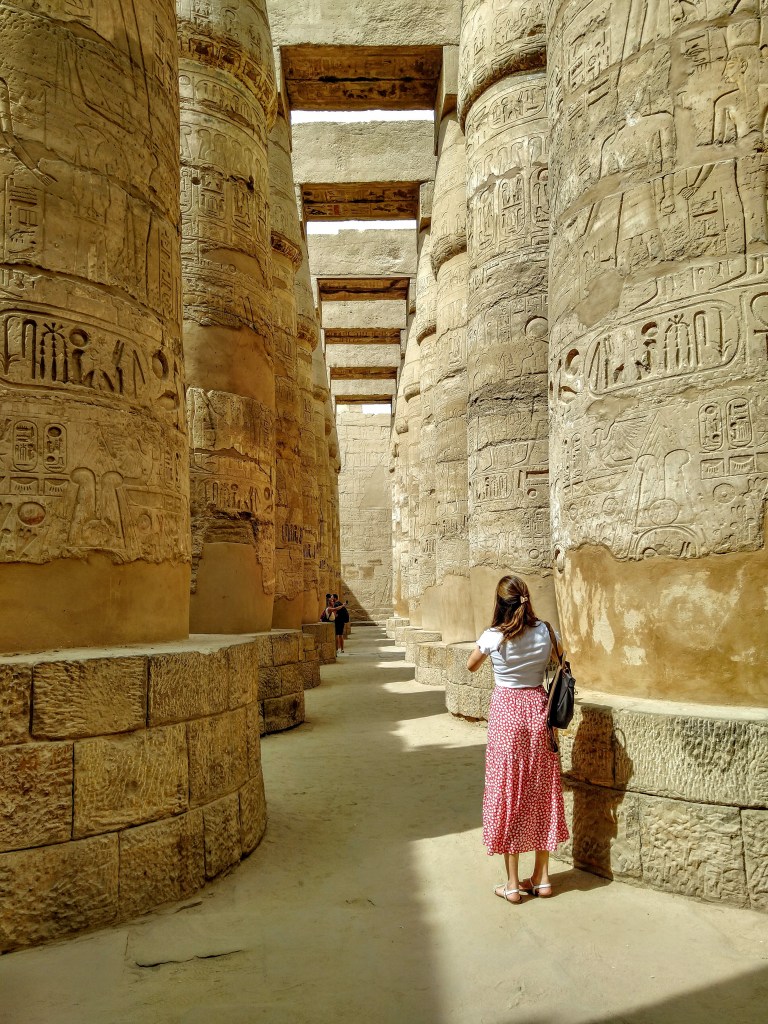
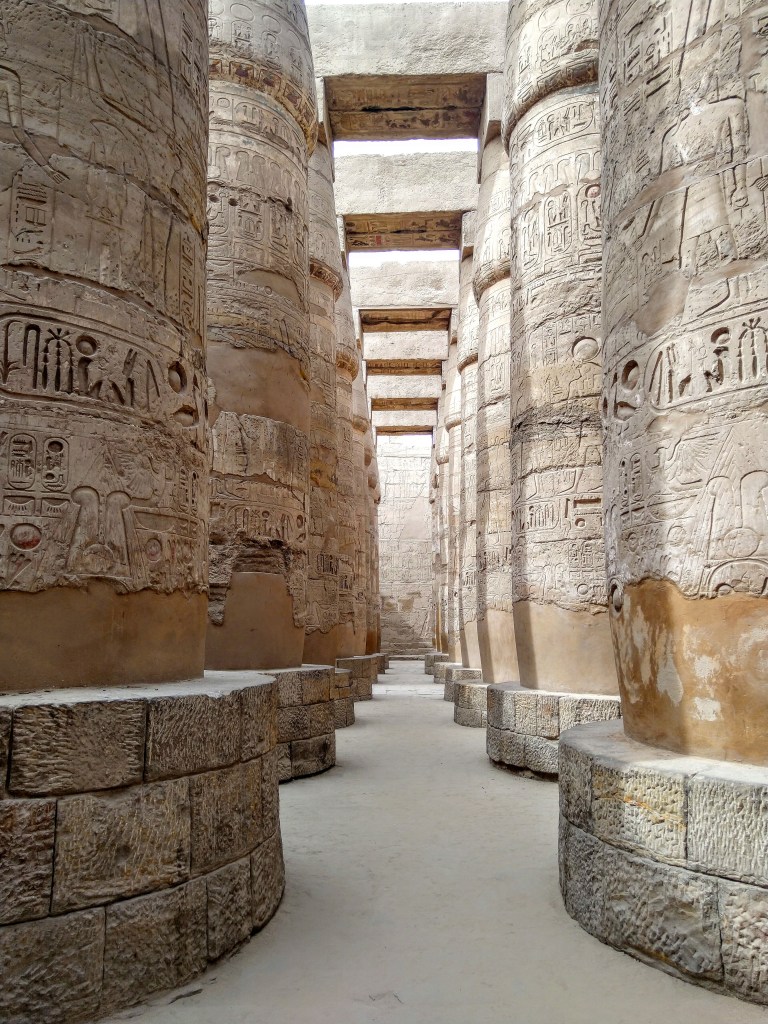
The most impressive feature of the temple is the hypostyle hall, built by Seti I & Ramses II, consisting of 135 columns, some towering 21m high. Each of these columns was painted in bright decorative colours and there is work being done to remove the dust and sediment which is masking the artwork. Queen Hatshepsut also had two of the largest obelisks ever built erected at the temple entrance.
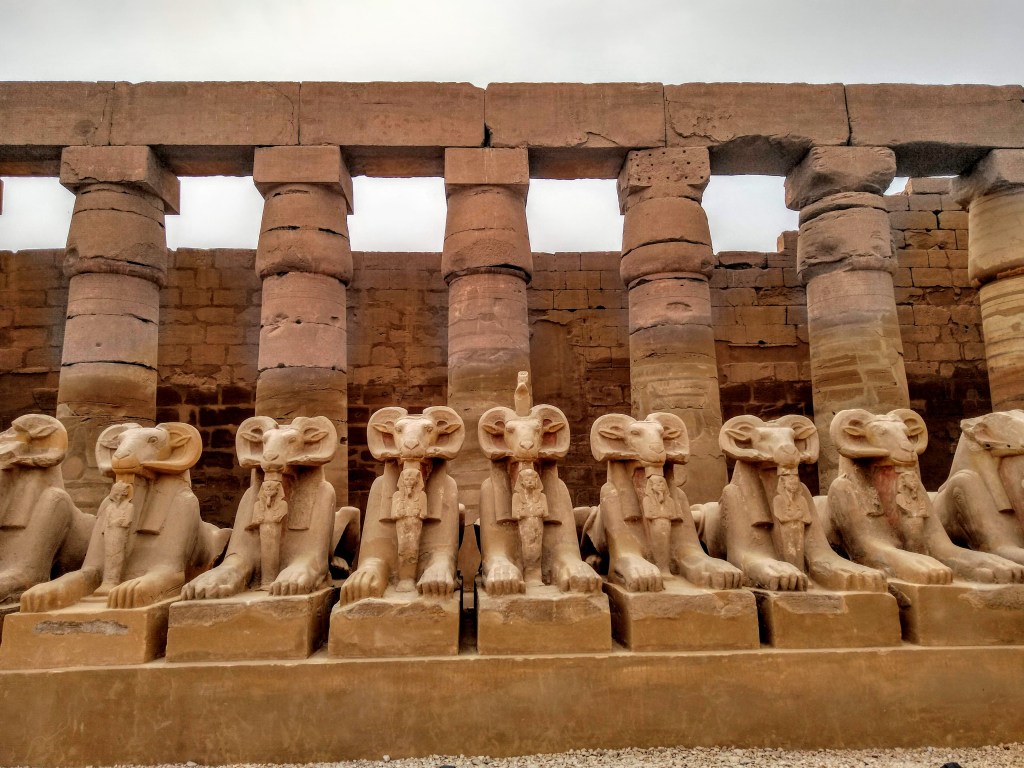
The avenue of ram-headed sphinxes which leads up to the first Pylon is also noteworthy, and there is a huge reconstruction project underway to rebuild this avenue, which once stretched the whole 3km from Karnak Temple through to Luxor Temple.
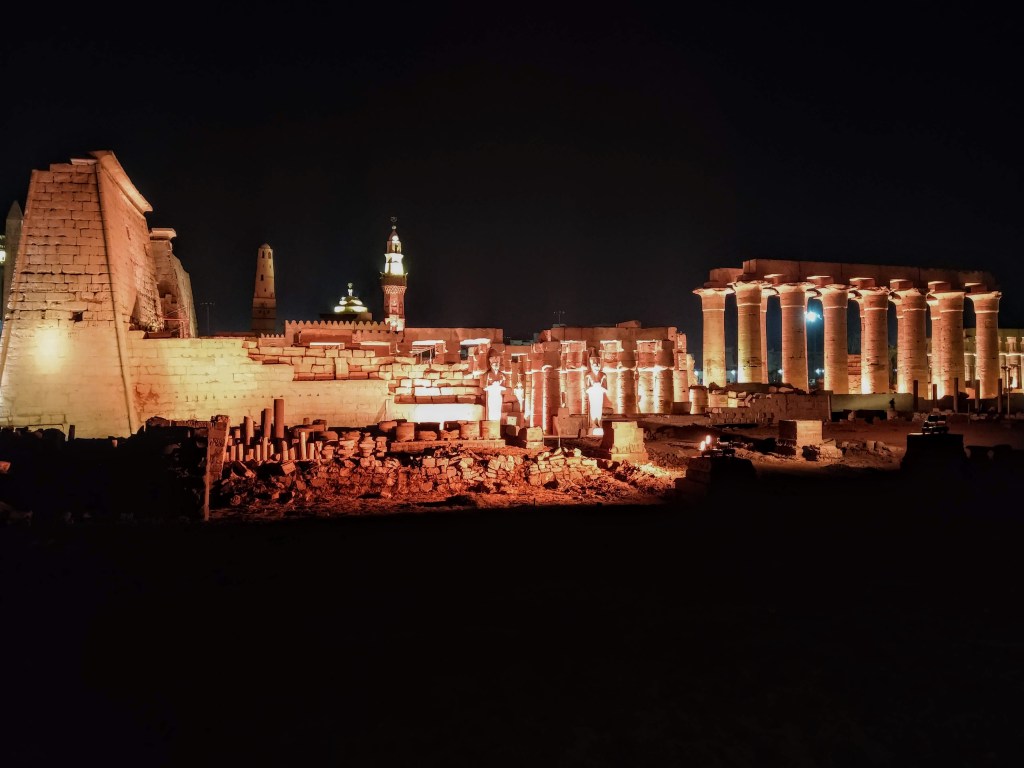
Spend the afternoon relaxing at `your hotel before heading out in the evening to Luxor Temple. Luxor Temple is lit up at night, making it very atmospheric to visit in the evenings as opposed to the afternoon. We went in the afternoon, hoping we could return with the same ticket at night, which we found not to be the case, so I would recommend waiting until the evening.
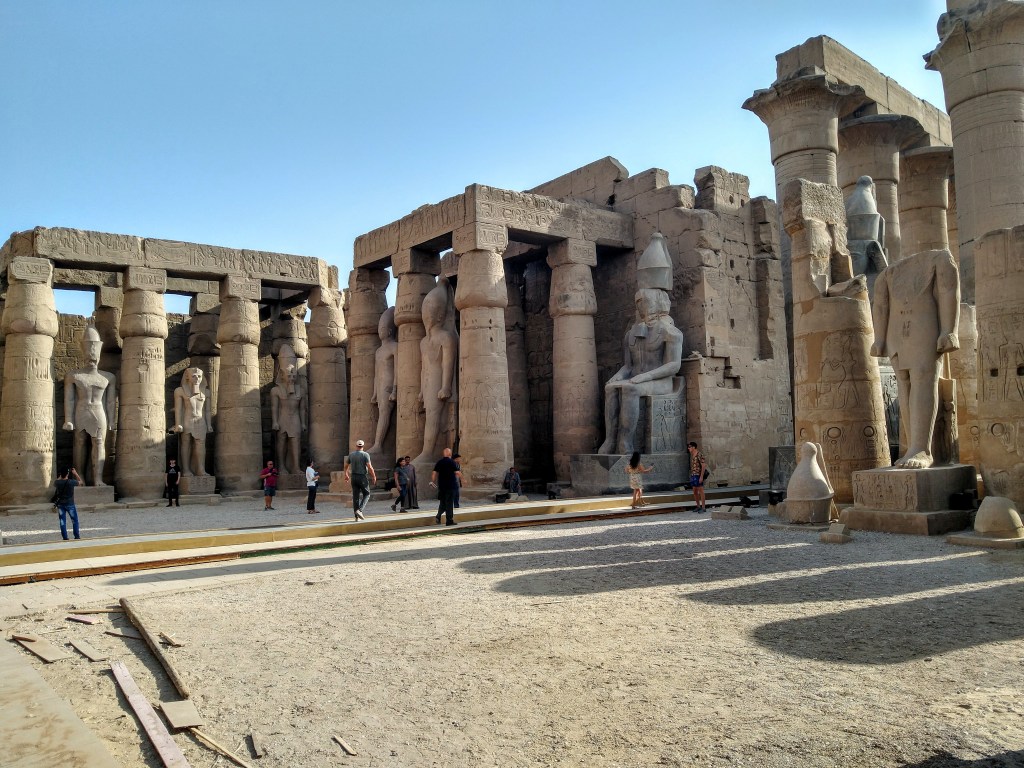
Construction was begun by Amenhotep III in 1400BC and continued throughout several Pharaoh’s reign, as Tutankhamun, Horemheb and Ramses II all added to further construction in front of the original court of Amenhotep. It is easy to see the design of the temple changing from the rear to the front as each Pharoah added their own style. Ramses II added two 25m pink granite obelisks at the entrance, one of which is now in Place de la Concorde in Paris.
Day 3 – Luxor’s West Bank
For the West Bank you will need to have private transport to access the main sites of the Valley of the Kings and the Temple of Hatshepsut. Having a guide with their own transport will solve this problem, but if you don’t want to fork out for a guide, you can book a taxi to spend the day with you.
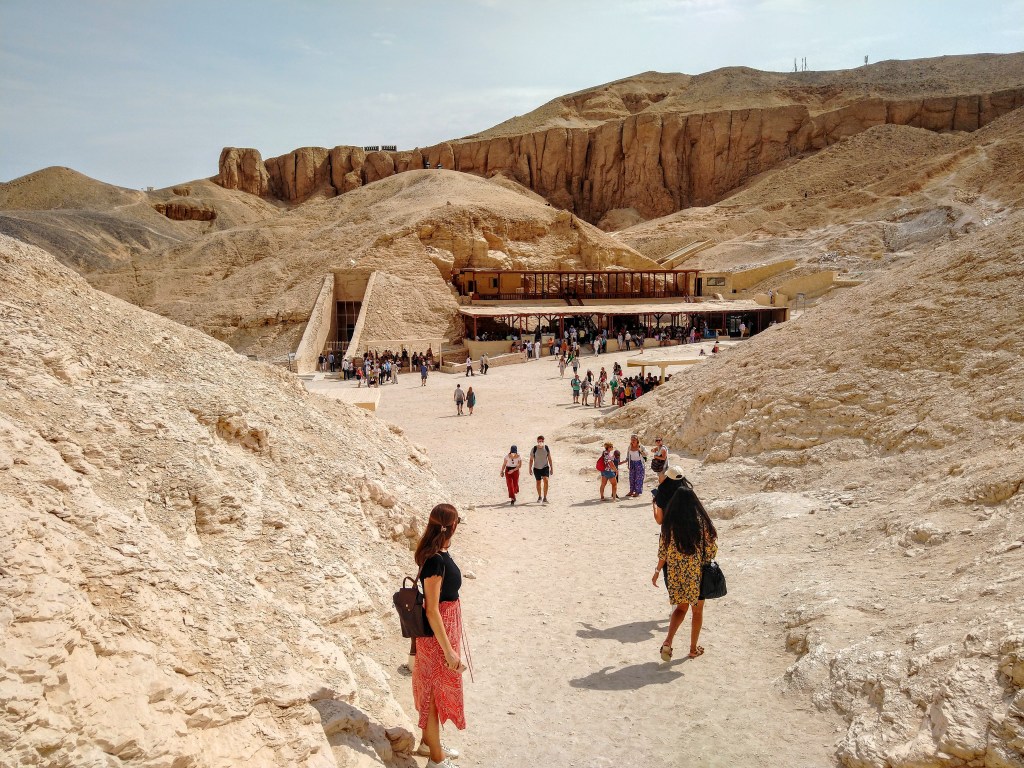
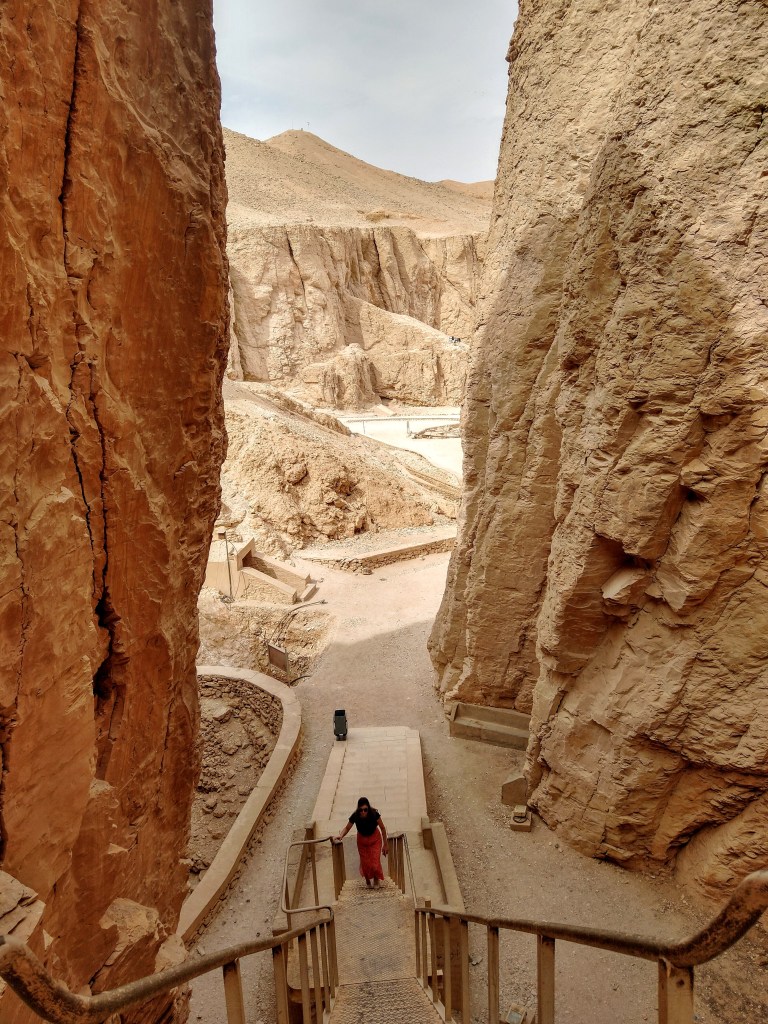
A guide is useful for the Valley of the Kings because each tomb has a significant number of scenes carved into their walls, which would most likely have gone over our head if our guide hadn’t told us what to look out for and explained them in advance. It is worth noting however, that guides are not allowed in the tombs themselves, as the tombs would get quite congested and noisy with many guides in there at once. Just make sure to ask what to look out for before going into each tomb.
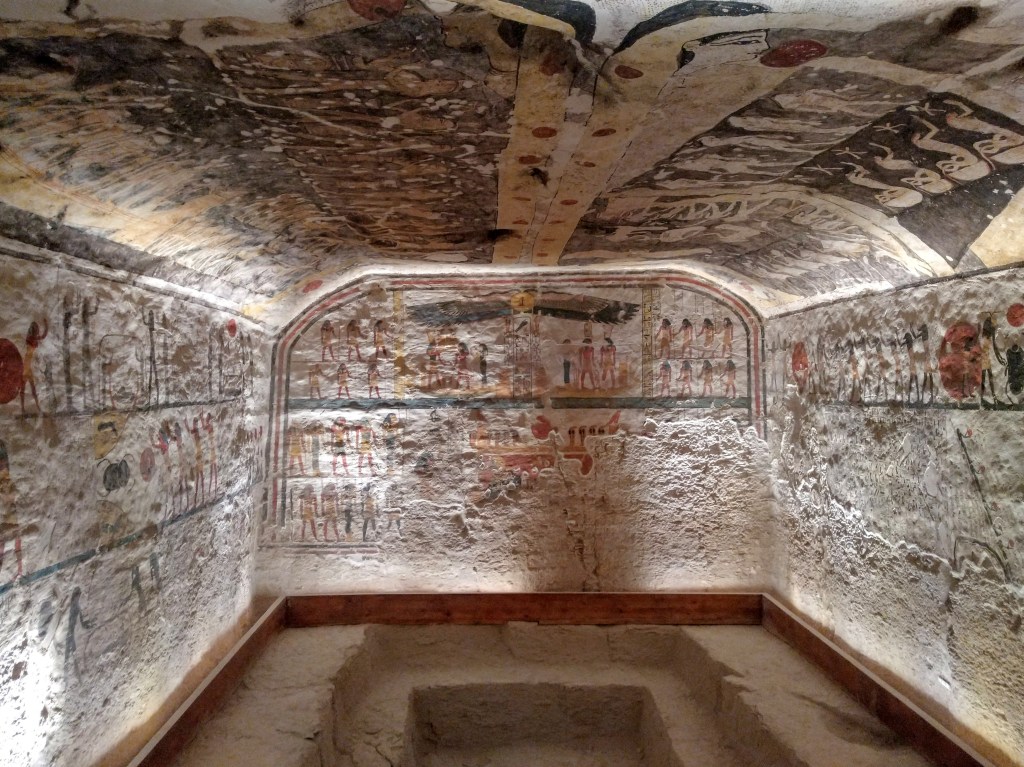
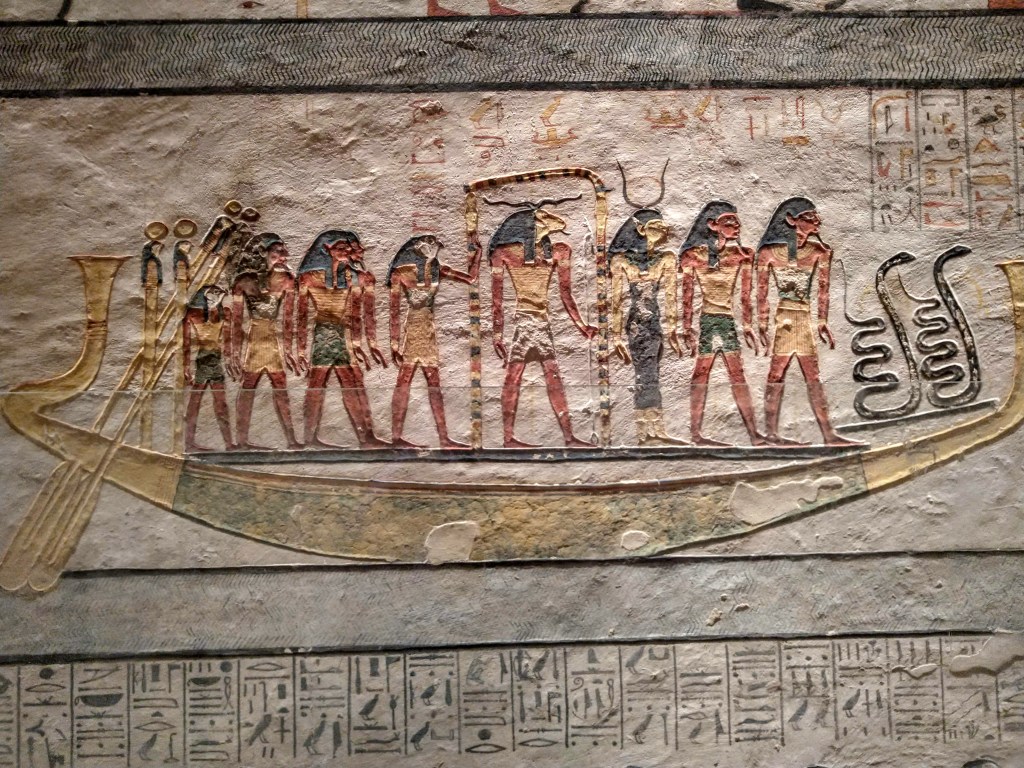
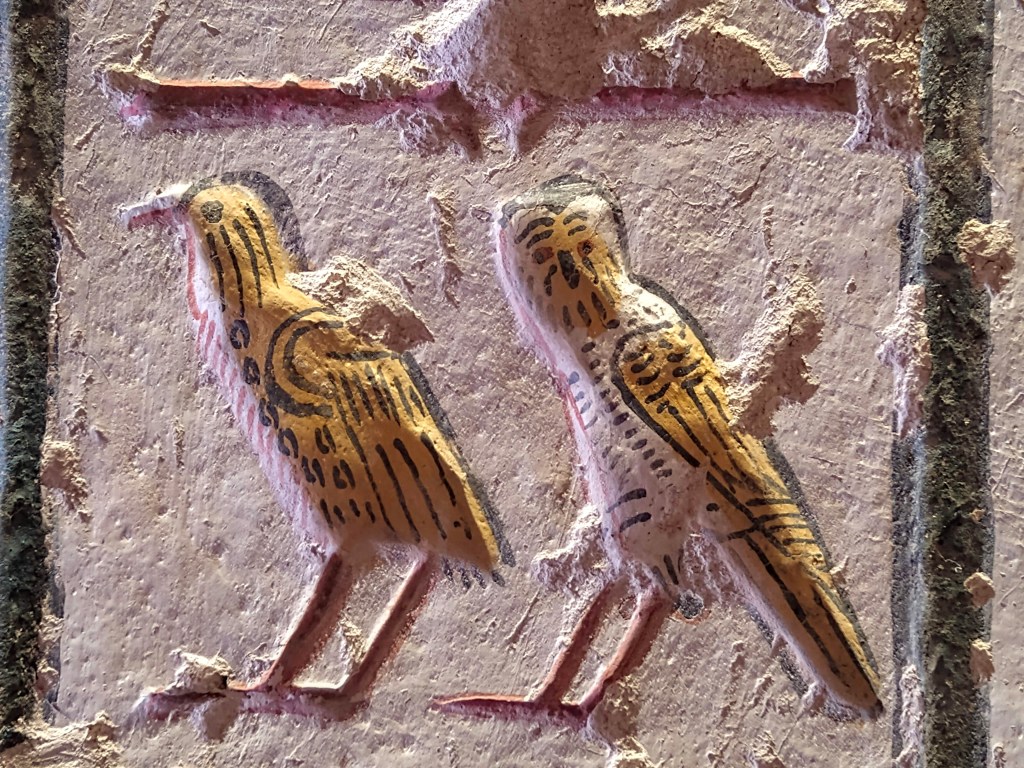
Make sure to get up very early to get to the Valley of the Kings before the crowds arrive. If you don’t get there early enough, we would recommend visiting the Temple of Hatshepsut and return to the Valley of the King’s once the crowds have been and gone.
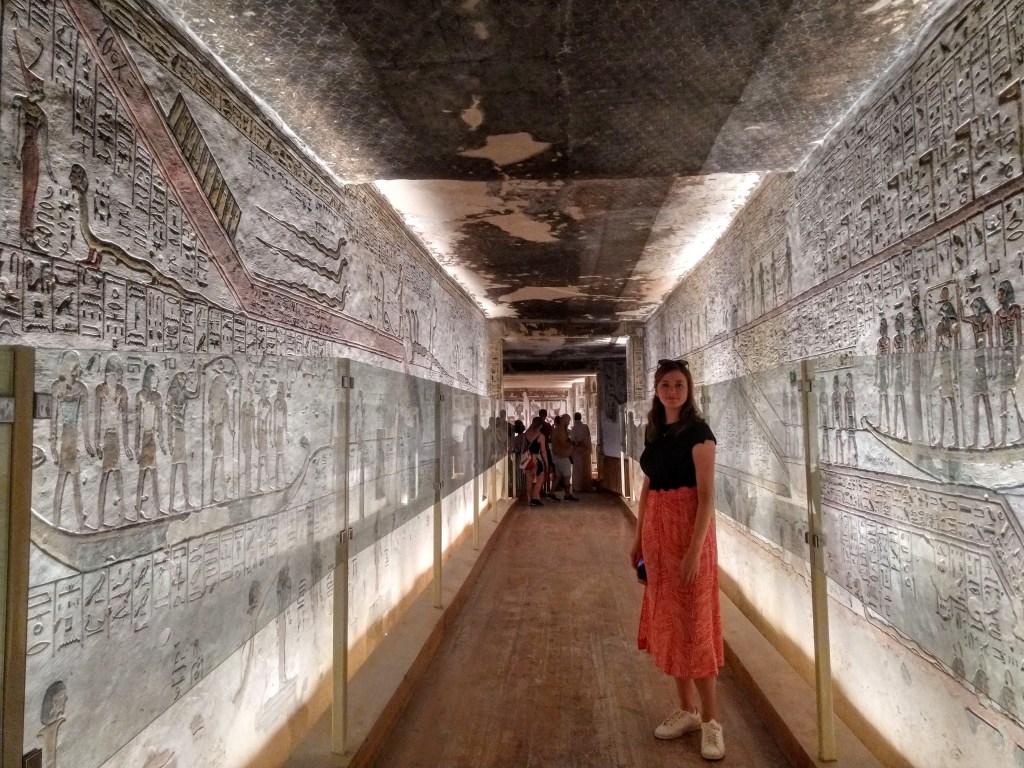
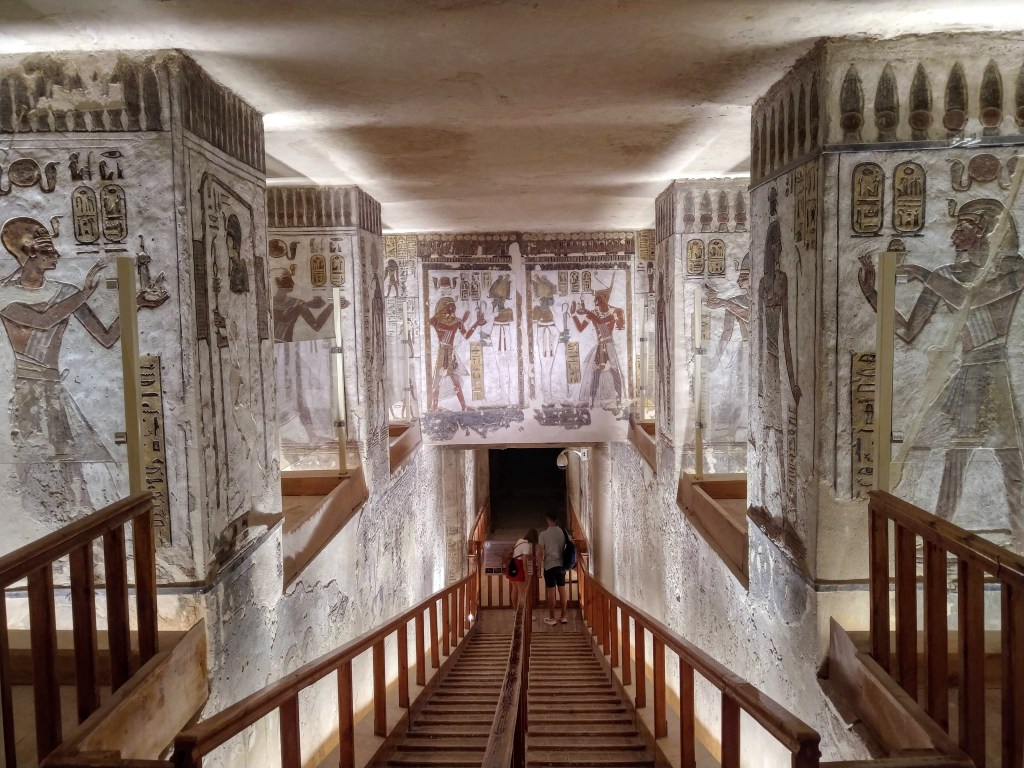
Included in the entrance ticket is entrance to three tombs from a short selection. Guards at the entrance to the tombs will hole punch the ticket to show you have used it. We would recommend Ramses IX, Ramses III and Merenptah or Tuthmosis III which is very well hidden in a high-up gully at the end of the valley (unfortunately it was closed when we visited).
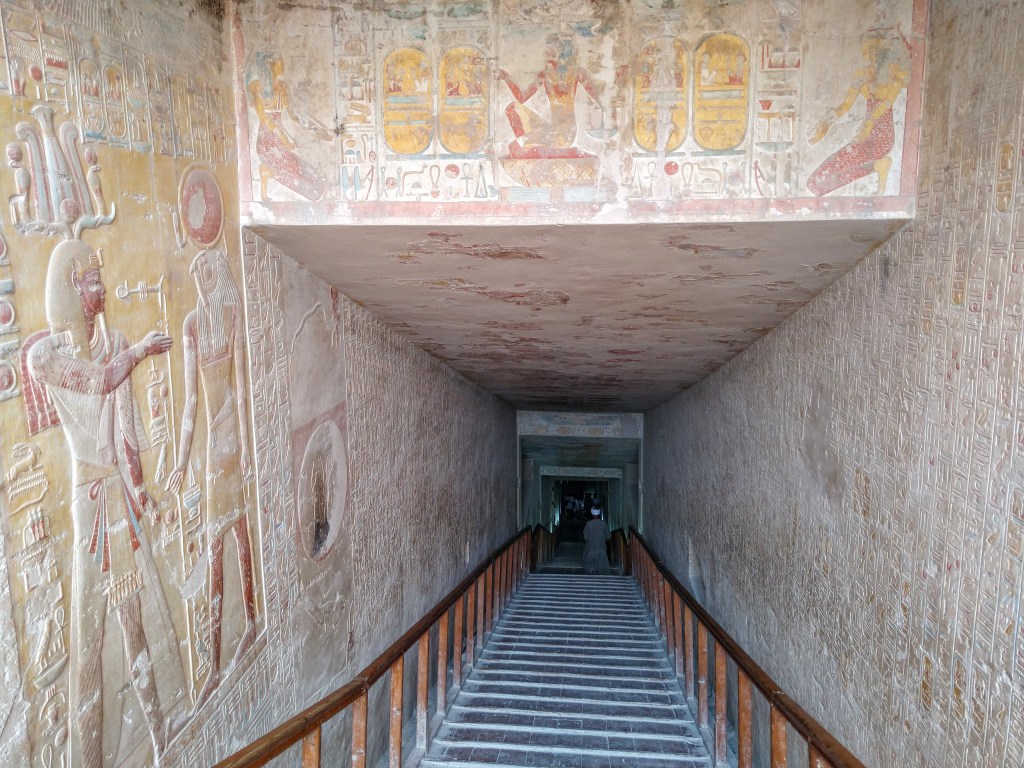
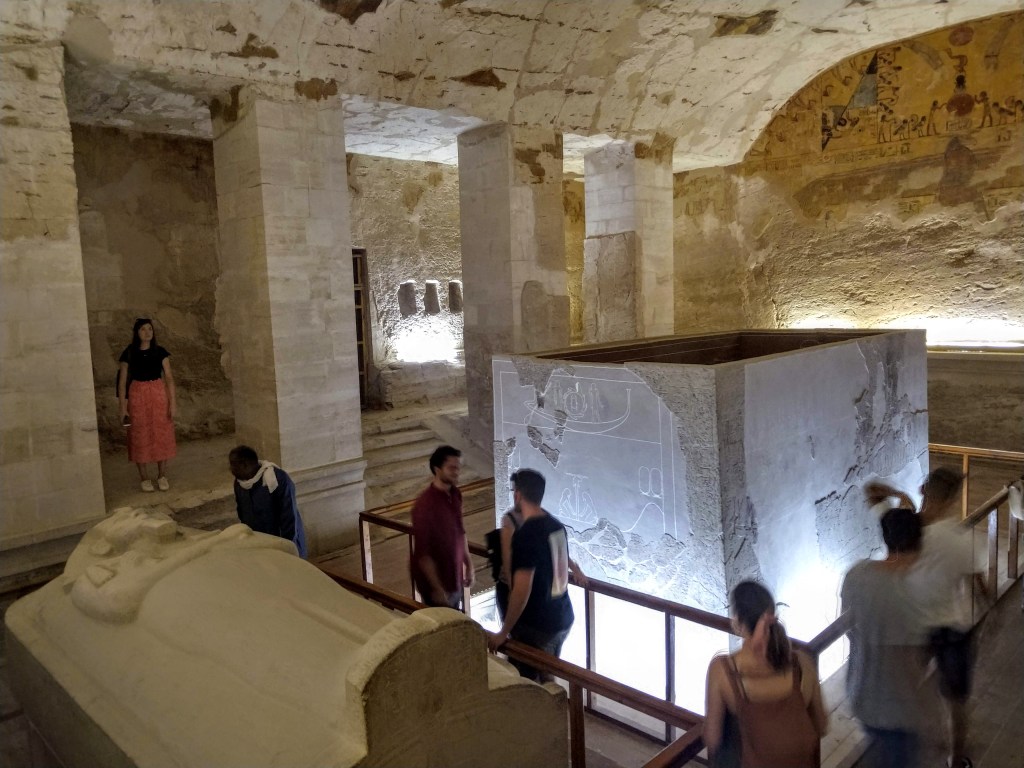
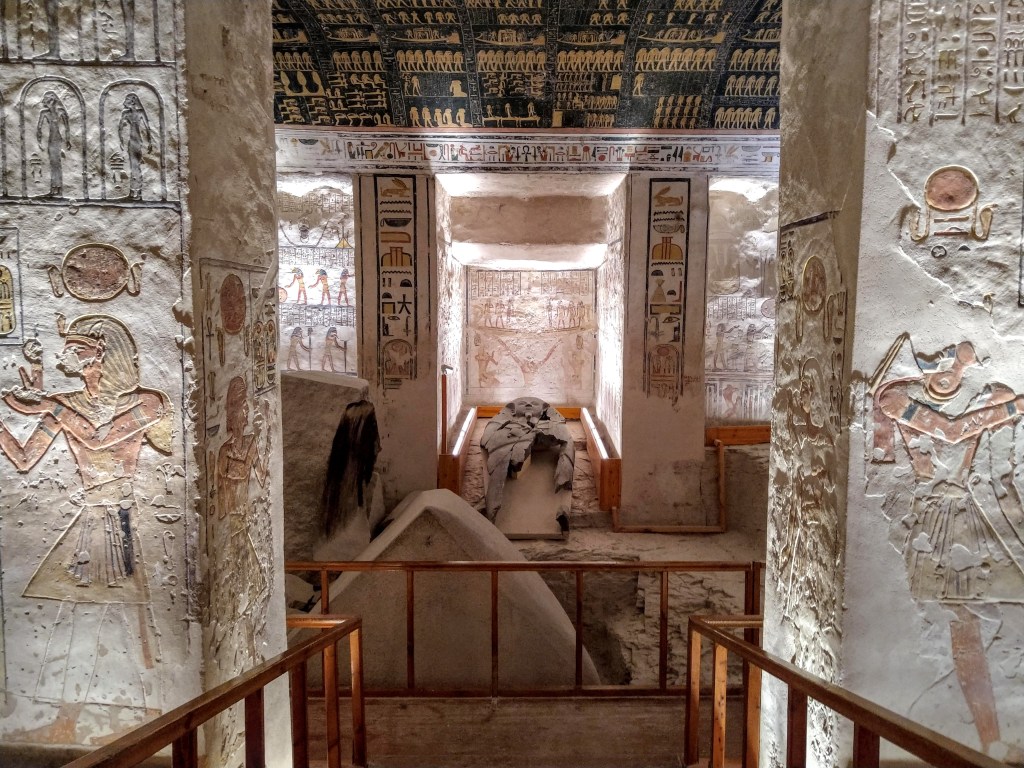
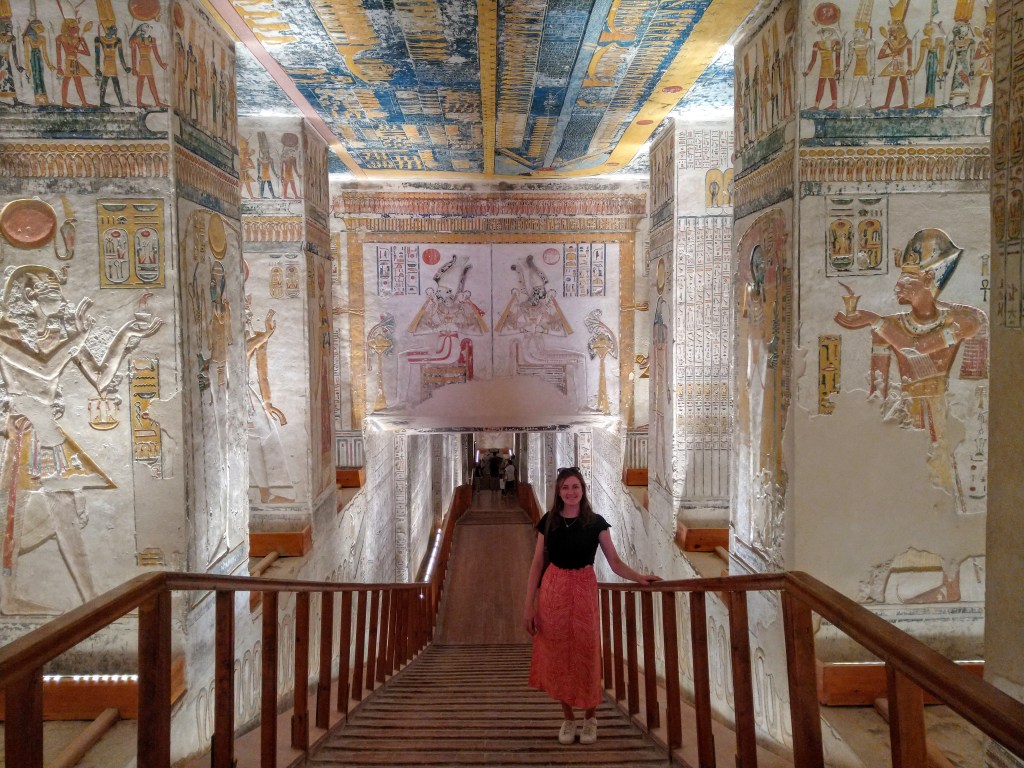
You can also buy additional entrance tickets to some of the other more impressive tombs, we opted for Ramses V & VI (a joint tomb) which was incredibly ornate and well-preserved. Entrance to these tombs can be expensive however, Seti I’s tomb can set you back £50. We found 4 tombs to be enough (took about 2 hours), but you could spend a lot of time (and a small fortune) visiting more.
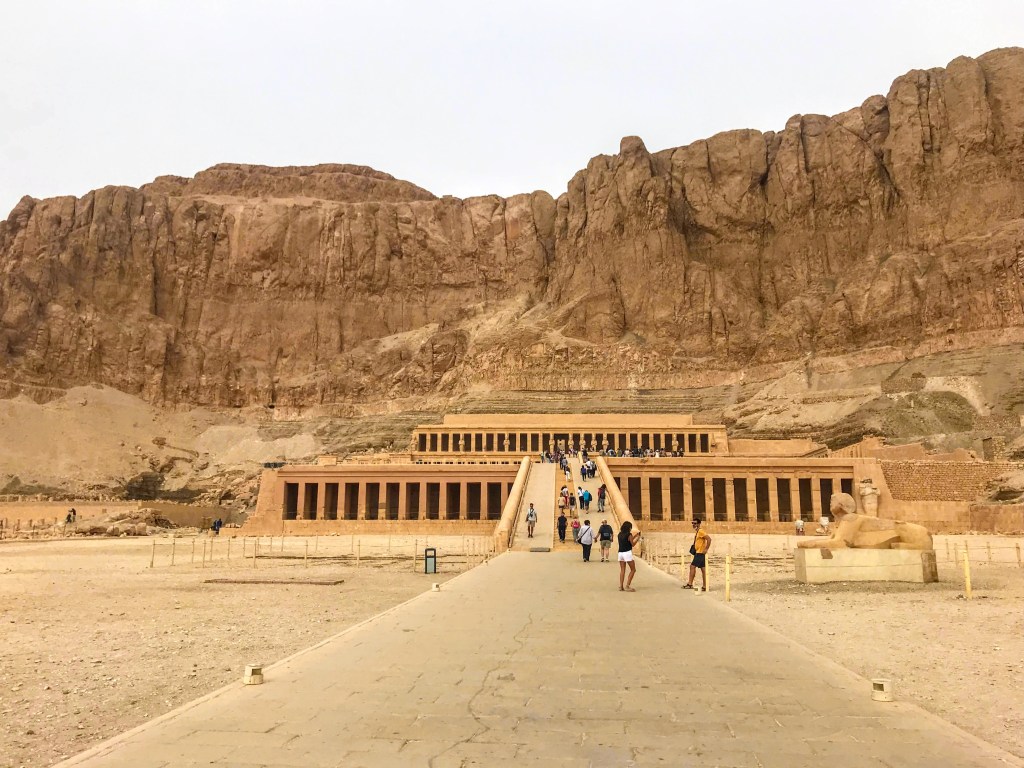
The Mortuary Temple of Hatshepsut is very much worth a visit, firstly because of its setting against the high cliffs above it and secondly because it is so different to the rest of the sites on the West Bank. This temple has interestingly been reconstructed from the blueprints found etched into the walls of the architect’s tomb.
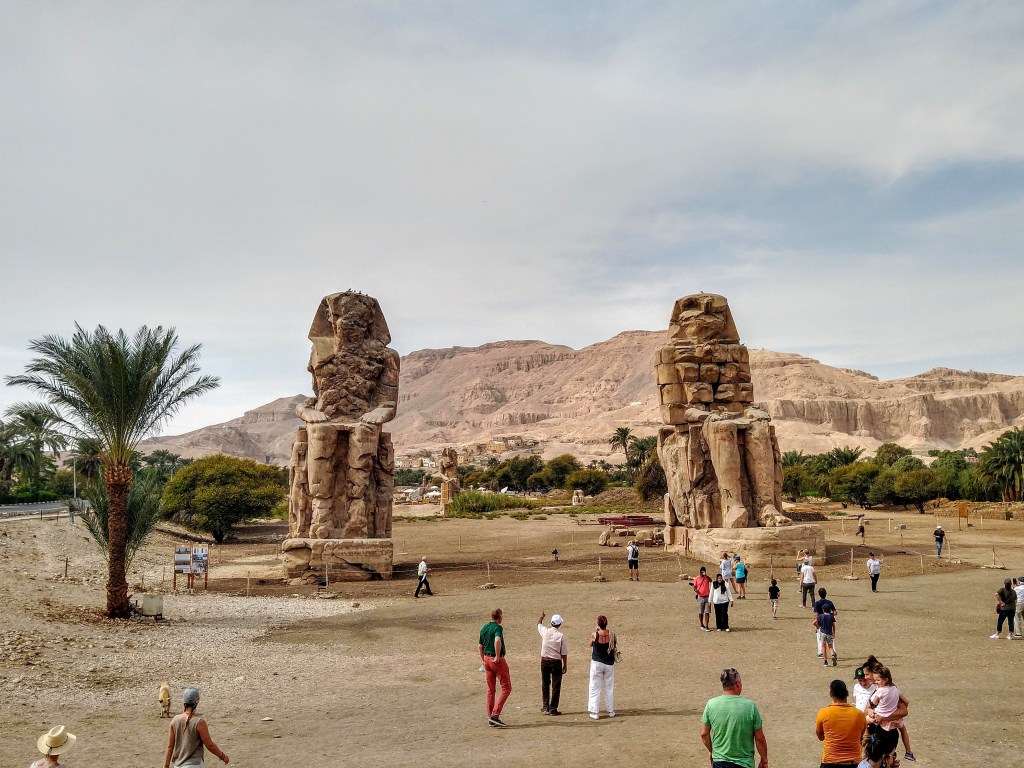
On the way back to your hotel, stop off at the Colossi of Memnon, two huge statues erected by Amenhotep III.
Day 4 – Nile Cruise, Esna
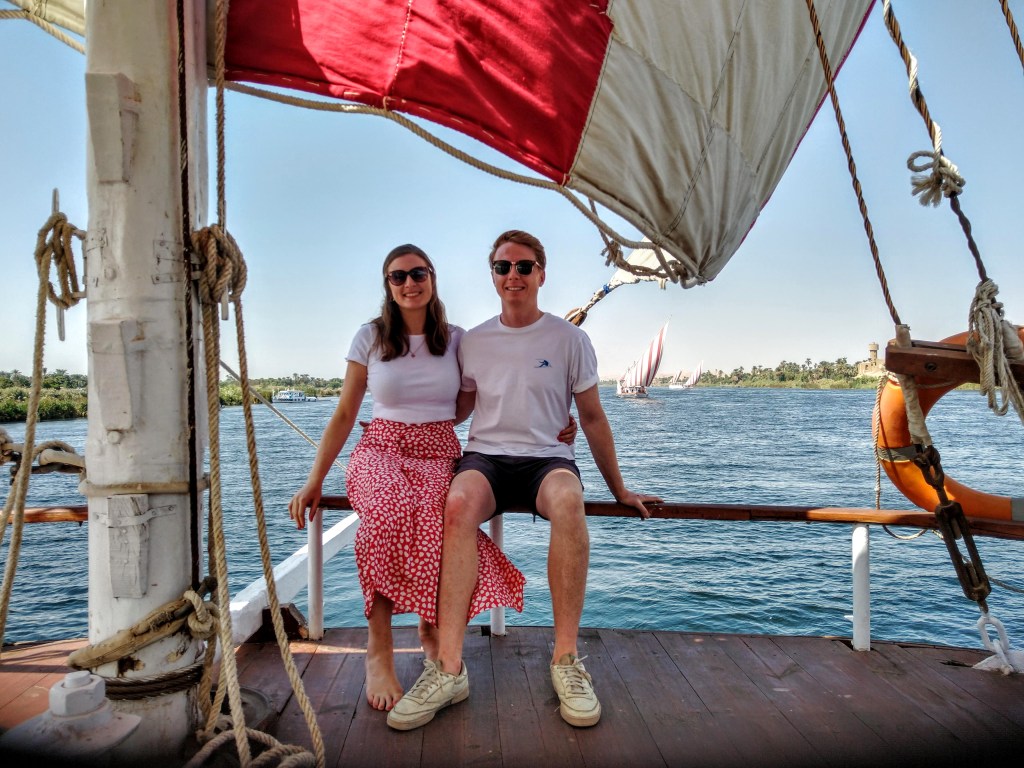
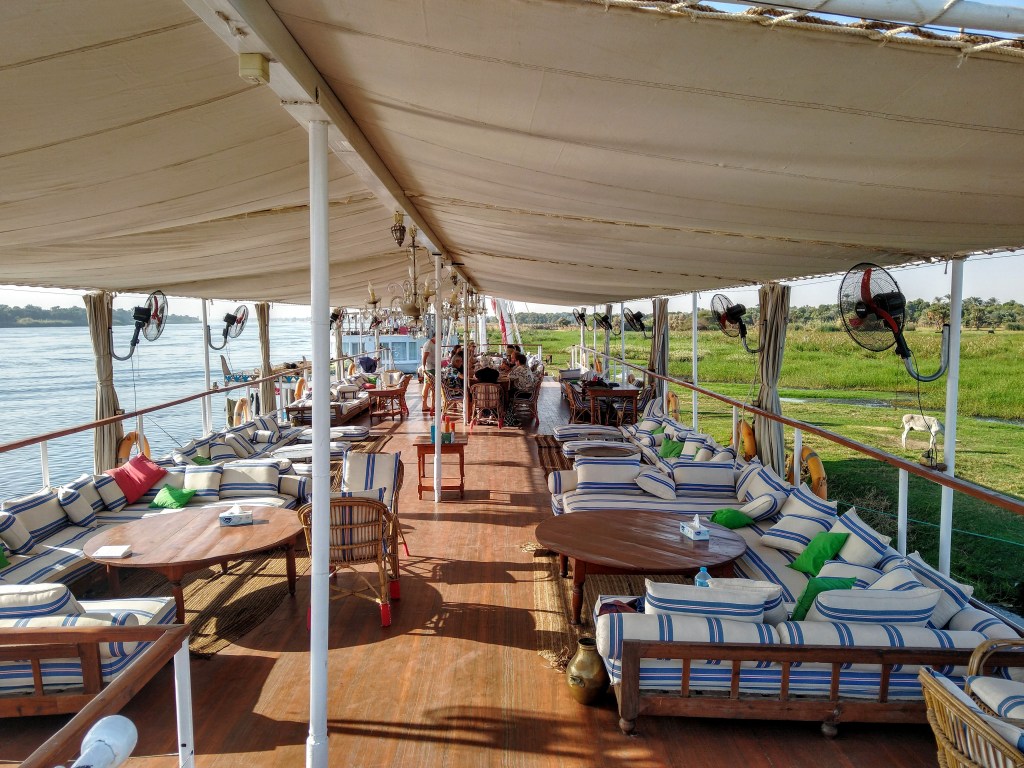
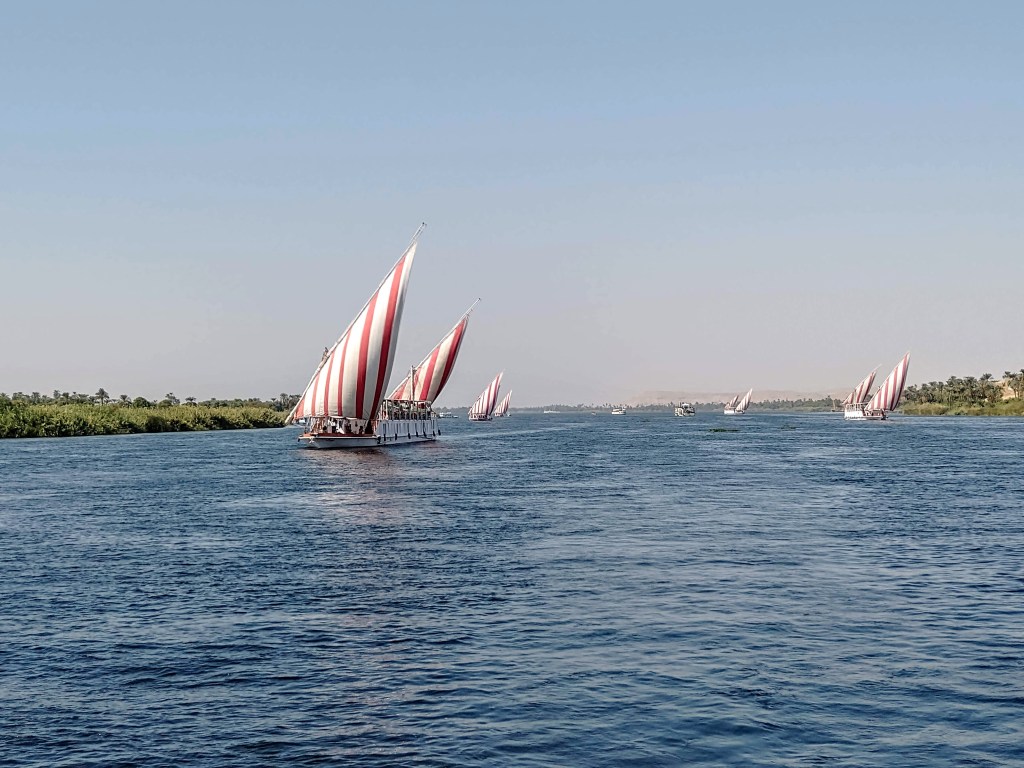
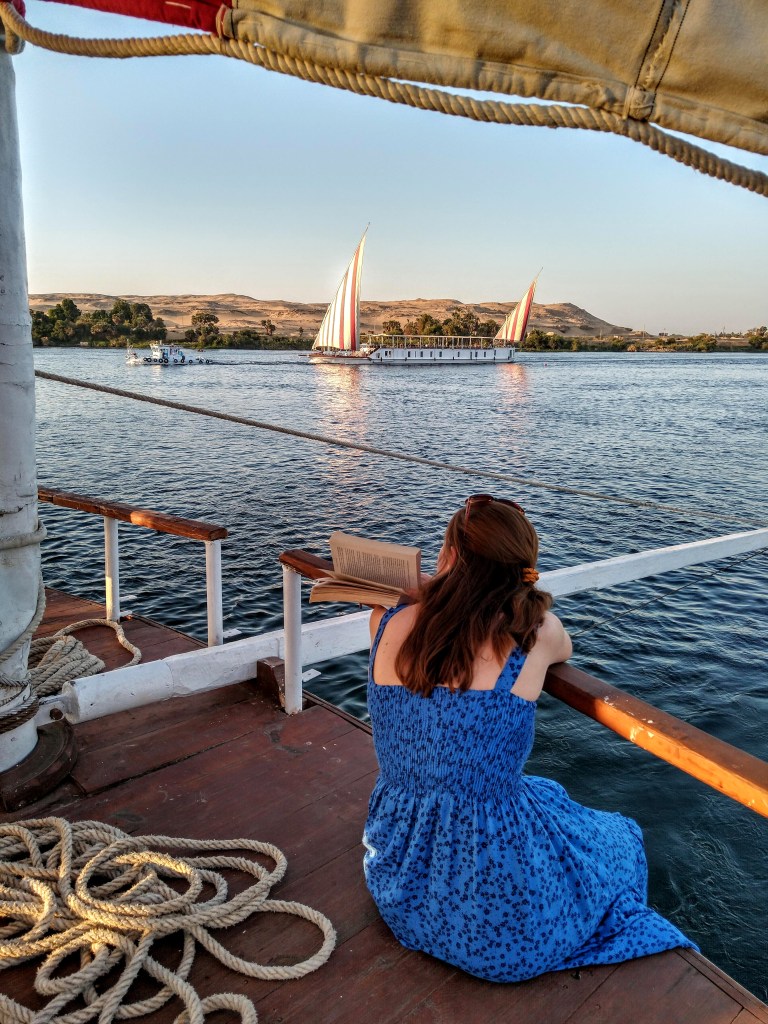
Nothing beats floating down the world’s largest river in a traditional Dahabiya sailing boat, stopping off at ancient temples, royal tombs and secluded swimming spots along the historic route from Luxor to Aswan.
Temple of Khnum, Esna
We chose a 5-day cruise run by Nour El Nil who sail a fleet of beautiful dahabiyas each week from Esna to Aswan. We would thoroughly recommend this over one of the shorter cruises offered on the bigger boats, as we were able to stop off at some very interesting and less touristy sites, meet local people and properly take in the tranquil beauty of the Nile without feeling like we were being herded around the whole time.

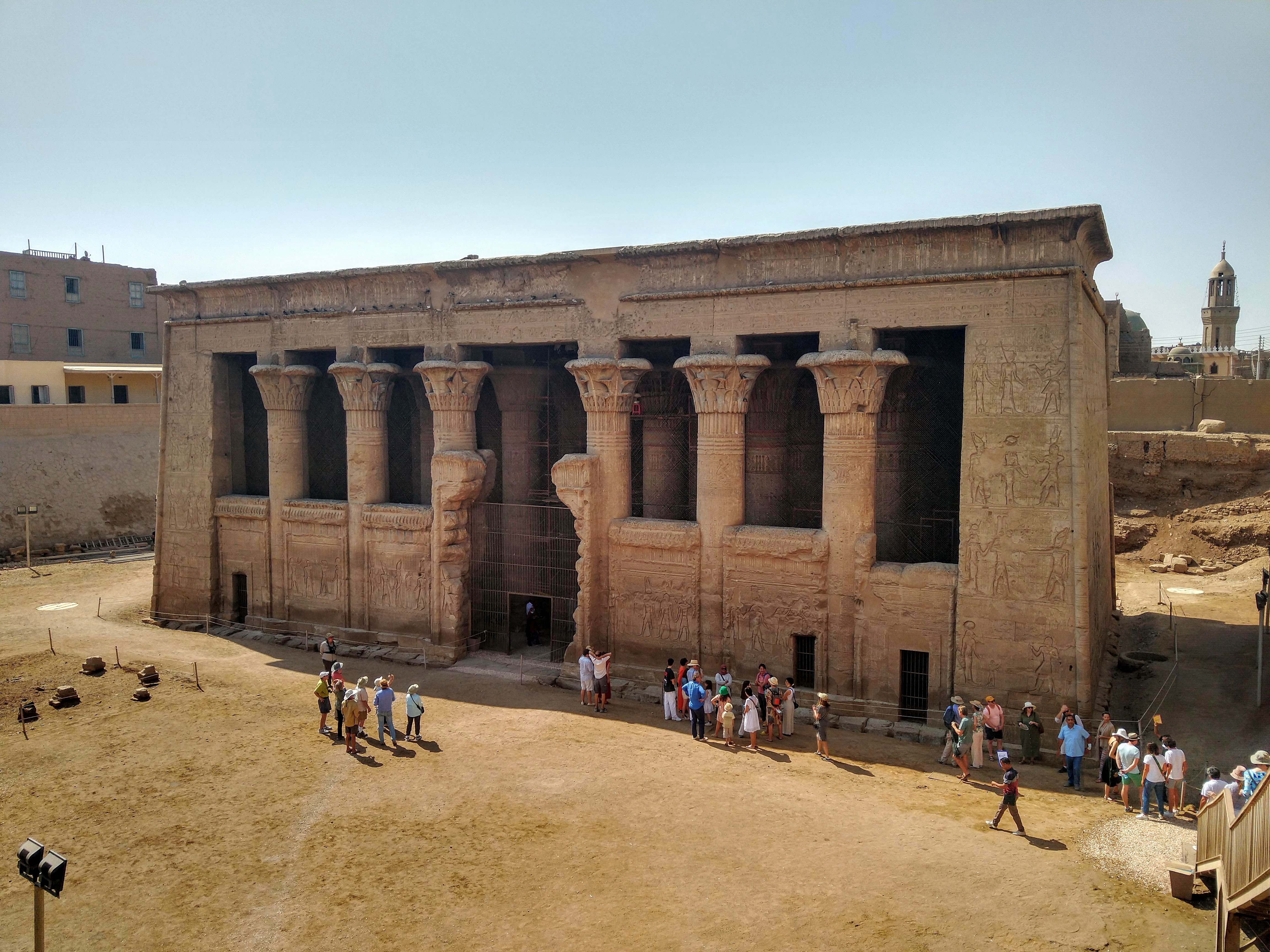
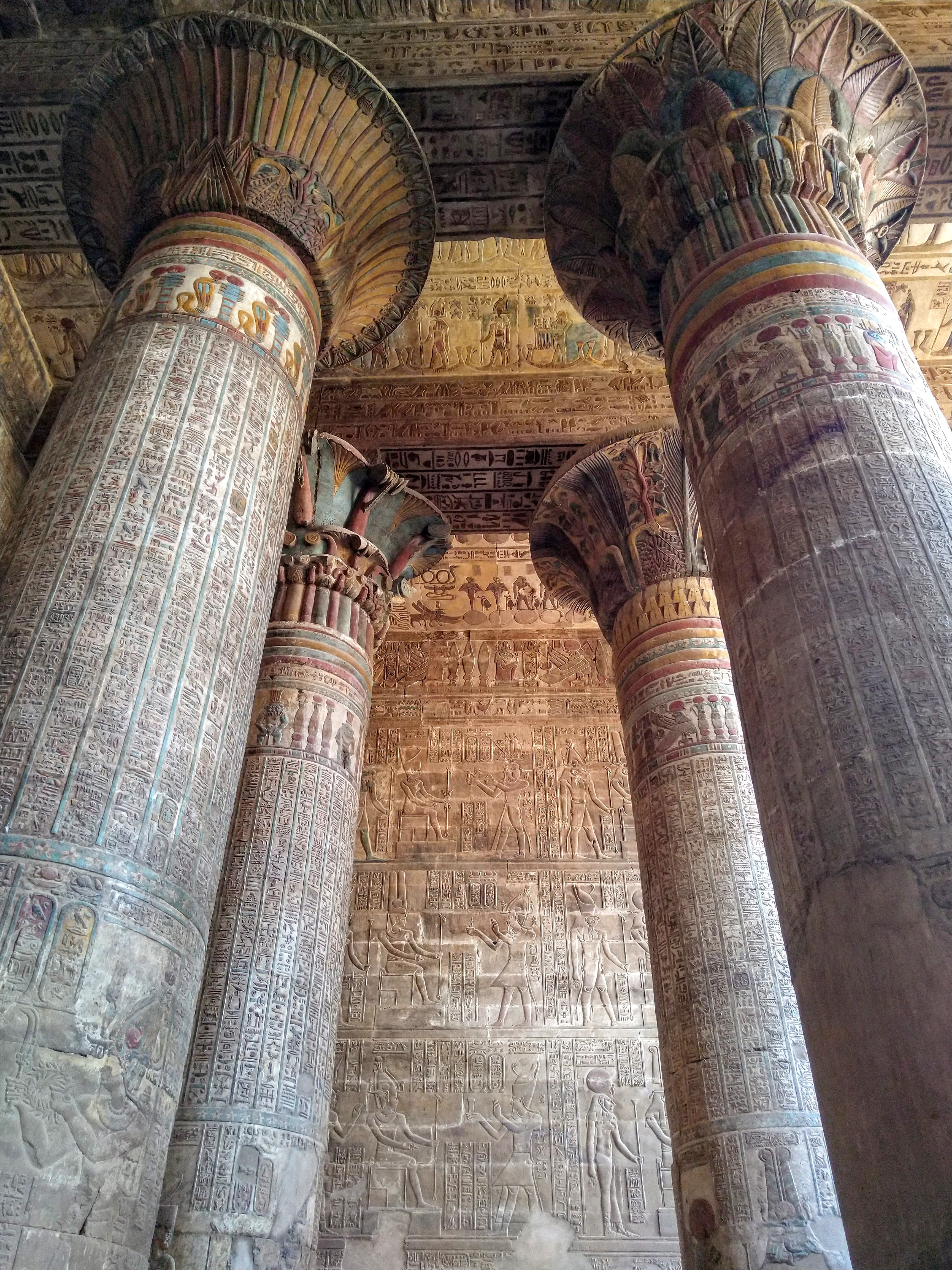
We were picked up from our hotel by Nour El Nil in a minibus and transferred to Esna 33 miles further down the river. Here we were given a guided tour of the small yet colourfully decorated Temple of Khnum which sits 9m below street level. Next we boarded our Dahabiya and set sail. If you’re lucky, they might let you take the tiller and drive it!
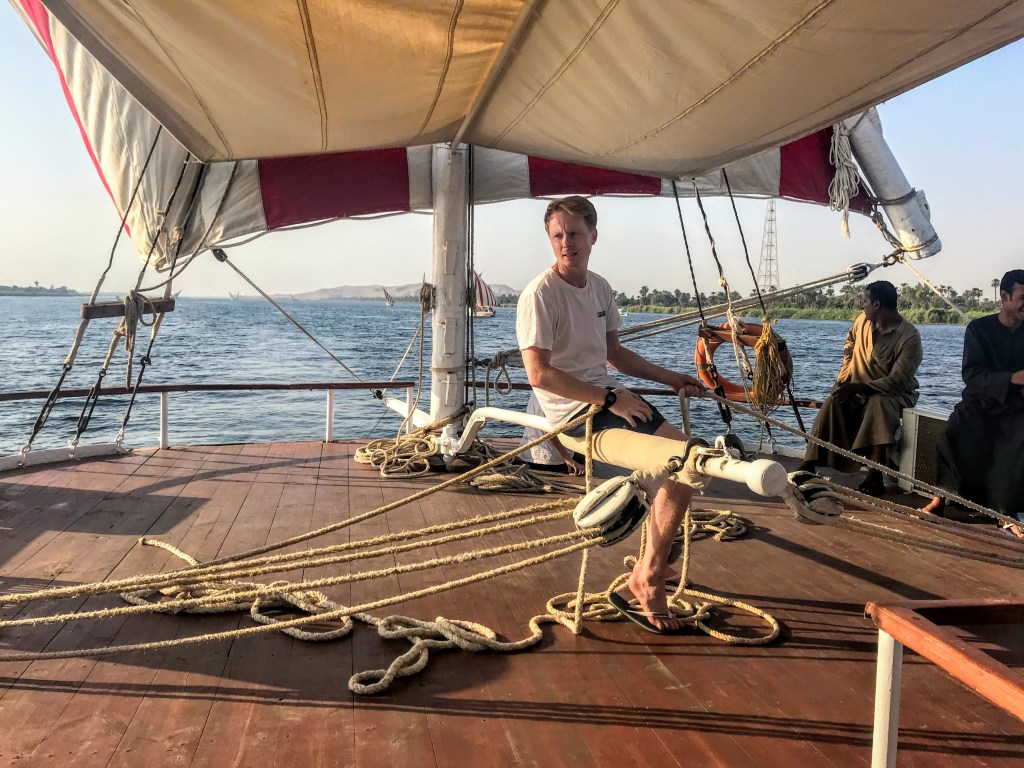
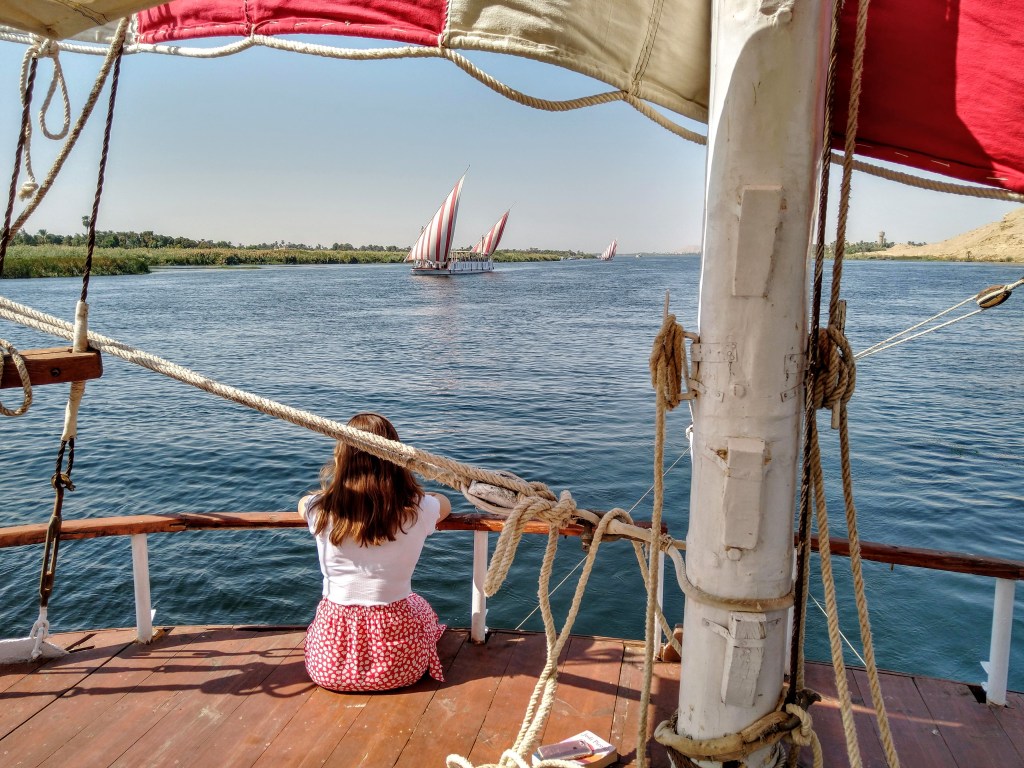
In the evening we moored up on the bank and went for a walk to a village, where we were invited into a house by a local family and shown around their traditional home.
Day 5 – Nile Cruise, El Kab & Edfu
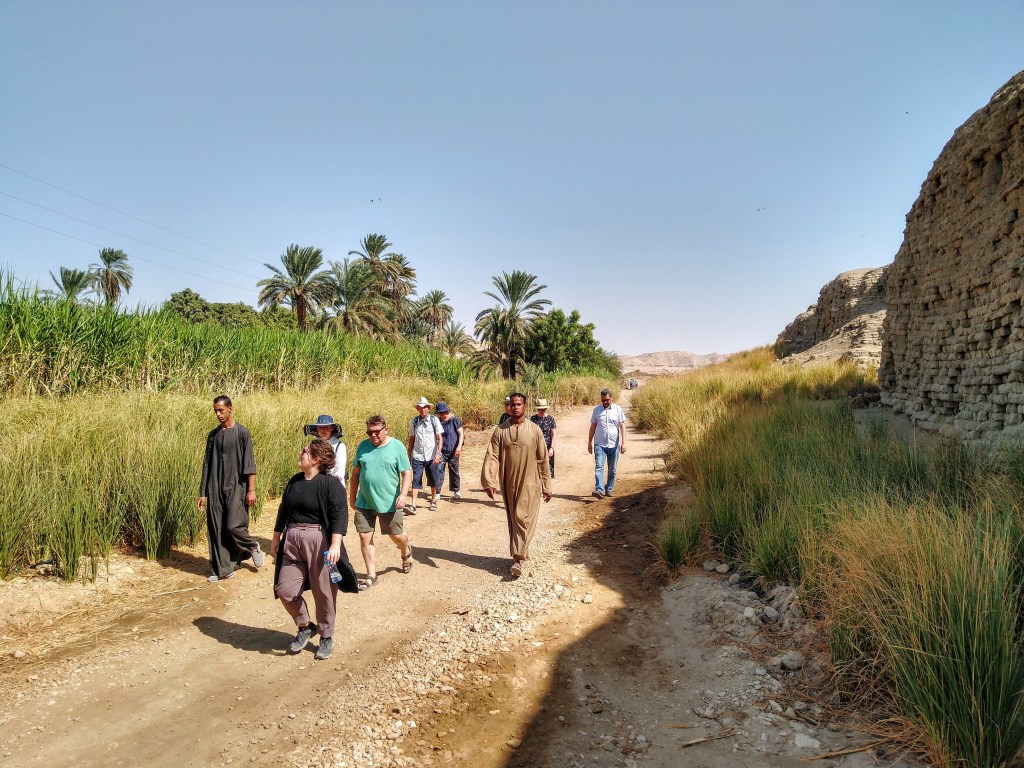
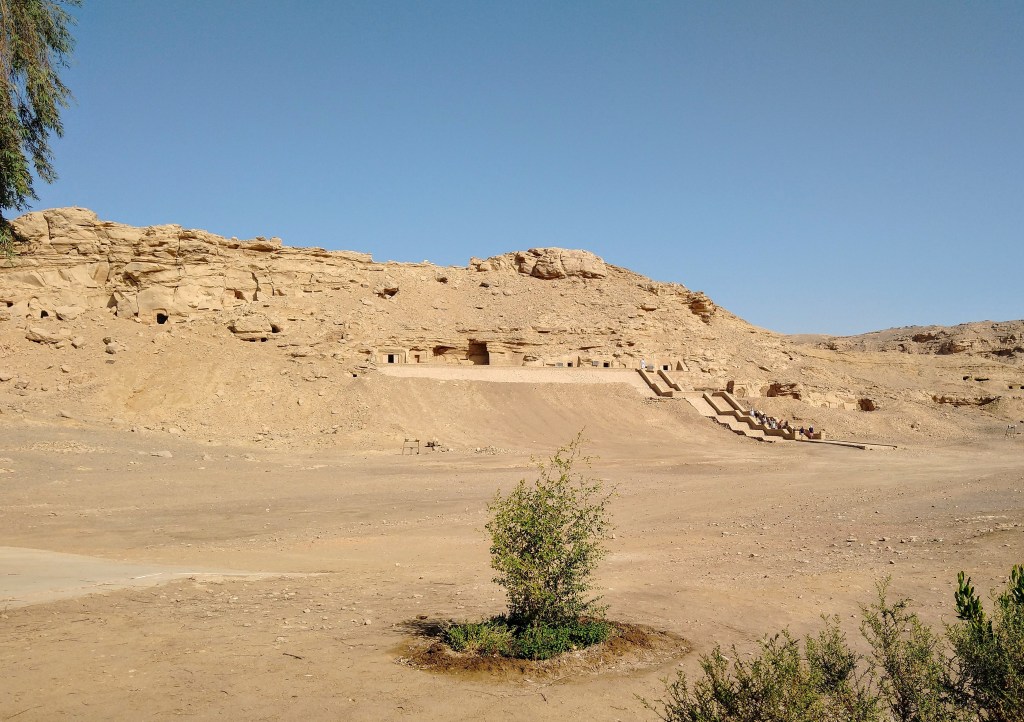
In the morning we visited El Kab where there were some interesting Nobles’ Tombs carved into the rock. The tombs were a short walk from the boat through a little fishing village and the surrounding countryside.
In the afternoon we visited Edfu Temple, dedicated to the god Horus. Built by Alexander the Great (237BC-57BC) in the traditional Egyptian style, this temple is one of the best-preserved temples in all of Egypt. From the boat we were picked in pairs by a group of horse and carriages, and we trotted through the town to the temple.
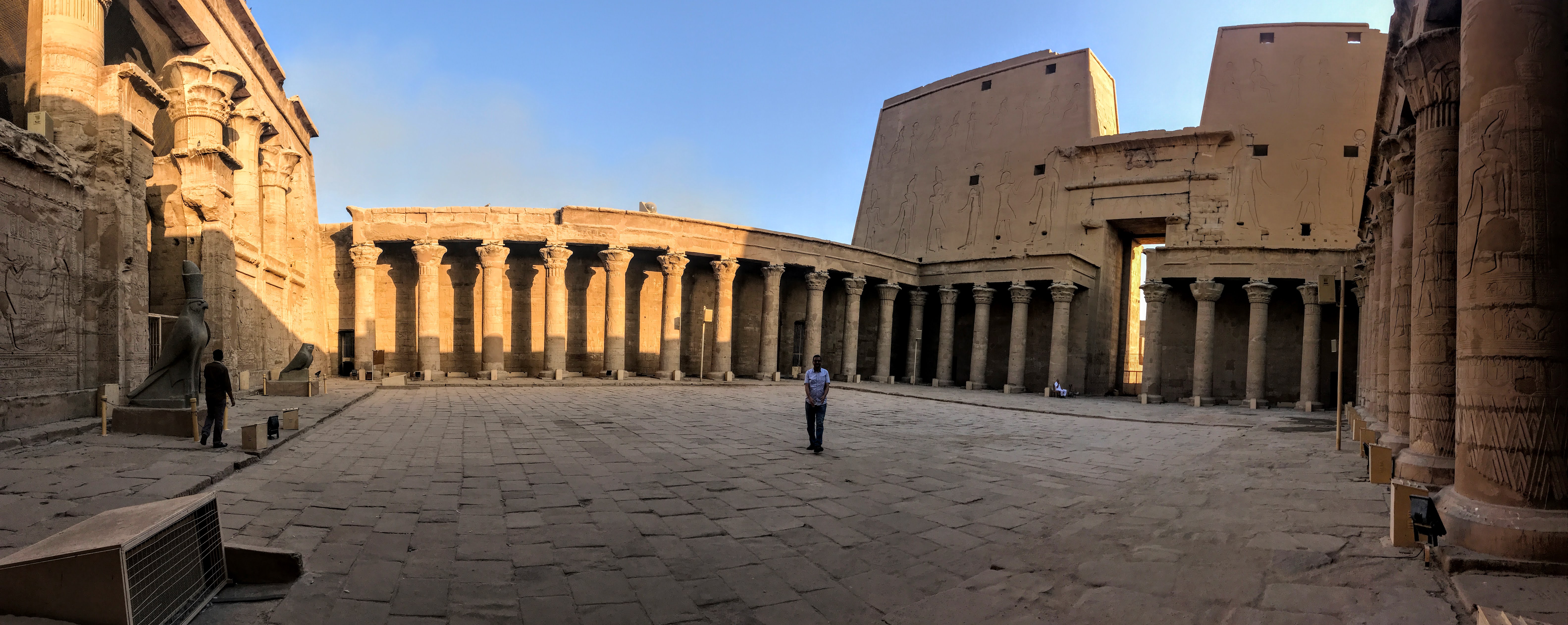
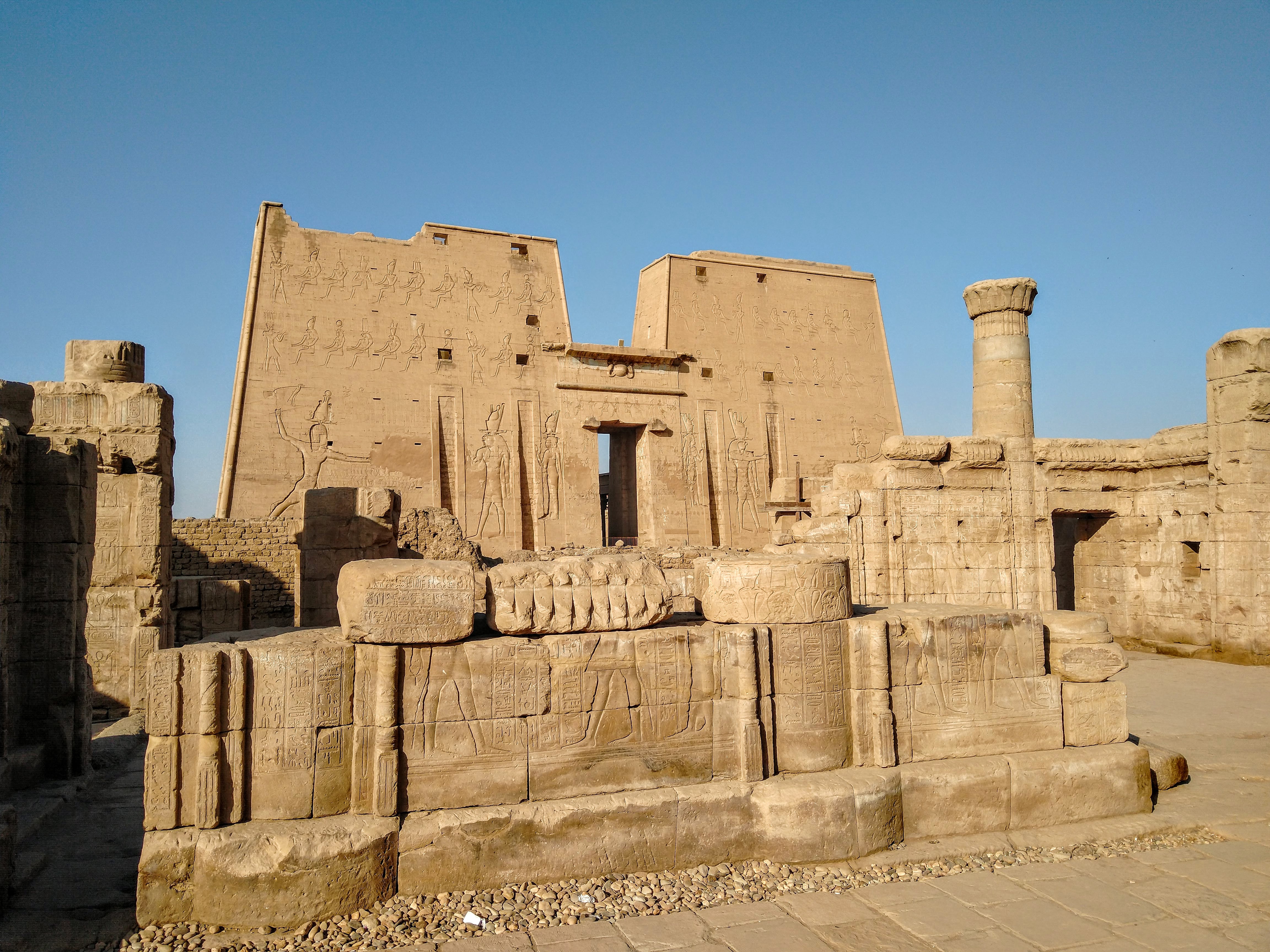
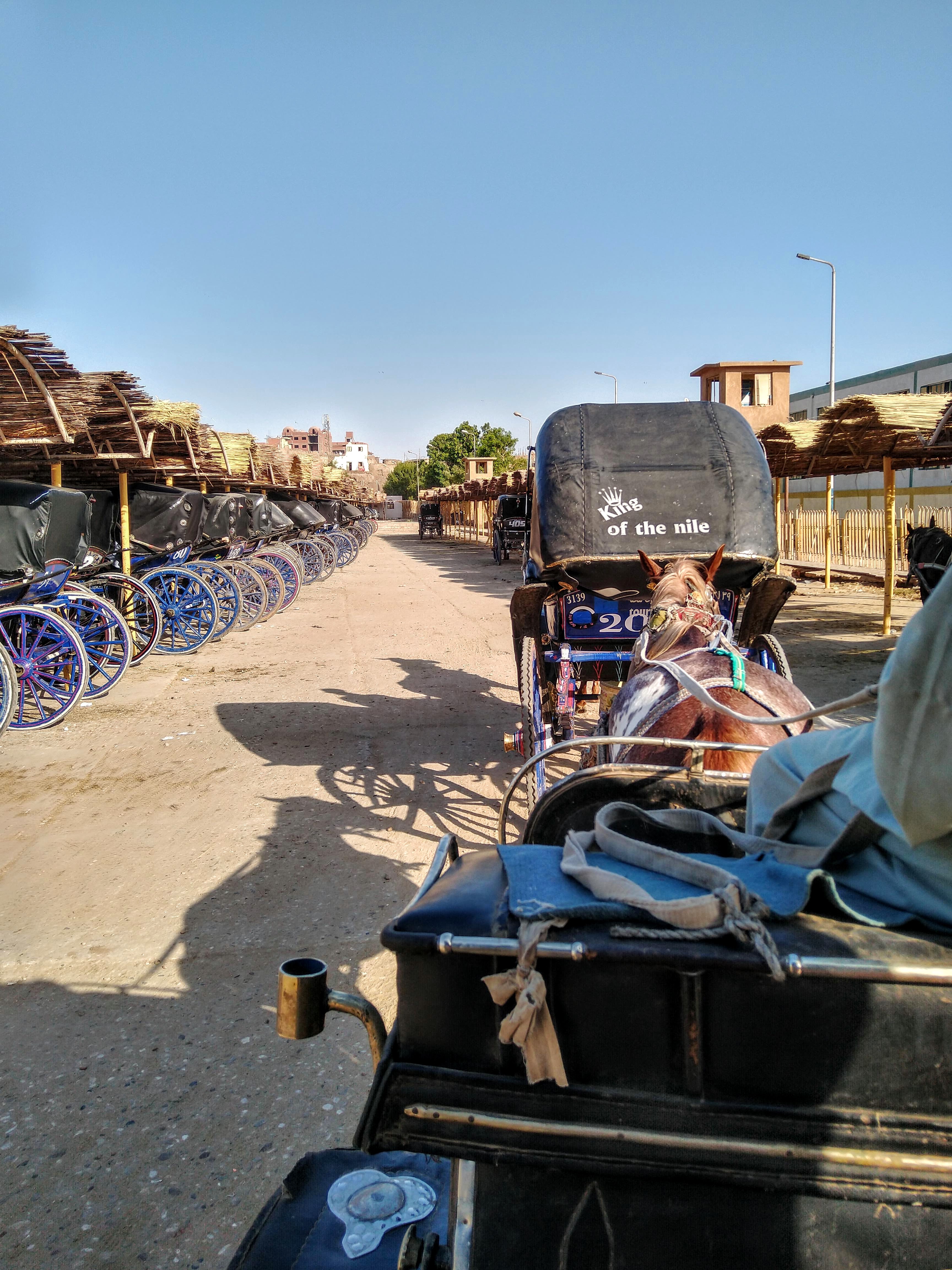
Edfu Temple
Day 6 – Nile Cruise, Sail & Swim
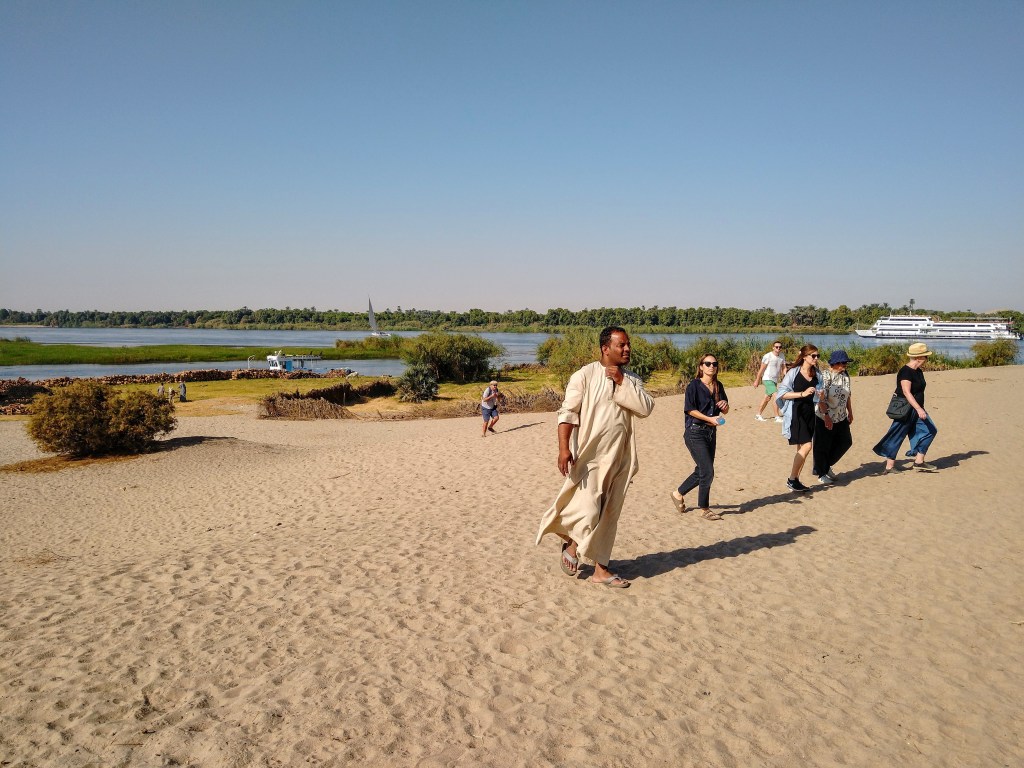
The middle day of the cruise was a rest day and cleverly allowed all the large, smelly cruise ships to overtake us, so that we didn’t have to share the river with them. In the morning we went for a walk on an island in the middle of the Nile.
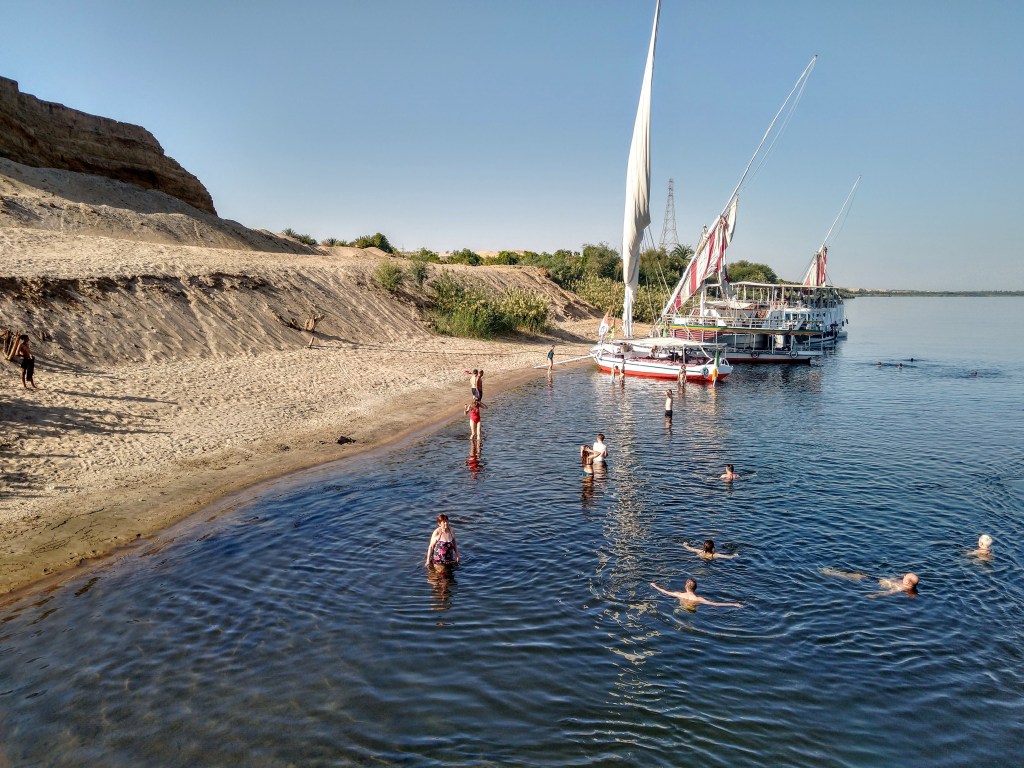
In the afternoon we moored up on a different island and swam.
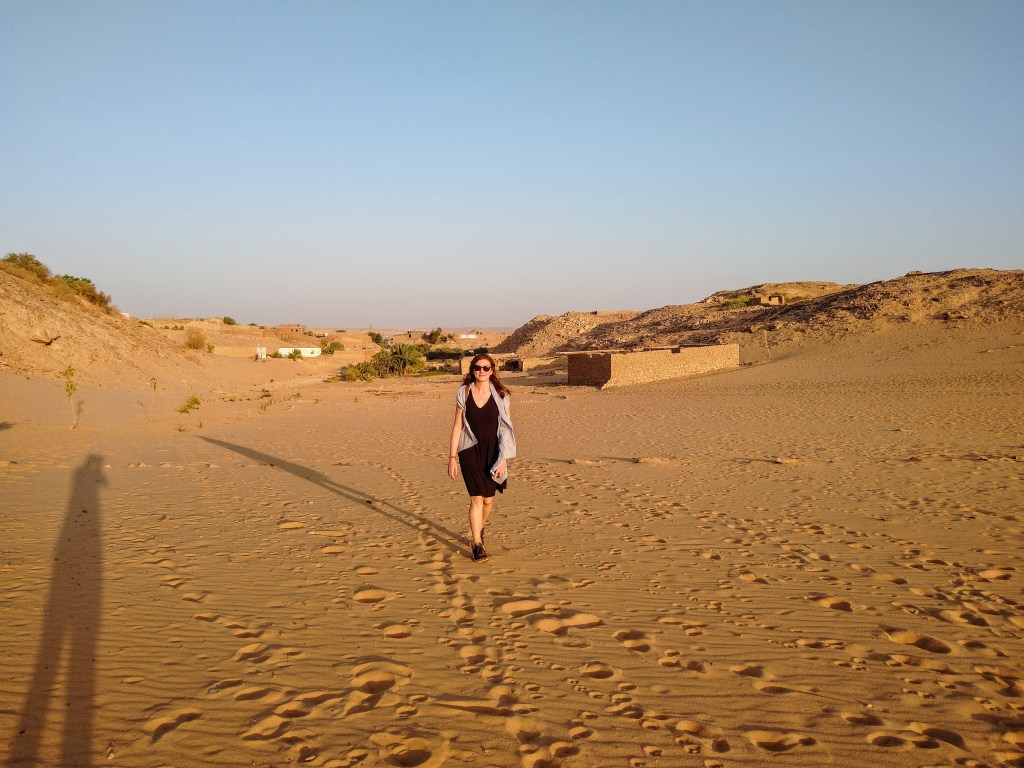
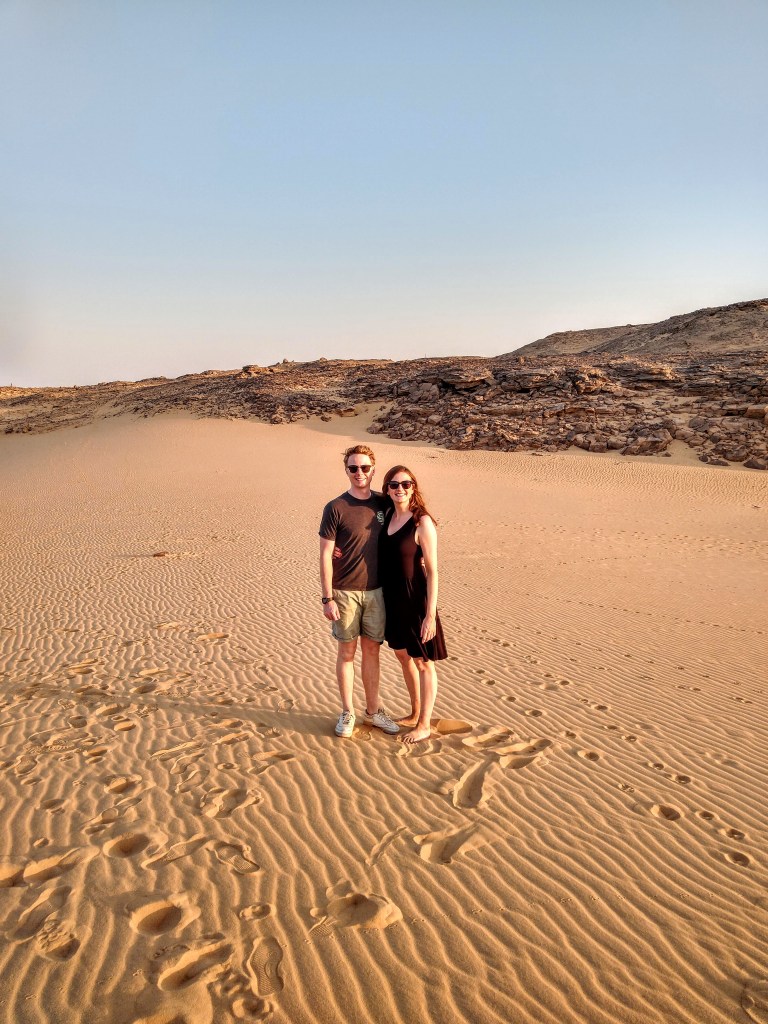
In the evening we went for a walk in the desert, to a view point where we watched the sun set over the Nile and the surrounding countryside.
Day 7 – Nile Cruise, Gebel Silsileh
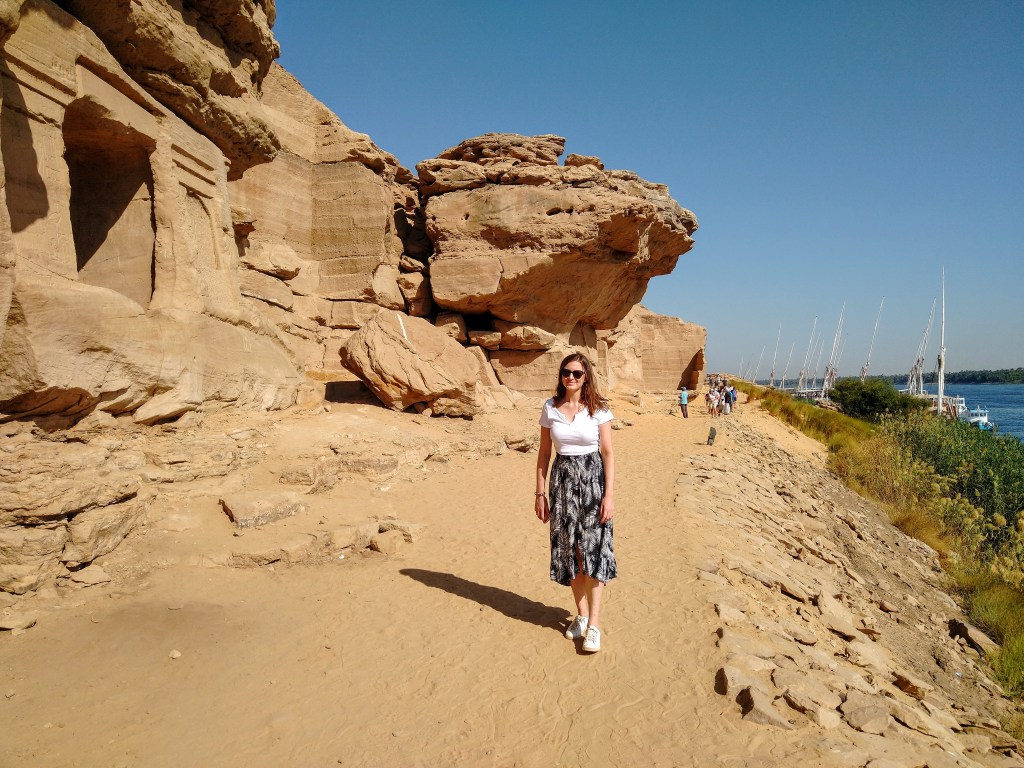
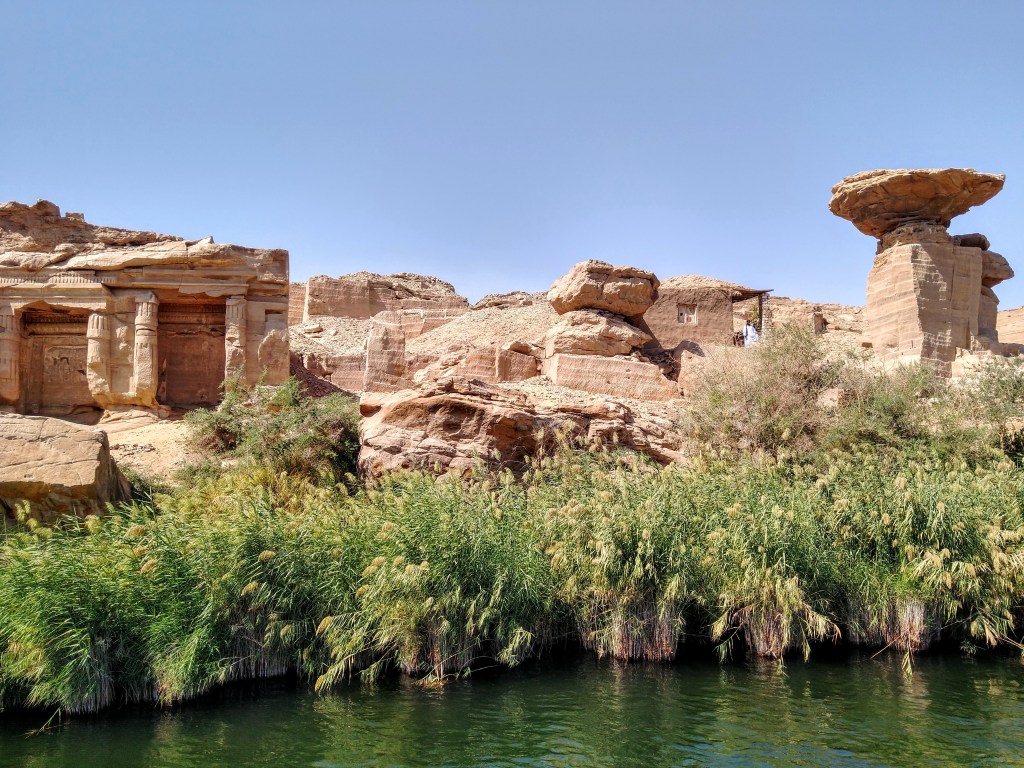
In the morning we visited the small Temple of Horemheb and then the Sandstone quarries of Gebel Silsileh, where the ancient Egyptians cut the stone for the many of their temples including Karnak and Luxor Temple. You can still see where the huge blocks were hewn from the cliffside.
In the afternoon we stopped at a beach where the desert met the Nile and enjoyed some more time swimming and jumping off the deck.
Day 8 – Nile Cruise, Kom Ombo
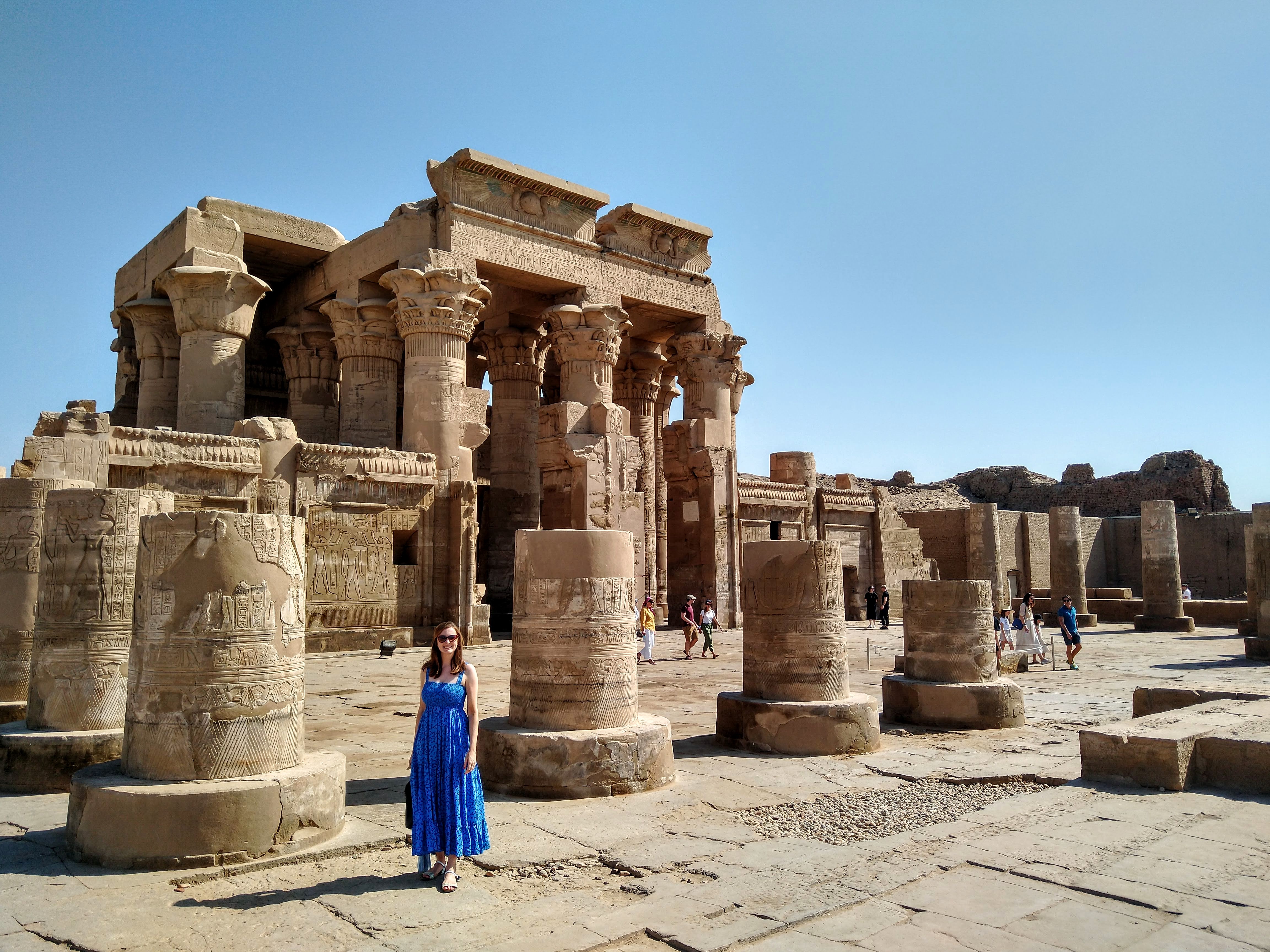
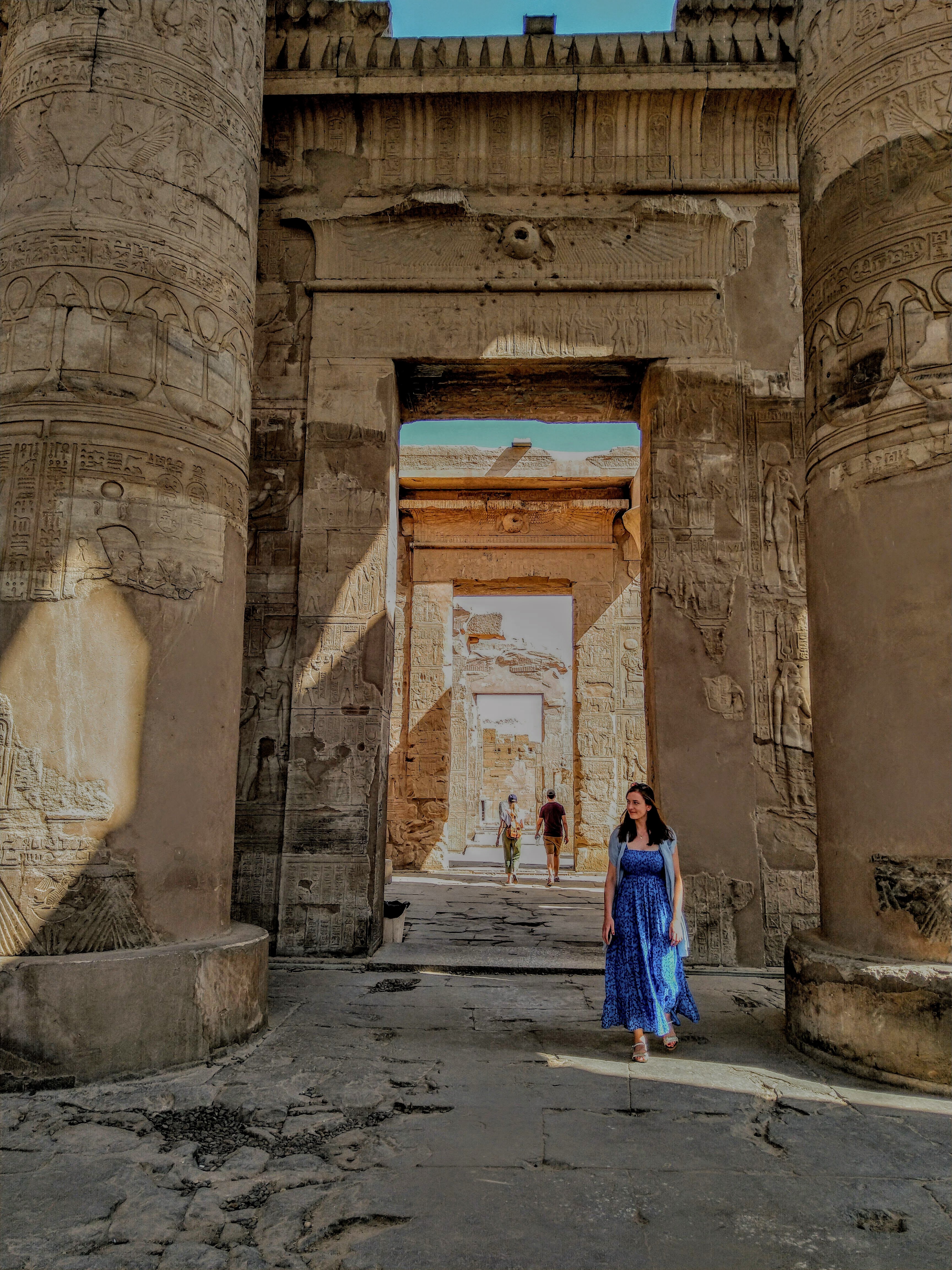
In the morning we visited the Temple of Kom Ombo which is dedicated to the crocodile god Sobek and the falcon god Horus the Elder. The temple is unusual because the architectural layout combines two parallel temples for each god with their own respective gateways and chapels.
Kom Ombo Temple
Following the temple, we visited the Crocodile Museum which contains several mummified crocodiles, some measuring up to 4m long. The ancient Egyptians believed that if they worshipped the crocodiles who lived in this section of the river, they would not be attacked by them.
Day 9 – Aswan
The Nour El Nil dahabiya dropped us a short distance outside of Aswan. We organised a driver through Horus.guide to pick us up from the boat and take us to the main sites of Aswan. This gave us the freedom to explore at our own pace, while the driver waited for us and ferried us around.
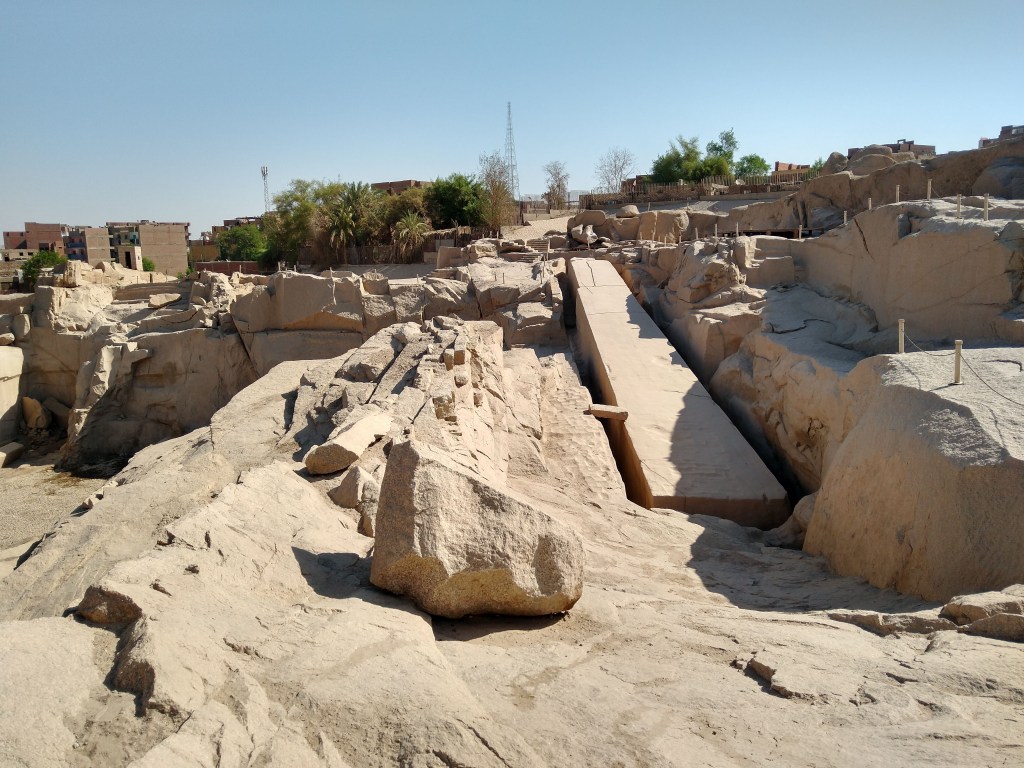
First we went to the Unfinished Obelisk, a site where the ancient Egyptians used to quarry their granite obelisks from, such as the ones at Karnak and Luxor Temples. Here you can see an enormous obelisk which they clearly began carving out the rock, before finding it had a structural fault and discontinuing their efforts.
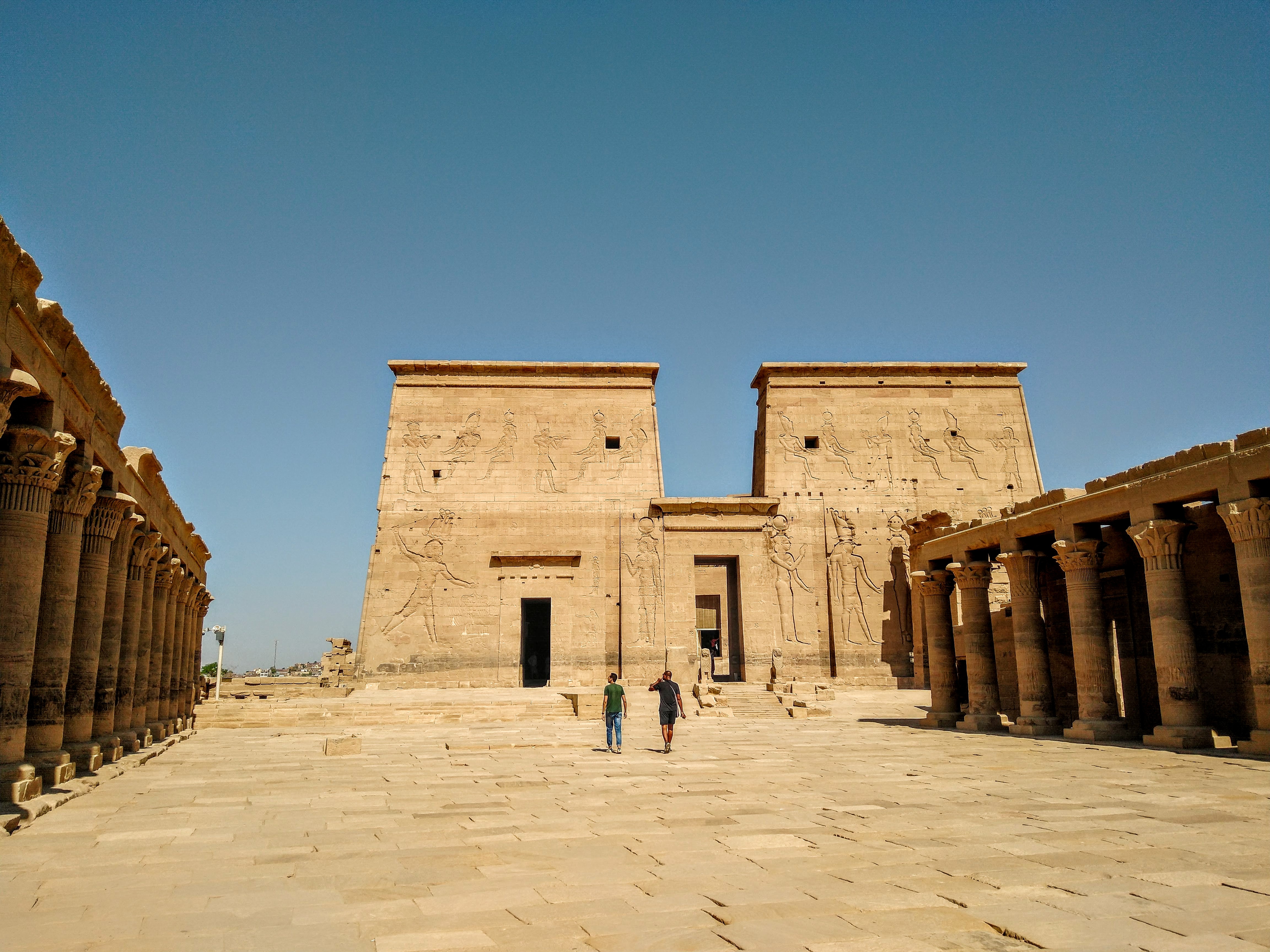
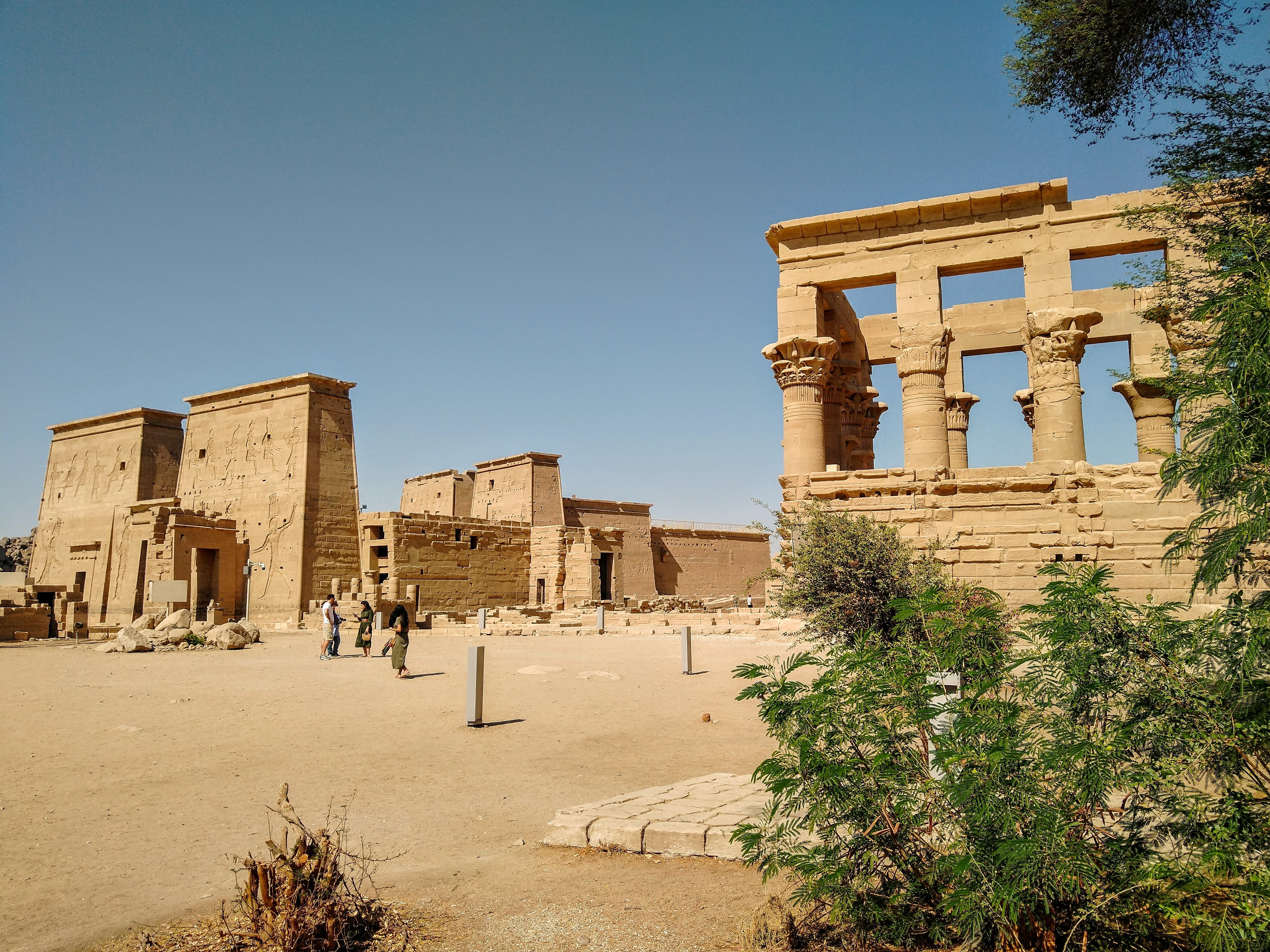
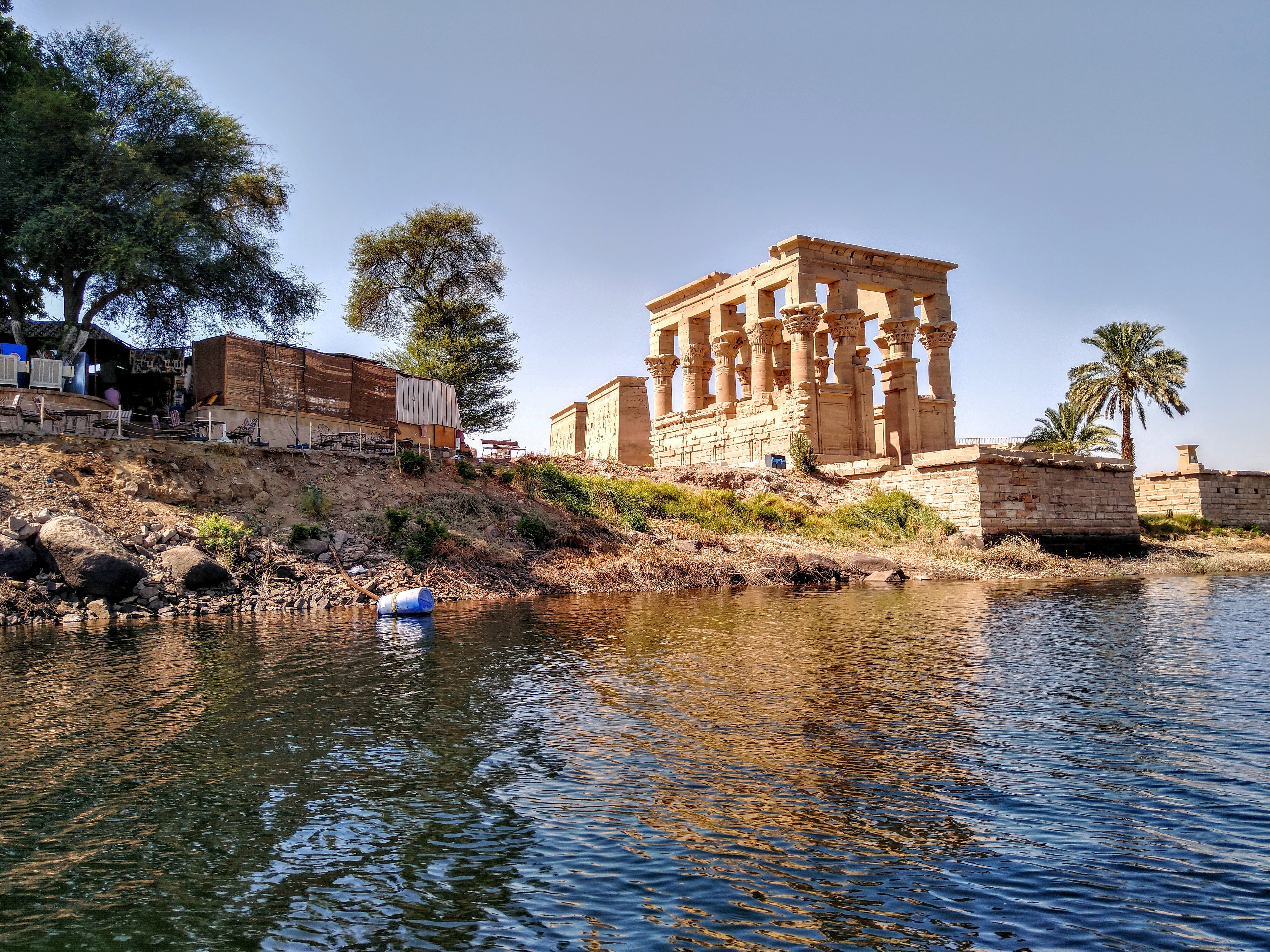
We then moved on to the Philae Temple, a beautiful temple dedicated to Isis, situated on an Island in the River. The original island was flooded when the Old Aswan Dam was constructed, so the temple had to be painstakingly moved to a new island. To get to the temple, you need to take a little boat from the Aswan marina, which seemed to be a rather steep fixed price for the short journey. It’s best to just sit back and take in the ride rather than worry about it whether you are over-paying.
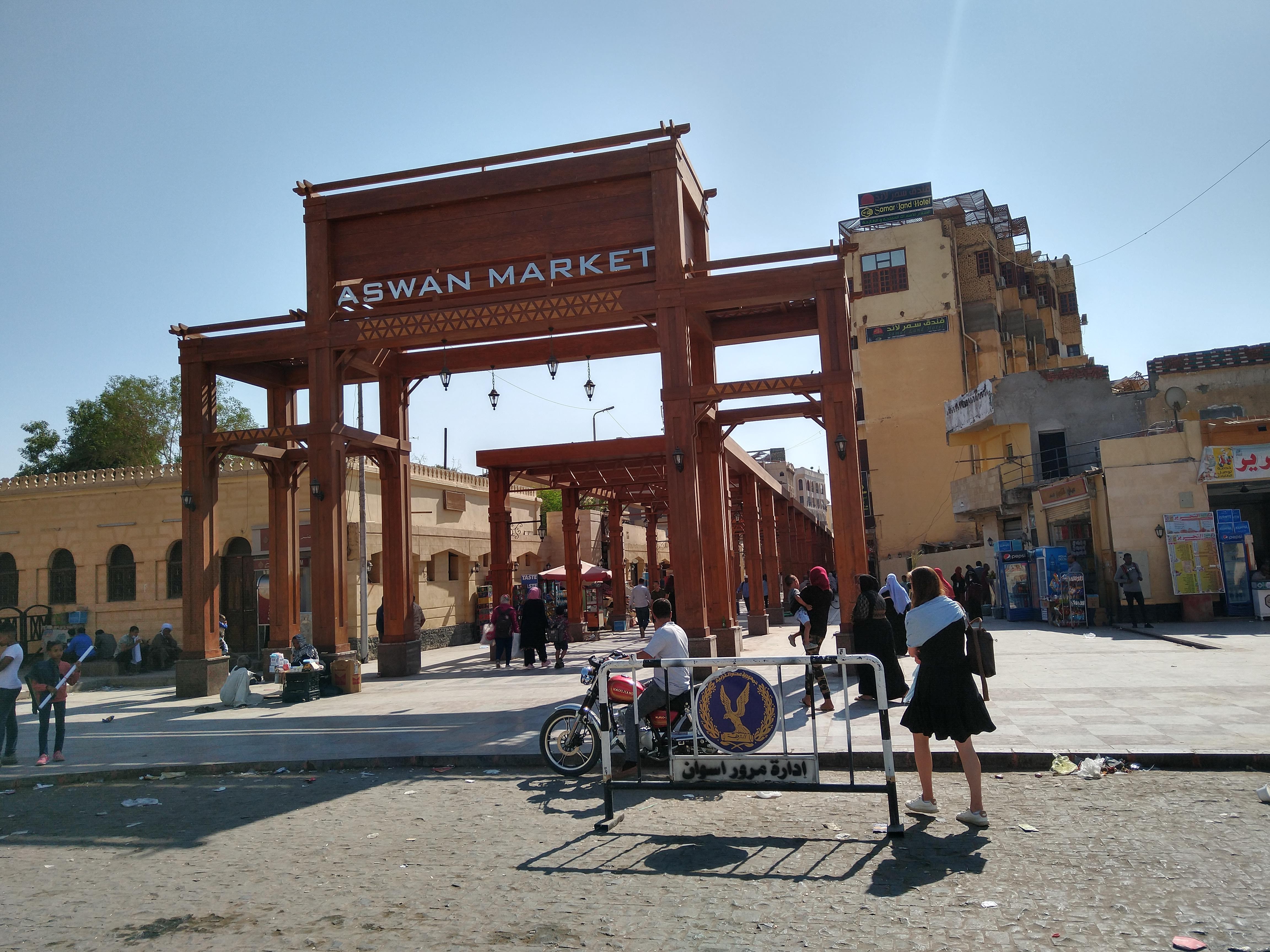
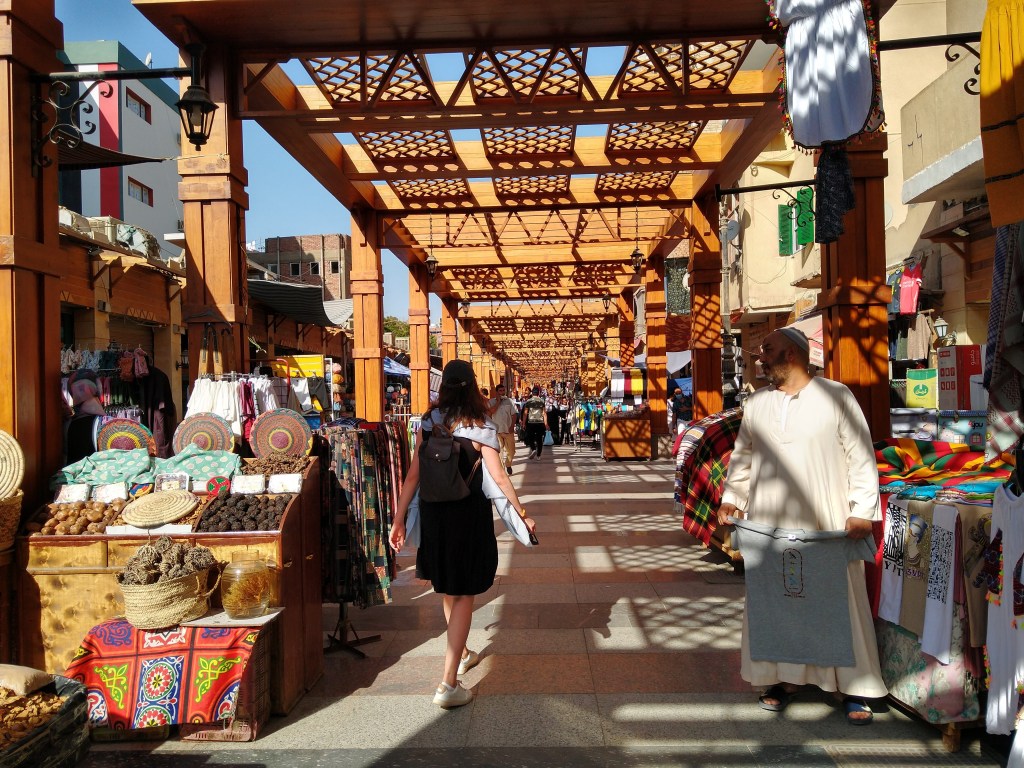
Head back into town and have lunch at the very local and traditional Abeer restaurant. Walk off your mezze and stuffed pigeon by perusing Aswan Market, a long pedestrianised street with well kept stores selling clothes, leather, rugs, woven baskets and spices.
We then flew back to Cairo in the evening, but if you have more time it is worth exploring Elephantine Island, taking a sunset Felucca ride or even making the trip across Lake Nasser to Abu Simbel, two massive temples cut into the rock by Ramses II.
Day 10 – Cairo
Cairo is not to everyone’s taste. The air is thick with the sounds of beeping horns, many of the buildings have a rather run-down chic and the streets are in need of a deep clean. If you can embrace the rough edges however, there are some amazing things to see and do in Cairo and the city allows you to experience the real, modern Egypt.
Stay in the Zamalek neighbourhood which is situated on an island in the Nile. Here the atmosphere is more European and sophisticated and even more importantly it is quiet and more relaxed.
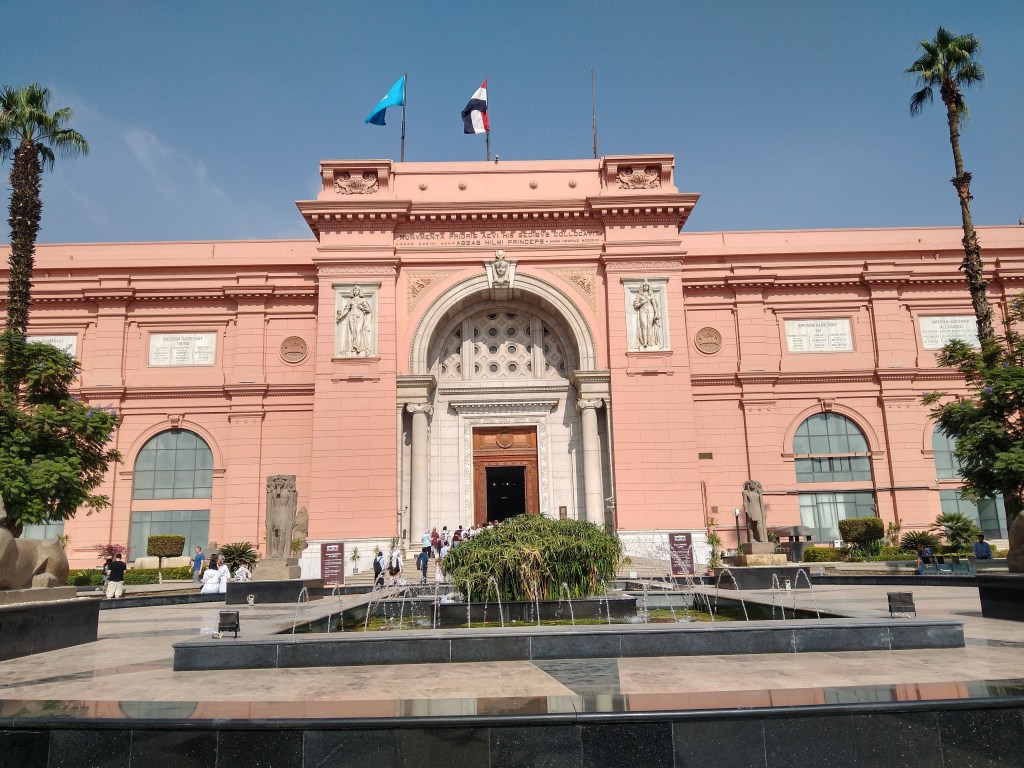
Head out early to the Egyptian museum to beat the coach trips and avoid a long queue at the gate. Once inside make a bee-line for the Tutankhamun exhibit at the far end on the second floor as this is by far the most popular part of the museum. Here you can see Tutankhamun’s famous golden death mask and the inner layers of his sarcophagus. Unfortunately you aren’t allowed to take any pictures in there. The rest of the museum is rather poorly laid out and labelled, but there are a number of other interesting exhibits jumbled in with a huge number of miscellaneous ceramic pots.
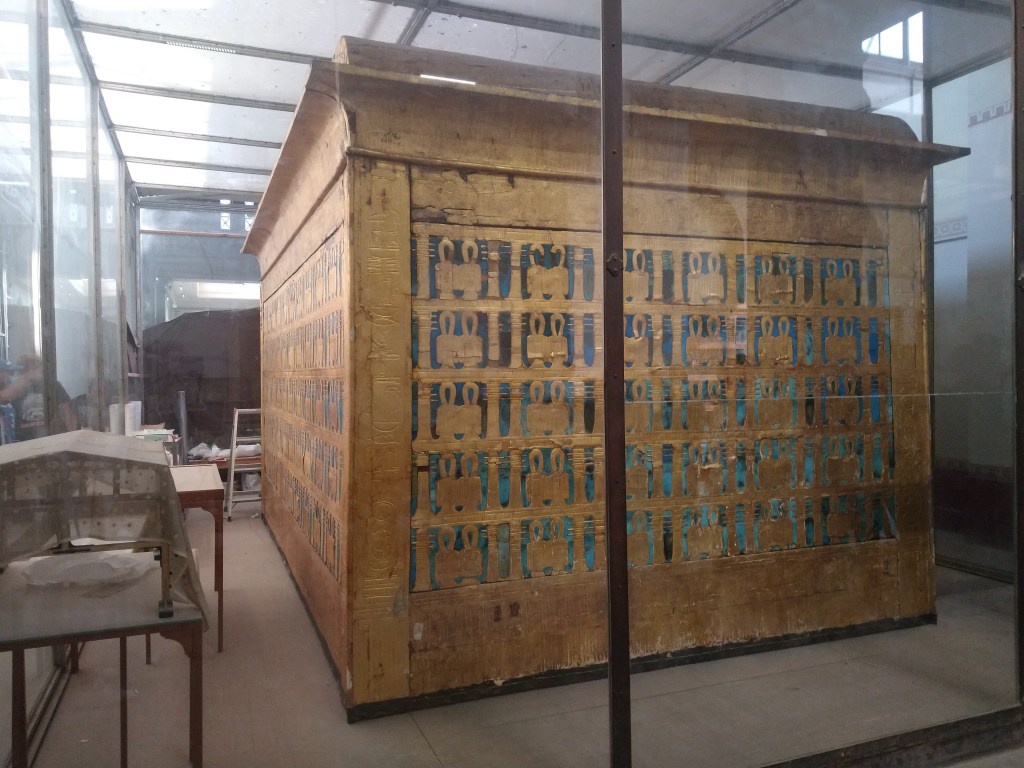
Head to the Bab Zuweila gates, one of the three remaining gates into the old city walls, and climb to the top of one of the two minarets for a great aerial view over the city.
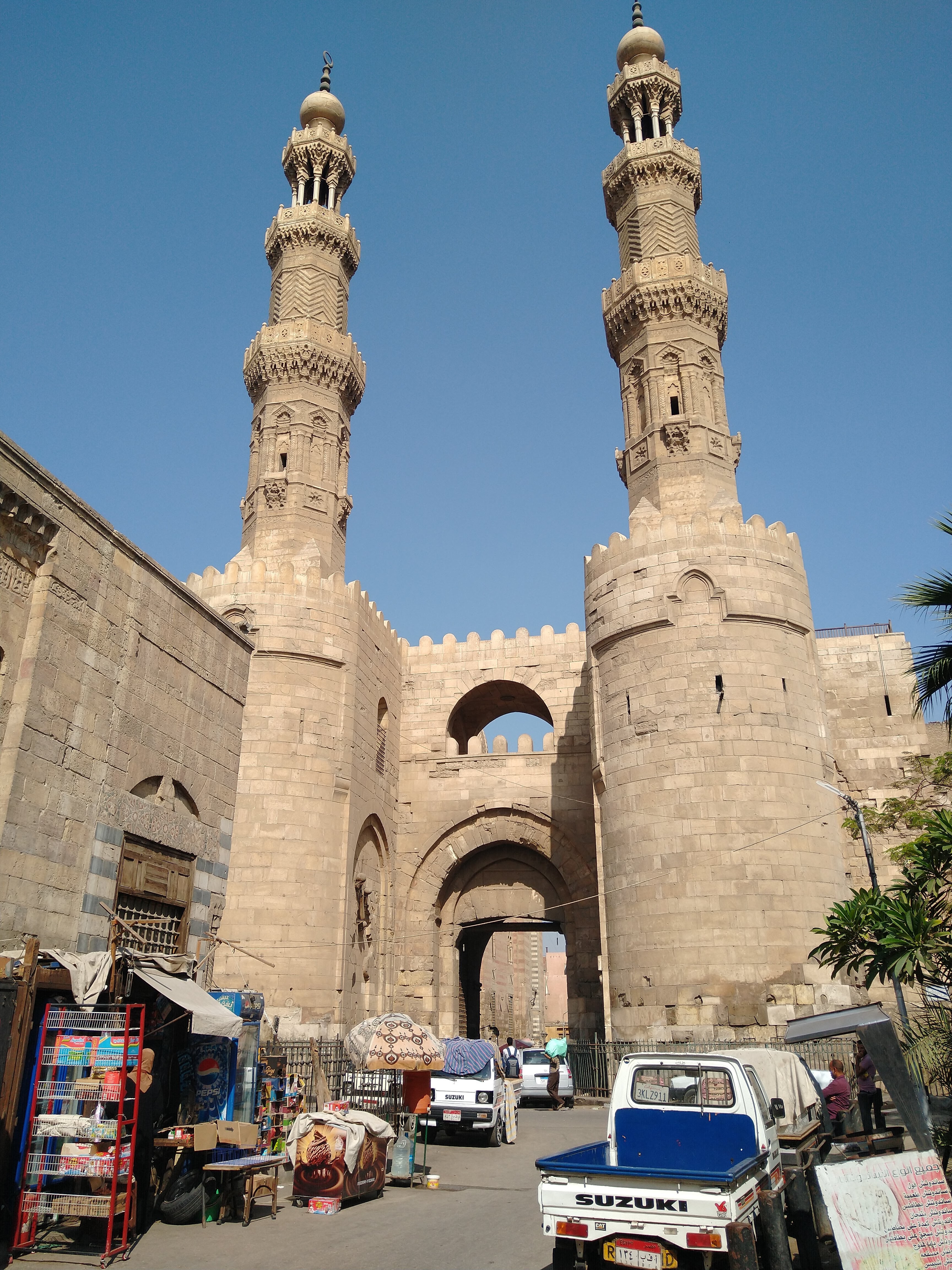
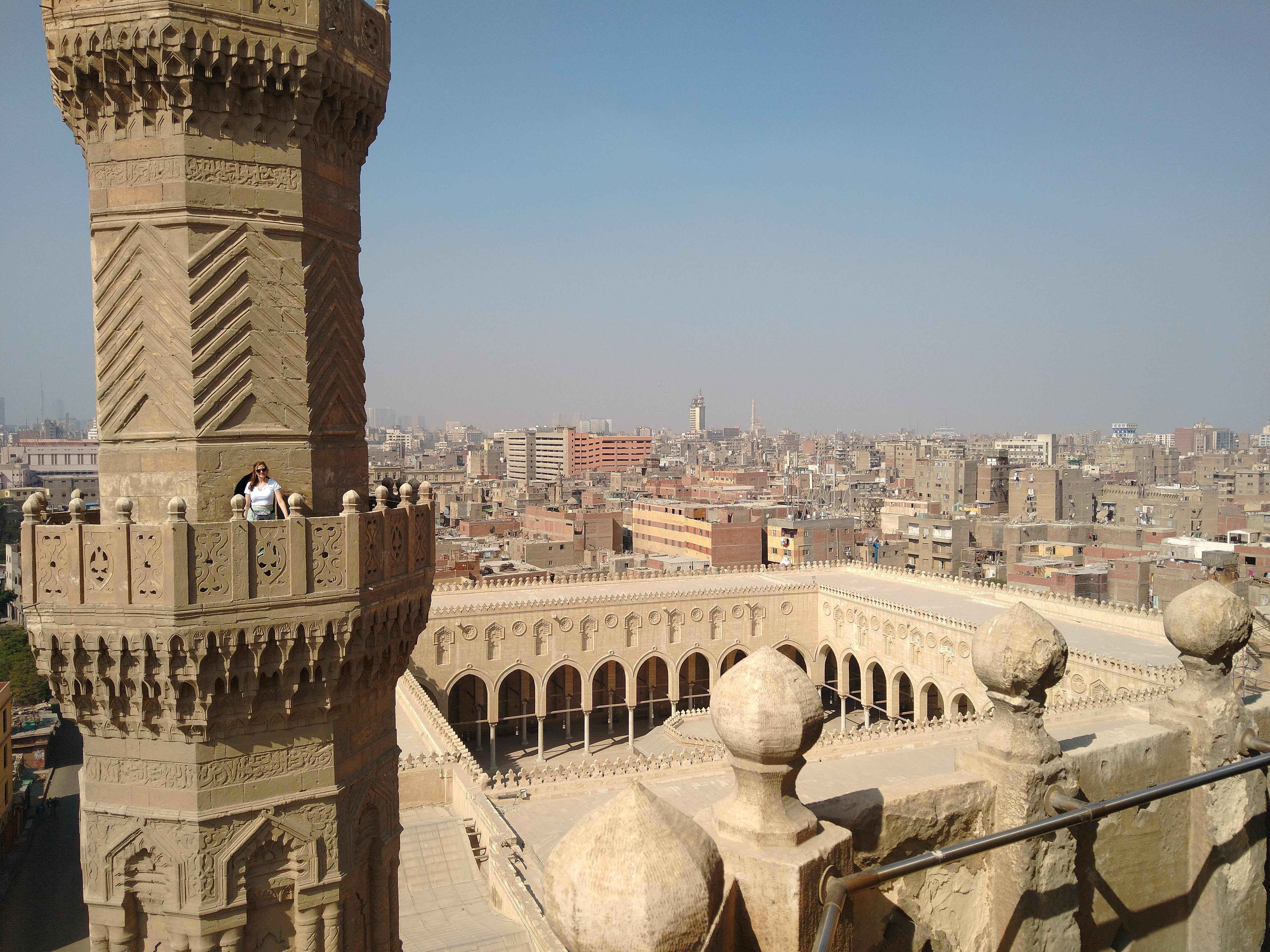
Bab Zuweila
A short walk from here is Al-Azhar mosque, which is well worth a quick visit. Be warned that if you are a woman you will be covered from head to toe before being allowed to enter.
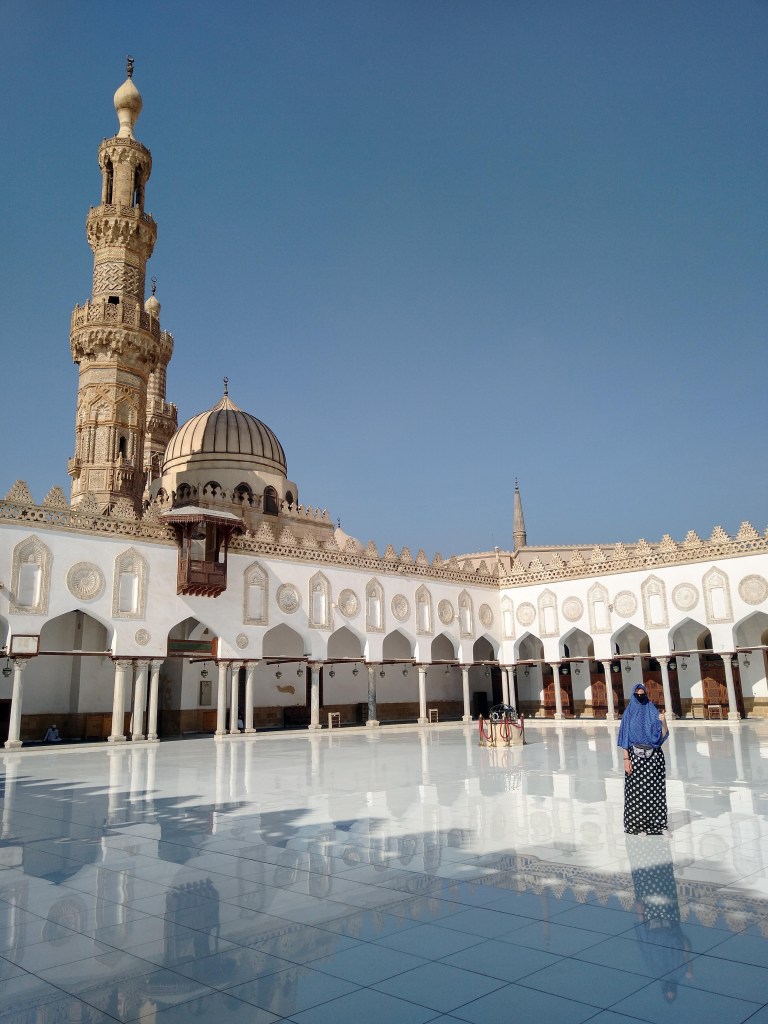
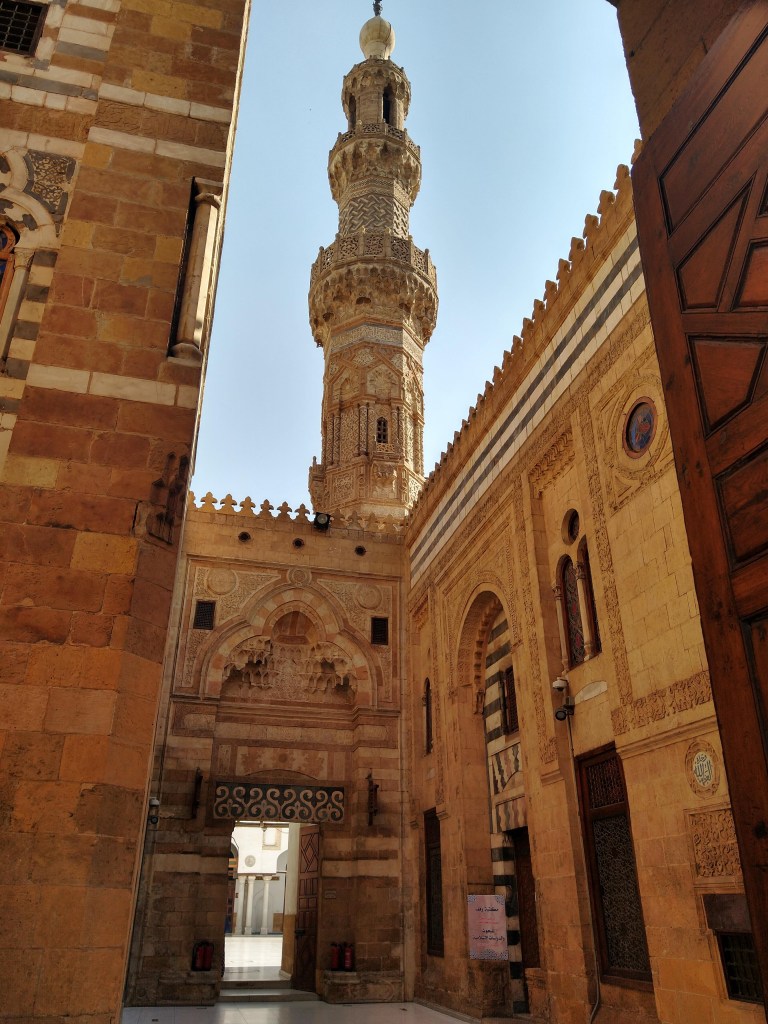
Al-Azhar Mosque
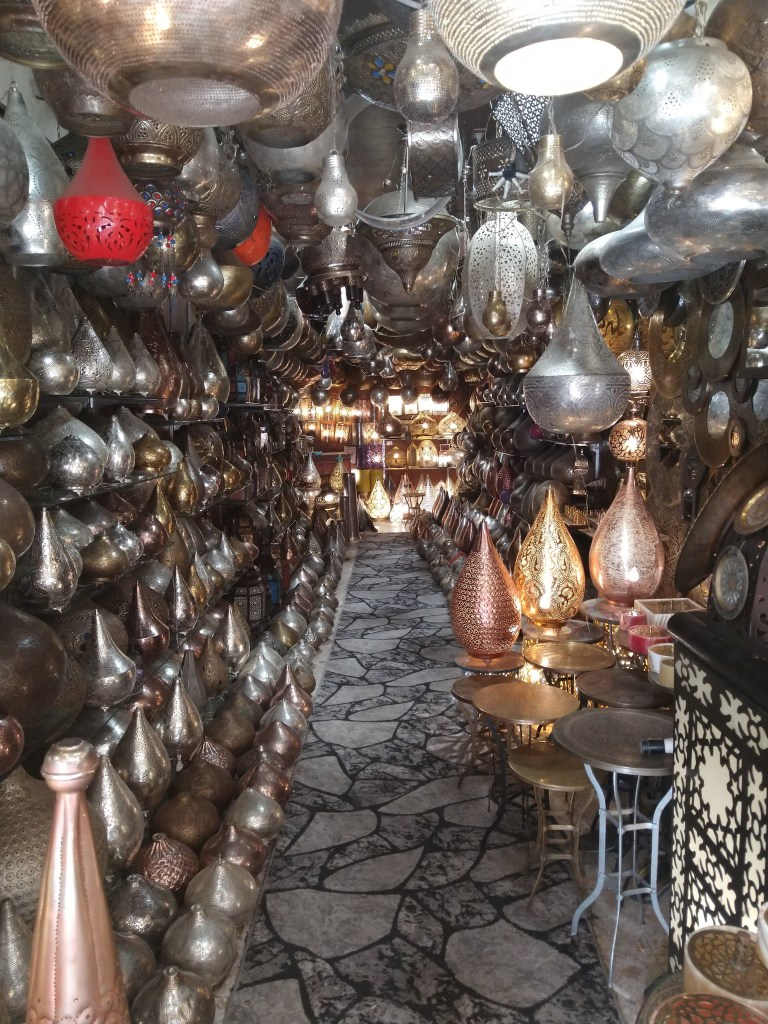
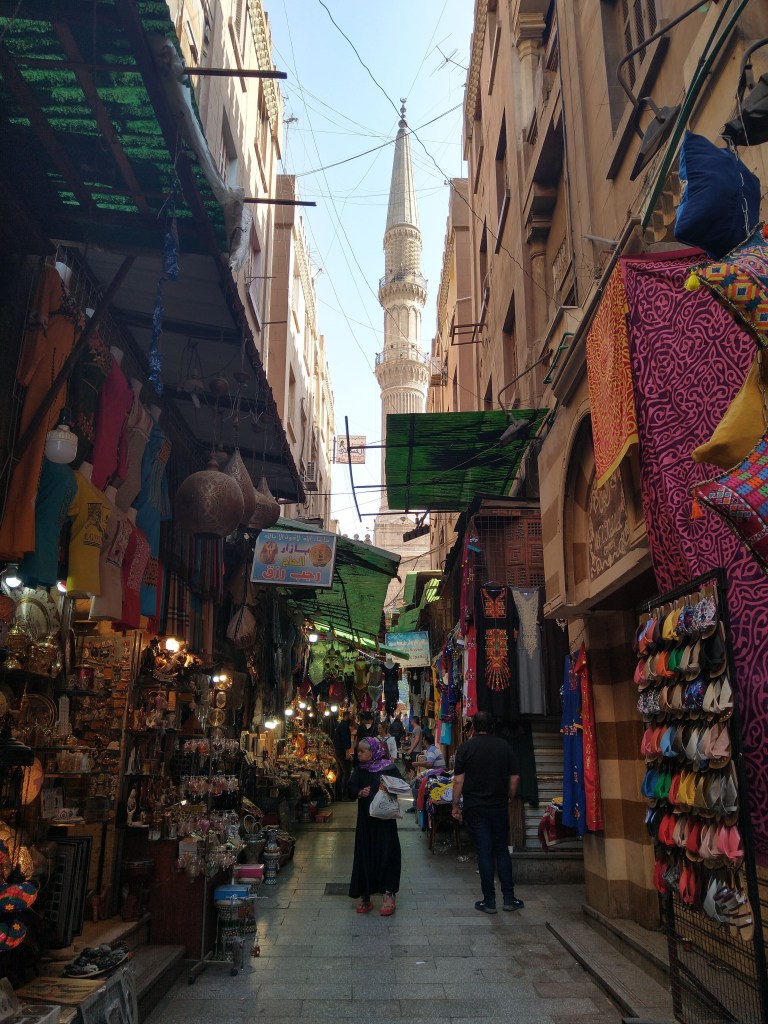
In the streets outside the mosque are the souks of Khan El-Khalili and Al Moez Ldin Allah Al Fatmi. Soend some time wandering through these streets, some sell a whole range of everyday items like trainers and childrens clothes, but if you take the right twisting alleyway you’ll be greeted by traditional souk stores selling gold and silver, colourful fabrics and intricately decorated ornaments.
Head to the airport after a quick lunch at O’s Pasta back in Zamalek.
Blogs about Egypt
Where to stay in Egypt
We spent a fantastic 10 days in Egypt (see our Egypt itinerary here), during which we stayed in some really great places and some more functional places which do the job if you are on a lower budget or booking last minute. We booked this trip at short notice because we went during the COVID…

 Sunburnt Zebra Travel