Getting Around Guatemala

The three main stops you should plan into your Guatemalan adventure are Tikal, Lake Atitlan and Antigua. The impressive Mayan ruins of Tikal are some of the best preserved Mayan ruins in the world and still stand tall, protruding above the jungle canopy. Lake Atitlan, bordered by three volcanoes, is one of the most picturesque places and if you believe in such a thing, it is said to be one of the World’s three positive energy vortexes. And finally the colourful cobbled streets of Antigua, the old colonial capital of Guatemala, are a great place to experience some more of the country’s rich culture. If you are interested in reading more about these destinations, take a look at our two week Guatemalan itinerary. This short blog is designed to help you join up these three extraordinary places.

The most common way to get around Guatemala is by road and, in particular, by Chicken bus (or “camionettas”). With no rail network, Chicken buses are a well known and very well used form of transport around Guatemala and they have an extremely comprehensive coverage of the country. It’s not clear why they are called Chicken buses, perhaps it is because people are crammed into them like chickens in a battery farm or because locals sometimes bring their chickens with them on the bus.

Chicken buses are old American school buses decked out with vibrant paint jobs, some glitzy chrome trim and a funky sounding horn (which gets plenty of use). With the lurid decoration, the loud revs of the engine and the strong smell of the exhaust, Chicken buses truly are an assault on the senses. And for this reason they are on many travellers’ must-do list for a trip to Guatemala. Tickets for Chicken Buses are purchased on the bus itself and you catch them from the main bus stations in each town.

The buses are generally safe; having been designed for school children in the United States, safety was the number one criteria. Having said that, even a safe tool in the wrong hands can be a little sketchy at times. The drivers generally have an exuberant driving style, overtaking on bends and driving at break neck speed and there is the odd chance you won’t be re-united with your suitcase which is strapped to the roof of the bus for the duration of journey. The occasional robbery has been reported as well. For these reasons there are often mixed opinions on whether catching the Chicken bus is a good idea, is it worth the risk for an authentic Guatemalan experience? We didn’t think it was, because the alternatives aren’t outrageously expensive and are often much safer and more convenient. This blog looks at the non-Chicken bus options for getting around.

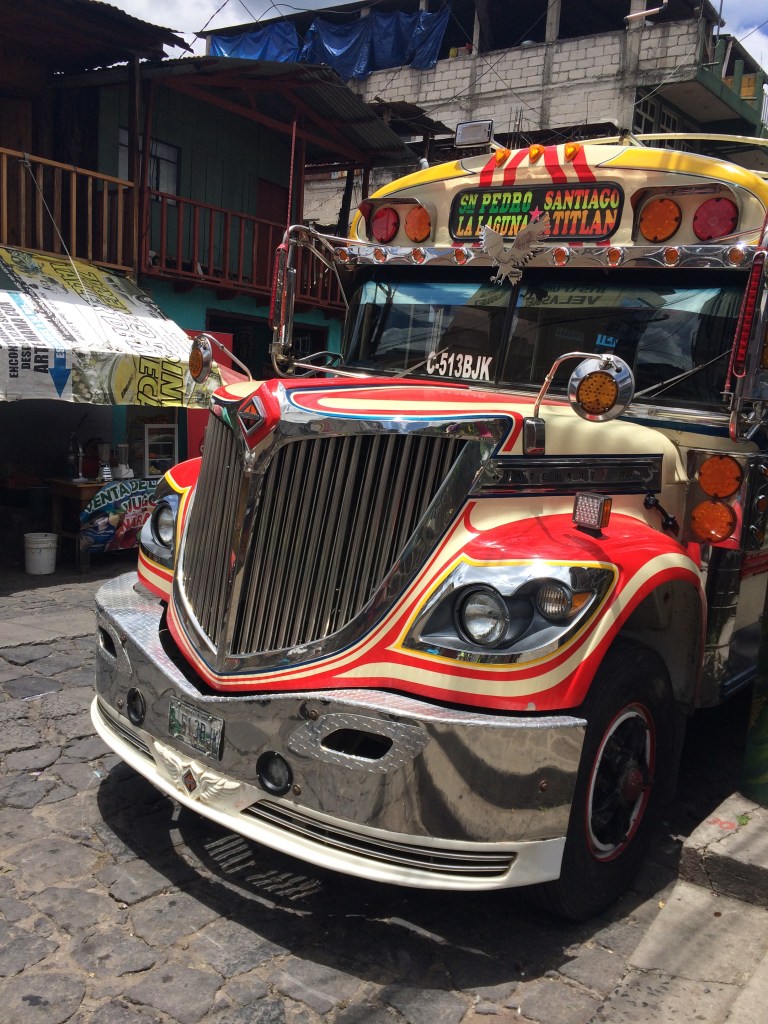
A couple of garishly coloured chicken buses

Tikal (Flores) To Guatemala City

Located up near Flores, Tikal is considerably further north than Lake Atitlan and Antigua, which gives you the option of an extremely long bus ride, or a short flight. We opted for the latter, a short flight from the tiny airport in Flores to Guatemala City. It did mean that we had to put all our trust into an aeroplane the size of a coke can. There are a few flights a day for £100 or less (some with TAG Airlines and some with Avianca) and the journey time is almost exactly an hour.

The tiny TAG Airlines aircraft at Flores Airport

If you can’t justify putting yourself several thousand feet into the air in such a tiny aircraft, or if you fancy saving a few bucks, the bus is a viable option. It is cheaper (prices range from £17-50) but the journey from Flores to Guatemala City takes around 8 hours. For travellers who are concerned about wasting a crucial day on a bus, there is the option to catch it in the evening and spend the night on it. The buses are quite plush coaches and the route is non-stop, so this can be quite a popular option.

There are two reliable shuttle bus operators which make the direct journey from Flores Santa Elena bus station to Guatemala City bus station; Linea Dorada and Autobuses FDN. Linea Dorada runs 4 times a day and Autobuses FDN runs every 3 hours, so there is essentially a bus every hour. Rome2Rio provide useful information and a bus schedule for this journey. It isn’t possible to buy the bus tickets online, so we would recommend asking a travel agency to book them over the phone for you, or to book them at the bus station itself ahead of your journey.

Guatemala City To Antigua

The drive from Guatemala City to Antigua which takes between 1 and 2 hours depending on traffic in GC.

We booked a shuttle bus ahead of time with Atitrans, a Guatemalan travel agency recommended by our accommodation, who drove us from La Aurora international airport in Guatemala City to the Atitrans headquarters in Antigua (we then went straight on to Lake Atitlan as we planned to visit the lake first – but all shuttles – unless it is a private one – stop in Antigua first as it is more economical for the drivers to take visitors bound for both destinations). This part of the leg cost around £13.
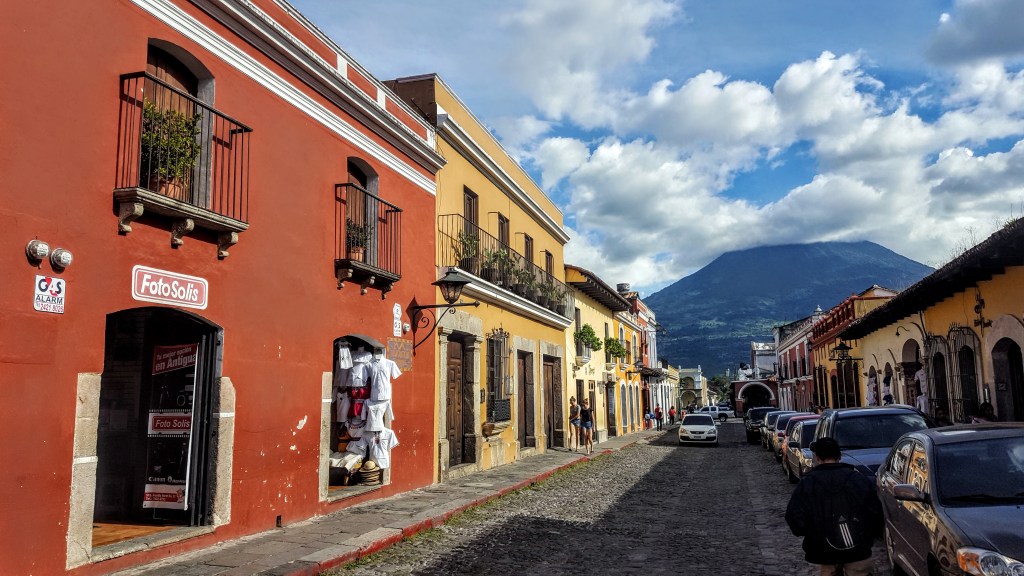
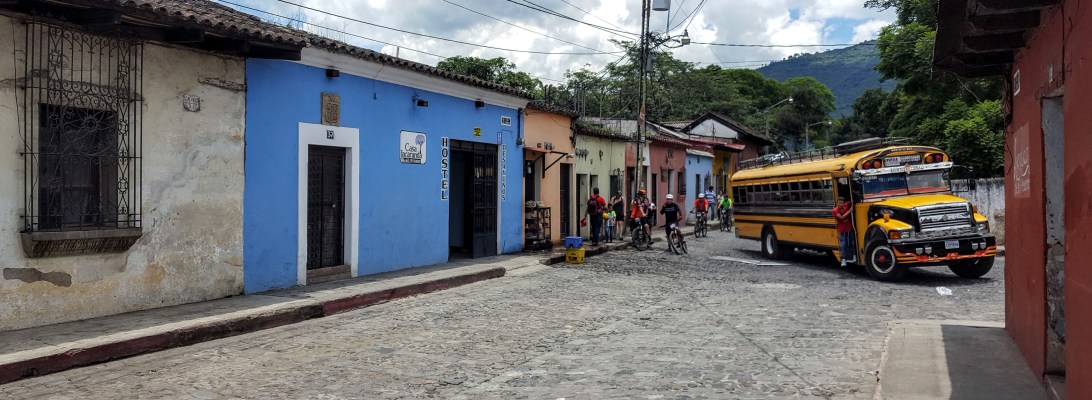
The colourful cobbled streets of Antigua

There is also a public shuttle bus which runs from the airport to Antigua all day until about 8pm. As you exit the airport, there should be someone holding a sign with Antigua scrawled on it. This is by far the most cost effective method of transport if you are travelling alone, as the price is only $10 – but make sure to pay the driver directly to avoid paying twice! The shuttle should drop you off at your accommodation or at an address you provide, just tell the driver clearly where you want to go when you pay him. The main downside of the shuttle is that it doesn’t really stick to a timetable– it simply goes when it is full, and if it isn’t full, it will sit there until it is.

There are also official taxis which run from La Aurora International Airport in Guatemala City. These are the most convenient way of travelling, but they will set you back about $40 for the 40 mile journey. The key here is to make sure you get into an official taxi, rather than a normal taxi where you could be scammed. Uber is also available in Guatemala City and this can be quite economical if you are travelling as part of a group as you can split the $20-$30 fare between a few of you.

Antigua to lake Atitlan

As mentioned above, if you’re travelling from Guatemela City to Lake Atitlan, all public shuttles will stop at Antigua on the way. We spent an hour or so here, while we waited for another bus to take us the rest of the way. The drive from Antigua to Atitlan takes about 2 and a half hours by shuttle bus which runs approximately every 3 hours or so, and cost us around £13. Again, we used the travel agency Atitrans for this journey.

The public shuttles and buses will generally drop you at Panajachel dock, the gateway to the lake and the main transport hub. If you are not staying here, then you will need to embark on the fourth leg of the journey, by boat across the lake. Please see our blog Getting Around Lake Atitlan for more information on this.

Panajachel dock

Some hotels offer private shuttles themselves from Antigua or from Guatemala City, rather than outsourcing them to travel agencies. Prices will vary significantly but are generally likely to be quite expensive. One hotel we stayed in offered a price of $120 all the way from GC and $110 from Antigua. Of course, this is much more convenient because the shuttle will not make any stopes (e.g. in Antigua) on the way and should be able to take you all the way to your hotel, rather than dropping you in Panajachel.

Two further websites which might help with planning this journey are transportguatemala.com and shuttleguatemala.com.
Getting Around Uganda

Uganda is a fascinating country that we highly recommend visiting (see our Uganda itinerary for more information), but Uganda’s public transport network is not something which can be relied upon and the rules of the road are rather seen as guidelines, so driving yourself is not recommended. One of the first masterpieces of driving I witnessed was a chap on a motorbike driving into oncoming traffic on a dual carriageway which had a central reservation. Not sure what happened to him!

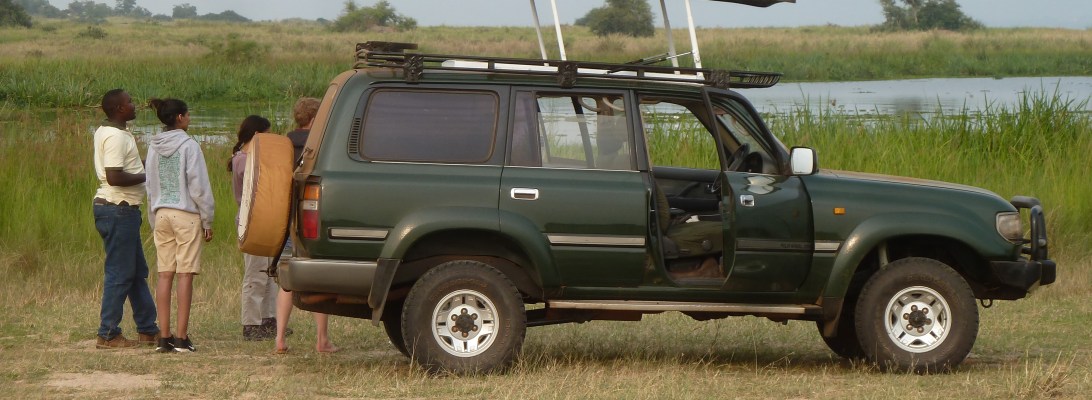
Private transfers can be organised extremely cheaply and are by far the best way to get around Uganda. Many of the tour providers will pick you up at your hotel in Kampala and Jinja and transfer you in 4x4s to the main National Parks, so that is all easily dealt with. We were picked up from our accommodation in a Toyota Land Cruiser which had been modified with a fold out canopy mounted to the roof designed to shade you from the sun while sitting on the roof watching the wildlife on safari. Brilliant.

A modified 4×4 used for safaris in Murchison Falls National Park.

The one thorn in your side which is unavoidable is the road infrastructure. Very few of the roads are properly metalled and the road surface is at time almost bone breaking. You won’t be catching much sleep on your transfer to one of the National Parks.

Outside of Kampala (where the traffic is awful) cars on the road might not be the kind of traffic causing hold ups. The roads are used by farmers to transport their livestock around and we got stuck behind this herd of cattle for a while.

Stuck in a traffic jam

If you’re a not a particularly risk averse traveller, the best way to get around inside Jinja itself is by Boda Boda, a motorbike with a driver who will chauffeur you from place to place for prices of less than 50 pence. This is by far the best ride hailing service I have ever used, with no need for an app, very short waiting times and prices that Uber would never even dream of competing with. There is always a Boda loitering at a street corner near you and all you need to do is whistle and one will arrive within the minute. Yes, no helmets are provided and you are sharing a bike with the driver (which can take some getting used to) so don’t get one unless you feel comfortable. Also there is no need to double up on a Boda, fitting two of you plus a driver is not worth the extra risk of dropping off the back of the bike vs spending an extra few shillings on another one. Most Bodas will require a brief period of haggling over price, but you will soon get a feel for how they price for the length of the journey.

Where to Eat and Drink in Paros

Paros was our favourite island on our trip to the Greek Cyclades Islands, and its food options did not disappoint. We stayed in Naoussa, a lovely and stylish fishing town in the north of the island. We loved the white washed cubist architecture (which is synonymous with the Cyclades), interrupted by flashes of fuchsia bougainvillea, and cobalt blue decor. If you are interested in reading more about Naoussa or Paros in general check out our one week itinerary in the Cyclades!

We have put together a great list of restaurant recommendations across the island of Paros to help you choose where to stop for lunch, dinner and drinks.

Safran – Naoussa

One of our favourite restaurants in the centre of Naoussa was Safran, a rightfully popular restaurant which serves traditional Greek and Mediterranean cuisine.

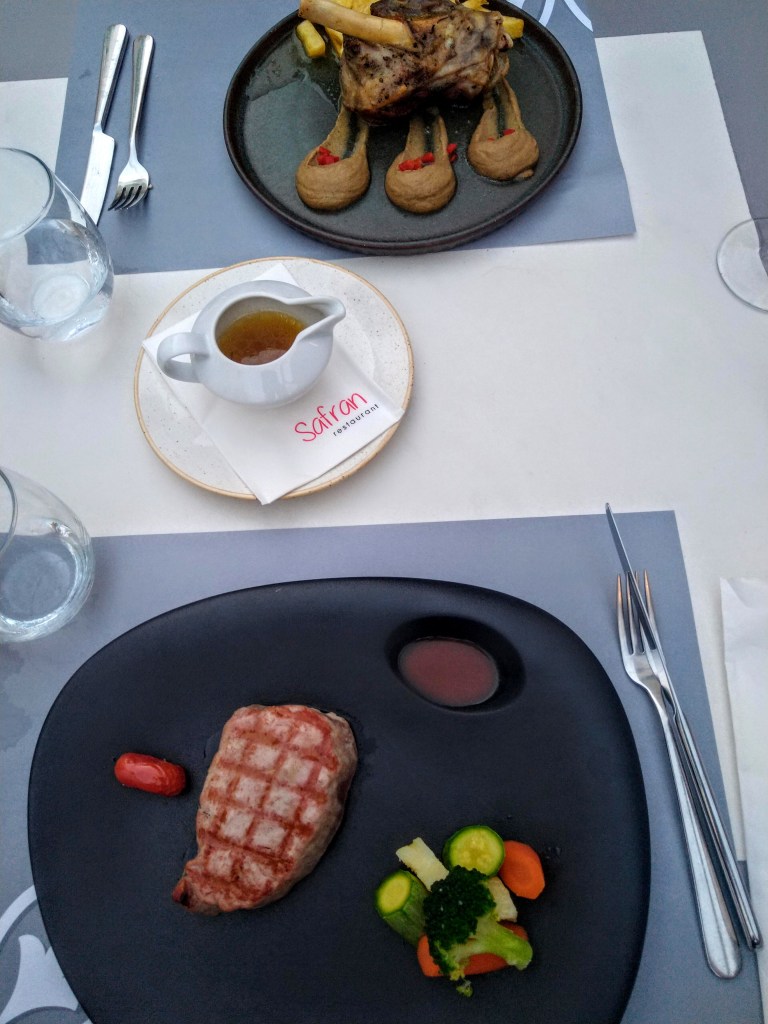
The dishes are sophisticated and delicious, served on an interesting array of crockery. The service is extremely friendly and we were well looked after by a waiter who was a big Tottenham Hotspur fan.

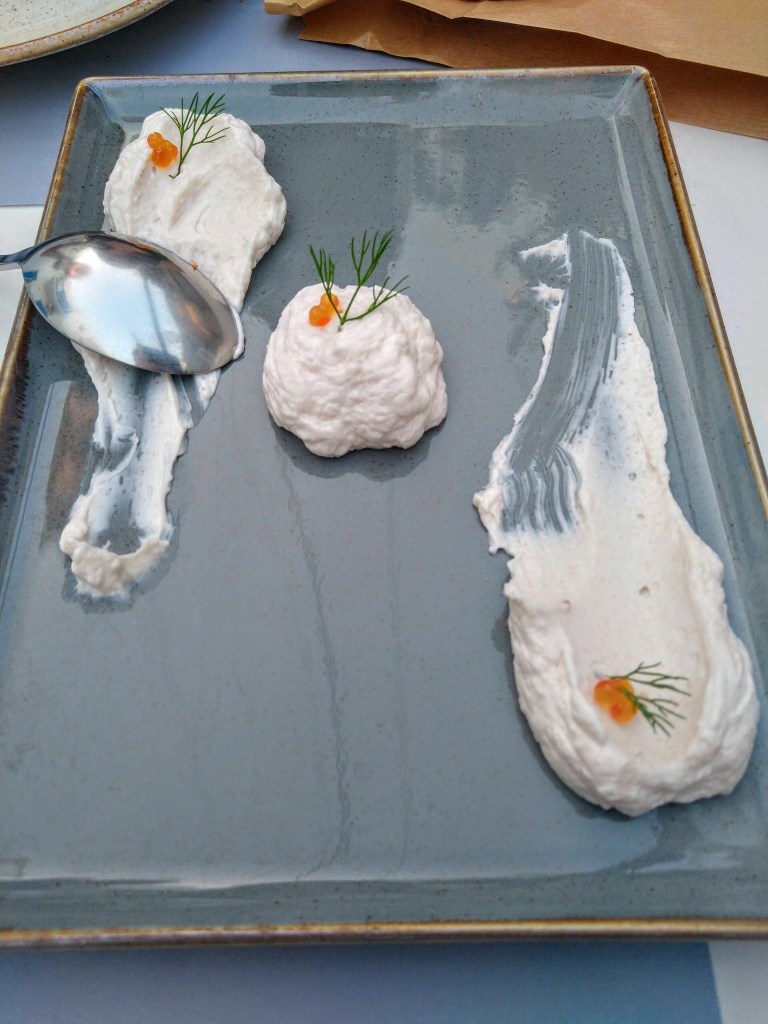
We ordered the taramasalata (a traditional Greek dip made from fish roe), followed by the tuna steak and the lamb shank. Each dish was exquisite and extremely tasty; the tuna was almost melt in the mouth and the lamb shank was hearty and tender.

We would recommend booking ahead for a prime time evening slot.

SOSO Restaurant – NAOUSSA

Soso was another great find close to the centre of Naoussa – and the dining experience was certainly not so-so. The restaurant does have an indoor dining area, but since we were visiting in summer, we opted to eat in the pretty white-washed street. Soso is located just off the busy, boutique lined streets in the centre of town, making it a reasonably quiet and relaxing atmosphere to dine in.

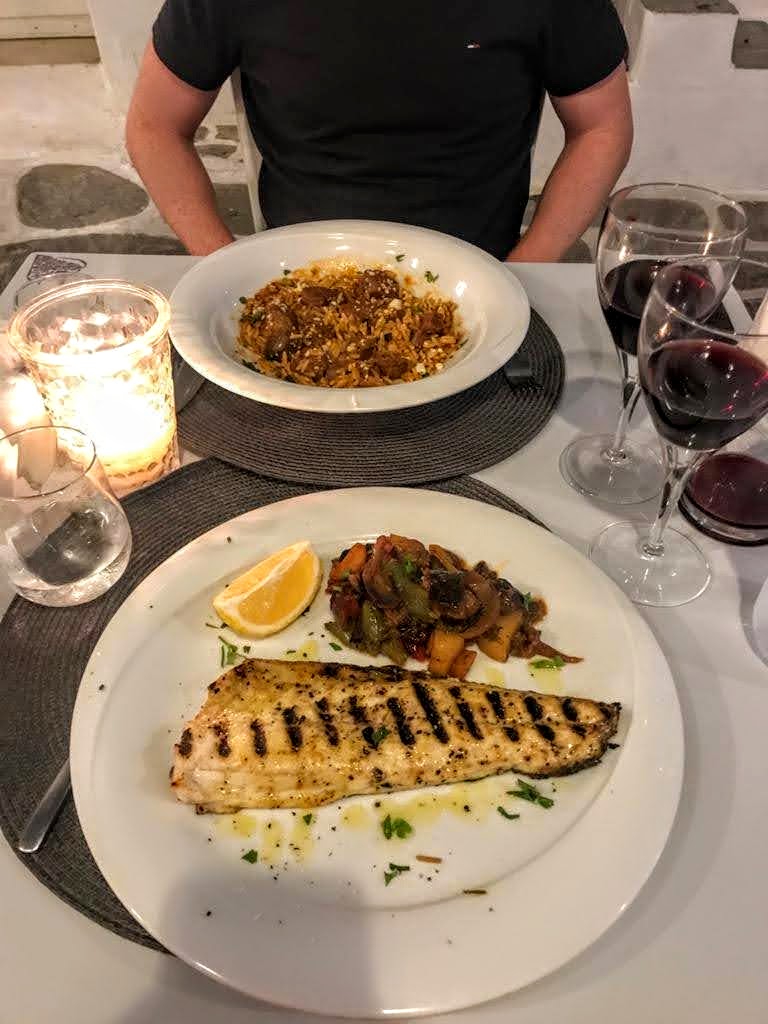
The food is Greek/Mediterranean cuisine which is very well put together. We had two starters: mini halloumi cheese pies in honey, and aubergine rolled in bacon with a cheesy, creamy sauce. For our mains we had a grilled sea bass and a veal orzo dish, both of which were very tasty.

Kafeino Palia Agora – naoussa

This little restaurant is where you go for your real down to earth, local grub. It doesn’t look particularly special at first glance – if it wasn’t for the huge queue, we might not have noticed it. Found in the buzzing narrow alleys running parallel to the sea front, this little beauty is a must for dinner.

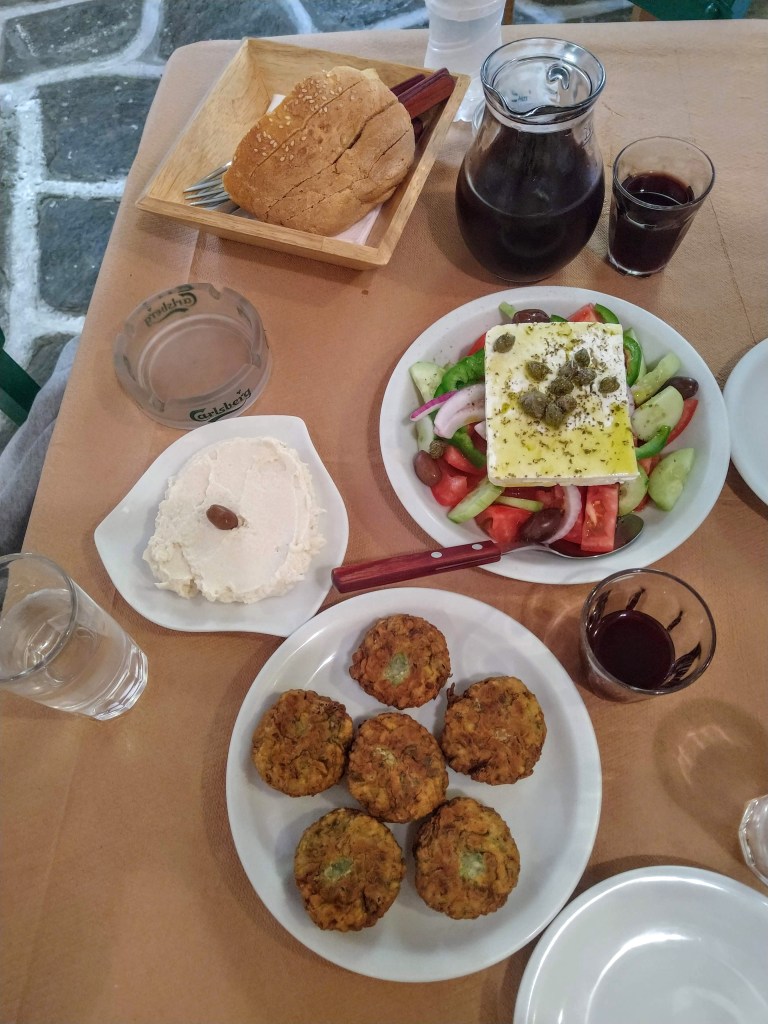
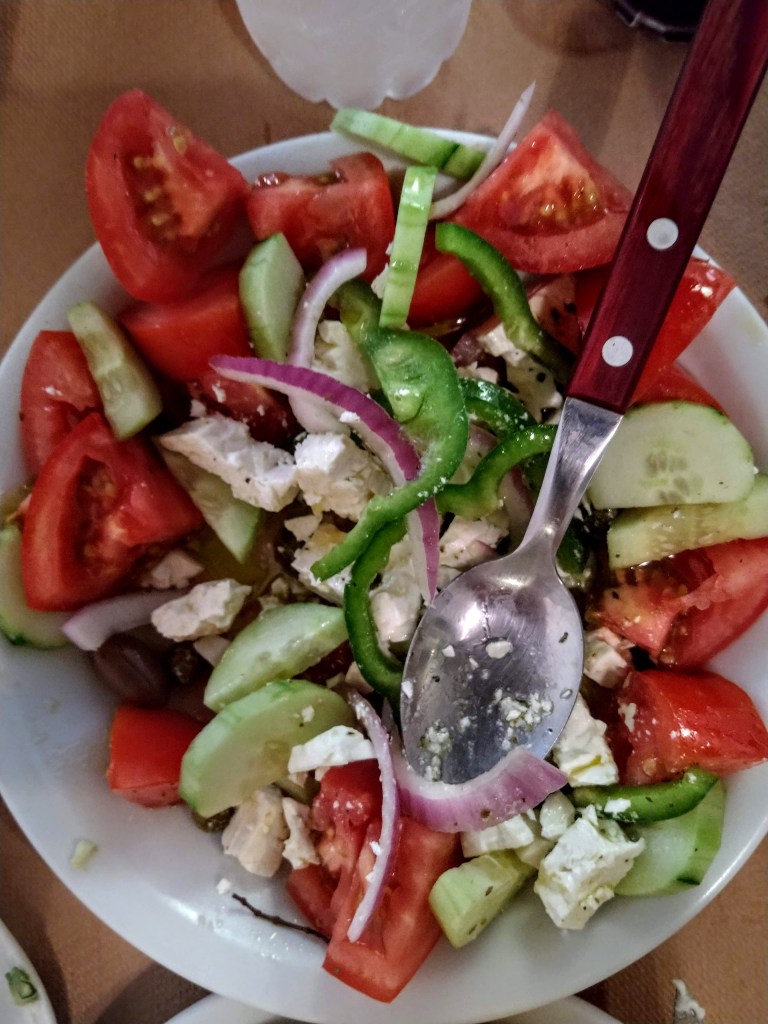
The food is small plates, all of which are excellent examples of traditional Greek food. We got a selection of plates; a Greek salad, taramasalata, fried zucchini balls, stuffed eggplant and chicken fricassee. This was more than enough for two people and was by far our cheapest dinner on our trip. It was extremely cheap for the quality of food we ate. No wonder it is so popular.

One downside is that because the restaurant is so popular, there is a long and quite unclear queuing system that they employ. To get a table you basically need to stop one of the waiters and ask to be put in their virtual queue (based entirely on the waiters’ memory!). Although you are entirely reliant on the waiters not forgetting you and there is no real way of knowing how many people are ahead of you, the upside is you are encouraged to go and grab an alfresco cocktail at one of the many bars lining the street while you wait.

ITRIA Cocktail bar – NAOUSSA

Itria Cocktail bar

This nice colourful little cocktail bar was where we sat in the virtual queue for dinner at Kafeino Palia Agora. It is about twenty metres down the same narrow alley as Kafeino, making it the perfect place to sit and relax with a cocktail while waiting to be summoned by the waiter.

We were drawn in my the colourful, wooden furniture and the lengthy cocktail menu – especially the espresso martinis.

Taverna Glafkos – Naoussa

Taverna Glafkos is the perfect bar for a sun downer. We stumbled on this gem quite accidentally while wandering through the labyrinth of alleys. This taverna offers a wide range of cocktails in a prime location to see the sun light up the pearly white Naoussa sea front. Of course the price of the location is reflected in the drinks!

Sommaripa consolato – NAOUSSA

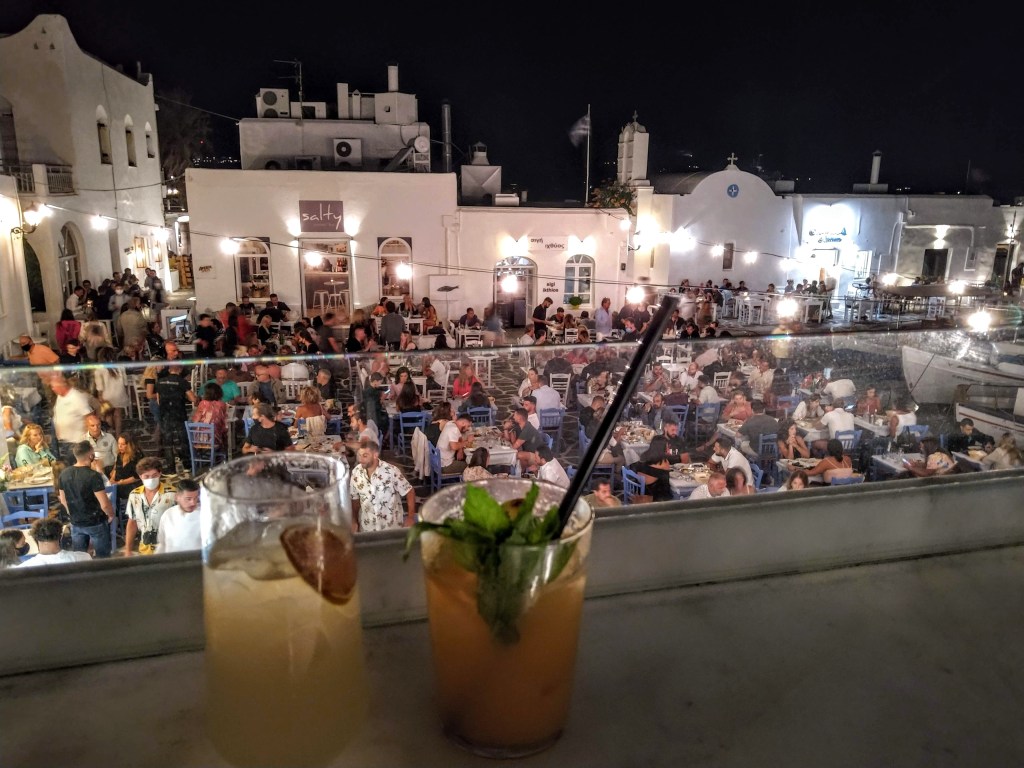
This cocktail bar takes the night up a gear – compared to some of the other quaint tavernas by the sea, Sommaripa Consolato is a bar with some heavy tunes and strong cocktails to go with them. Its main draw is it’s prime people-watching terrace overlooking the harbour, where you can be entertained by the array of buzzing fish restaurants and live music below. But you will have to wait your turn or arrive there early to get one of the balcony tables with that view.
LEFKIANO – LEFKES

Lefkes is a little village nestled in the hills of central Paros. It is one of the prettiest places we visited in Paros and perhaps in all of the Cyclades.

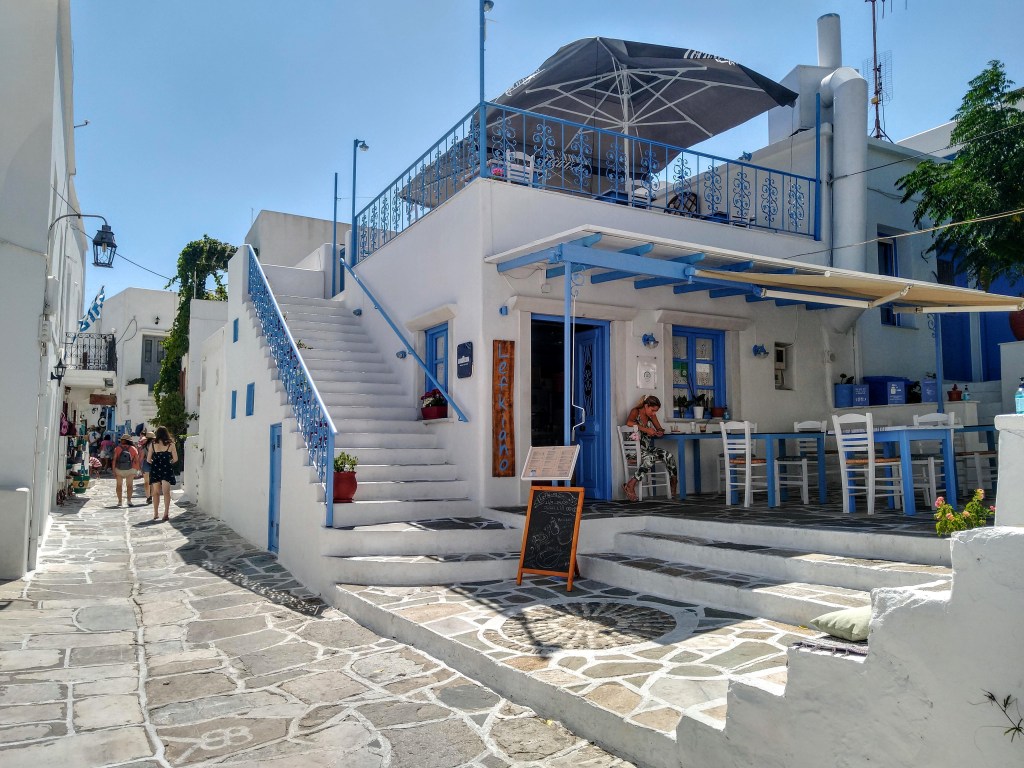
This picture-perfect blue and white restaurant is located immediately on your right as you enter through the main gate into the Lefkes centre. We were a little concerned that we had fallen into a tourist trap at first, as it was literally the first restaurant we saw. But after walking around the centre of Lefkes we decided that this restaurant was really too pretty not to try. We’re glad we came back.

You can choose to sit under the trees downstairs or upstairs on the terrace. The place was pristine and the staff very accommodating. We chose a starter of zucchini balls followed by shrimp linguine and lamb chops; all of which was superb.

Kafeneio I Oraia Plateia – Lefkes

This simple alfresco cafe is situated in a pretty little square at the centre of Lefkes. It is run by an old lady who has clearly been serving coffees to tourists and locals for quite some time.

The cafe has a lovely character to it and clearly makes good use of the summer months with its colourful, wooden chairs and tables squeezed into the square under the shade of two large pine trees. The Byzantine trail starts from here, and it is the perfect place to grab a drink and some homemade baclava before embarking on a hike.

Kafeneio I Oraia Plateia

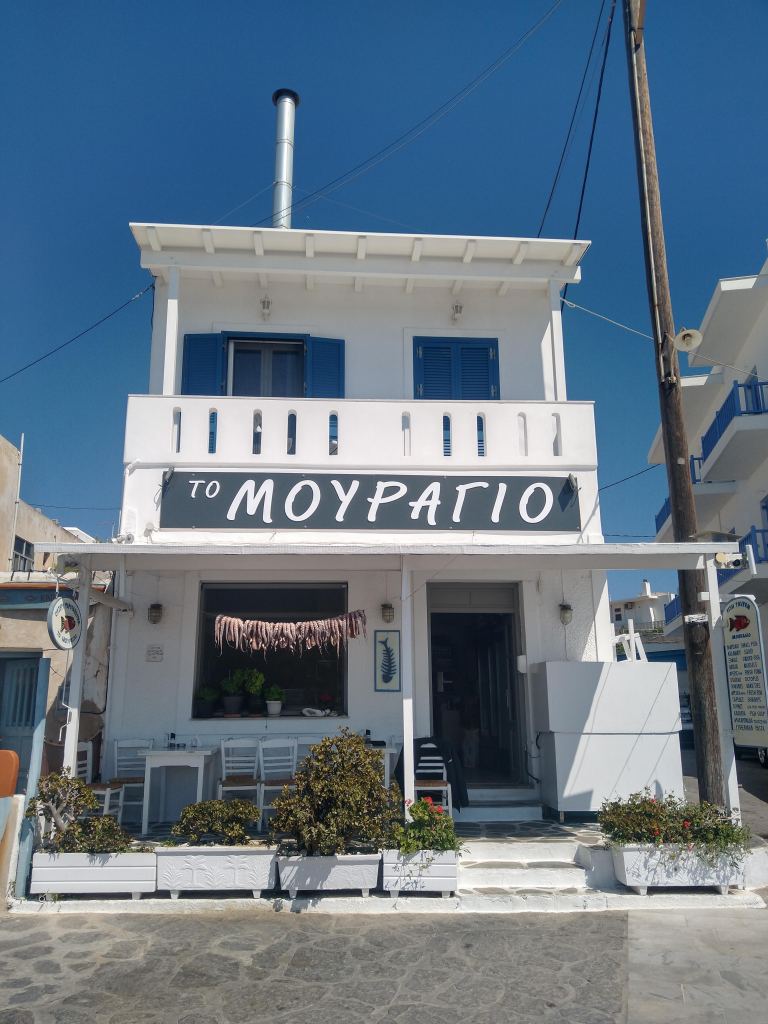
ΤΟ ΜΟΥΡΑΓΙΟ – Aliki

We visited Aliki in the south of Paros for a trip around the coast with Rofos boat trips. We managed to find this beauty on the sea front of this coastal town for lunch after the trip.

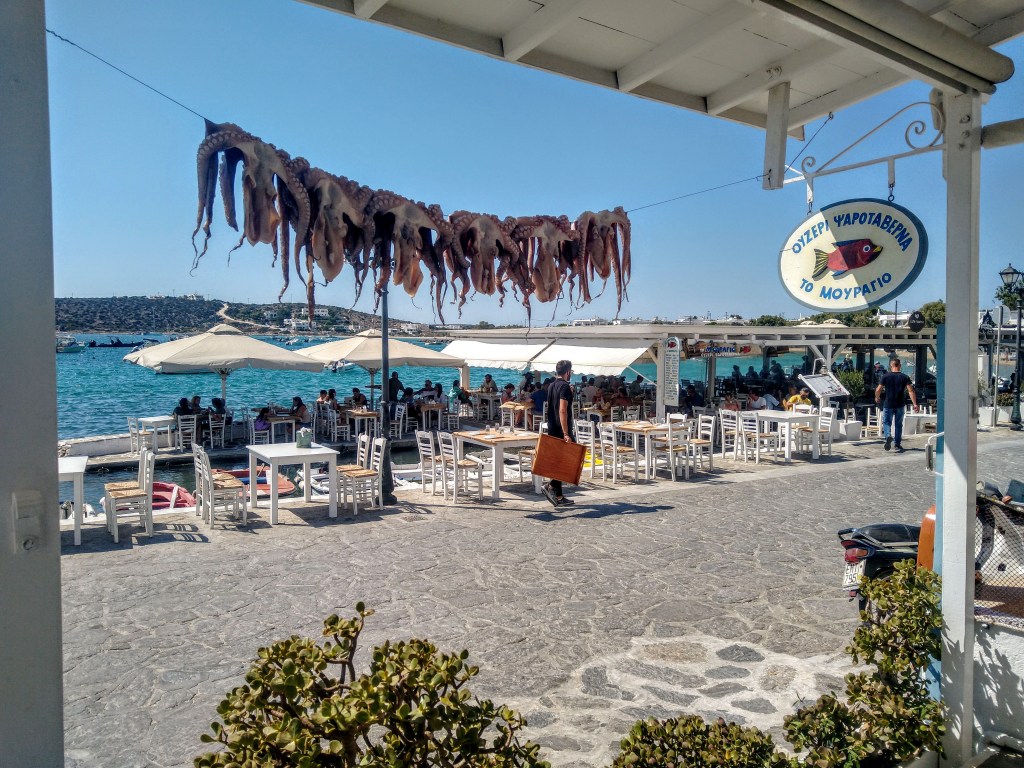
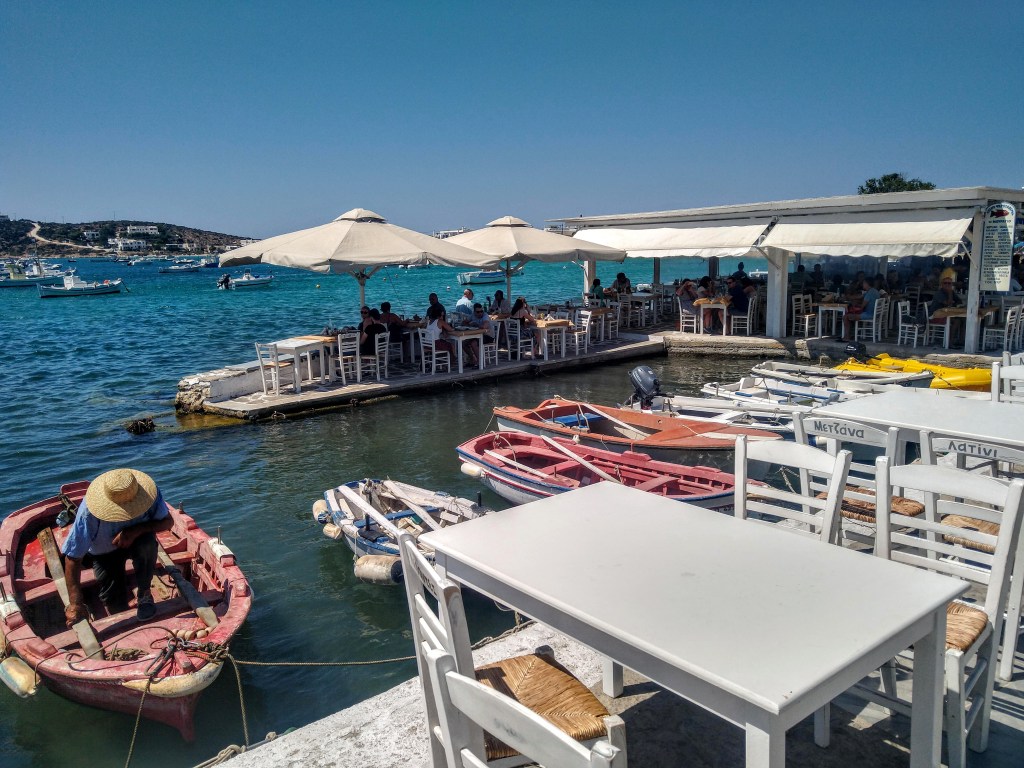
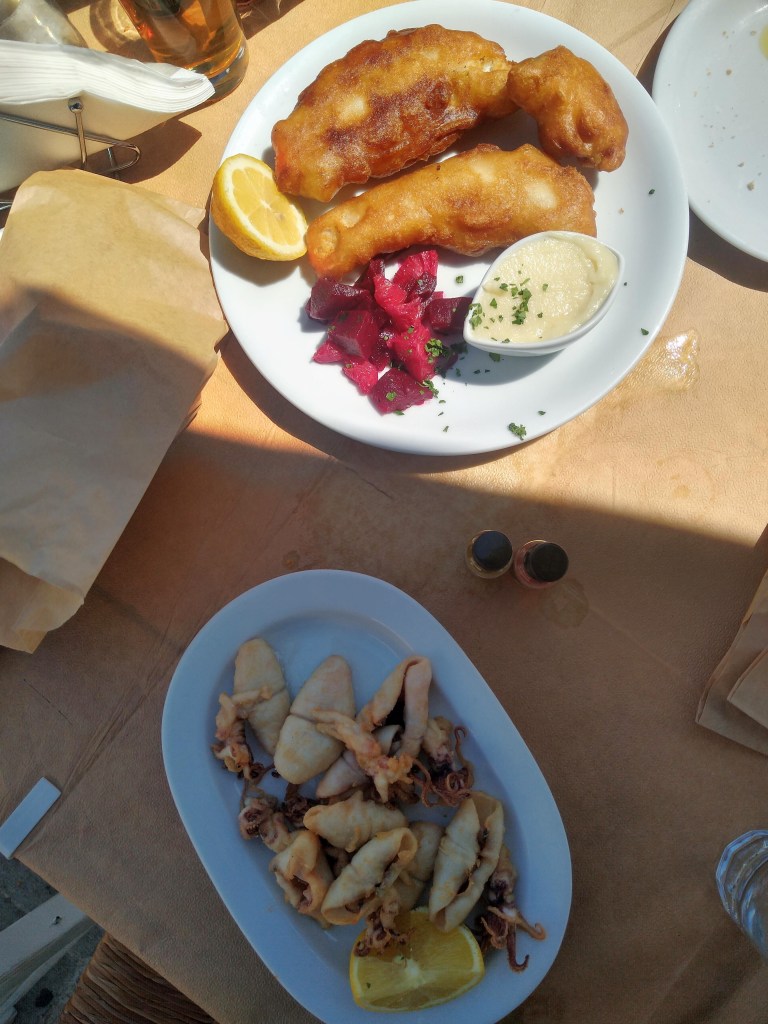
Pronounced “To Mouragio”, this family owned taverna has been perfecting its almost exclusively fish and sea food menu for the last 30 years. The drying octopus on the restaurant veranda is an indication that the food is incredibly fresh. We had a feast of fresh squid and fried sea bream which we enjoyed at a little table precariously placed on the edge of a parasol shaded peninsular jutting out into the harbour. We would definitely recommend asking for a table on the peninsular where possible, it was great being surrounded by the sea and watching the fish swimming below as we ate.

The restaurant is connected to its sister restaurant which also has a peninsular but instead of the fish courses, it majors on more meaty dishes.

Where to Eat and Drink in Tenerife

Where shall we go for dinner? Those staying in one of the many all inclusive resorts lining the south coast of Tenerife may not need to ask that question. But if like us, you’ve opted to stay in the beautiful hilly north of Tenerife, then you are in for a wonderfully authentic island experience, and the same can be said for the cuisine!

On our trip we almost exclusively visited the northern part of the island (see our one week itinerary in Tenerife) where the island experience is dramatically different to the south, and we had the chance to try out a number of fanstasic local restaurants and bars.

We’ve given you a run down of our favourite, and a bit of an insight into what local Canadian delicacies you can expect to see on the menu.

Canarian Delicacies

Patatas Arrugadas – or are they are fondly known – Wrinkly Potatoes, are one of the delicacies which you should be sure to add to your tapas order while visiting the Canary Islands. Although they don’t look particularly appetizing or interesting, they were one of our favourite dishes. The potatoes are simple new potatoes, but they are boiled with their skins on in heavily salted sea water. Once the potatoes have boiled, they are returned to the heat until the salty water has evaporated from them – this produces both the wrinkles and the white salt crust on the skins.

Wrinkly Potatoes with Mojo Rojo and Mojo Verde

Canarian dishes are often accompanied by two sauces, the Canary Islands’ answer to Italy’s red and green pesto; Mojo Rojo (red sauce), made from chili pepper, paprika and garlic; and Mojo Verde (green sauce) made from cilantro, parsley, green peppers and garlic. They are a popular accompaniment for wrinkly potatoes or as a side dish to a main meal such as a traditional Canarian rabbit stew. Generally red mojo goes with meat and green mojo goes with fish. We liked how each restaurant had its own take on their homemade mojos – the sauces varied in taste quite dramatically from restaurant to restaurant. The mojo rojo can sometimes be extremely spicy, so watch out before dipping things in to it too exuberantly.

A Barraquito is a popular multi-layered coffee liqueur drink which comes from Tenerife. It is typically served in layers; working our way up the glass we have a layer of condensed milk, then Licor 43 (a popular Spanish coffee liqueur), espresso, frothed milk and topped with cinnamon and lemon peel. The layers are just for show however, and the proper etiquette it is to mix them all together before drinking it. They are extremely nice.

Restaurante Miramar – Garachico

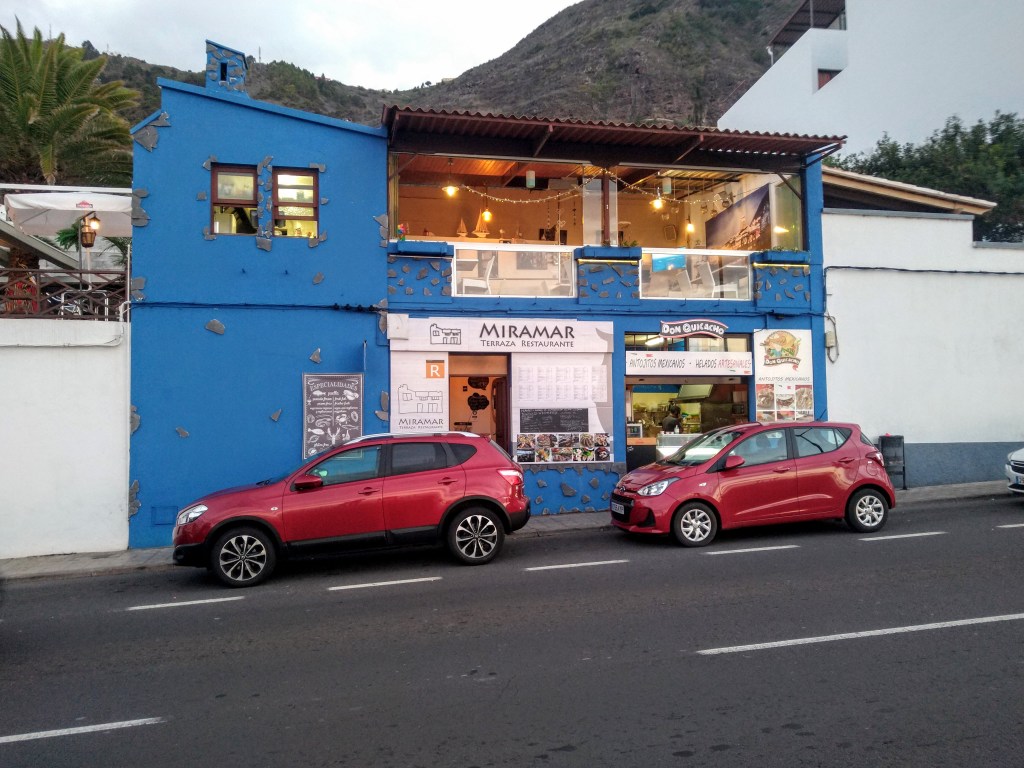
Restaurante Miramar is a beautifully simple restaurant on a terrace over looking Castillo de San Miguel (Garachico Fortress) and the famous Garachico rock pools. This makes it the perfect place for people watching as coach tours flock to the pools as part of their itineraries organised by their package tour operators. The pools were closed due to rough tides when we visited, but I would expect this restaurant becomes reasonably busy for lunch due to its prime location on the sea front. That said, the place felt very local, with very few frills to impress tourists and a menu of fresh fish caught that morning and some classic Canarian dishes. The staff added to the local atmosphere, with refreshingly limited English and an extremely friendly service.

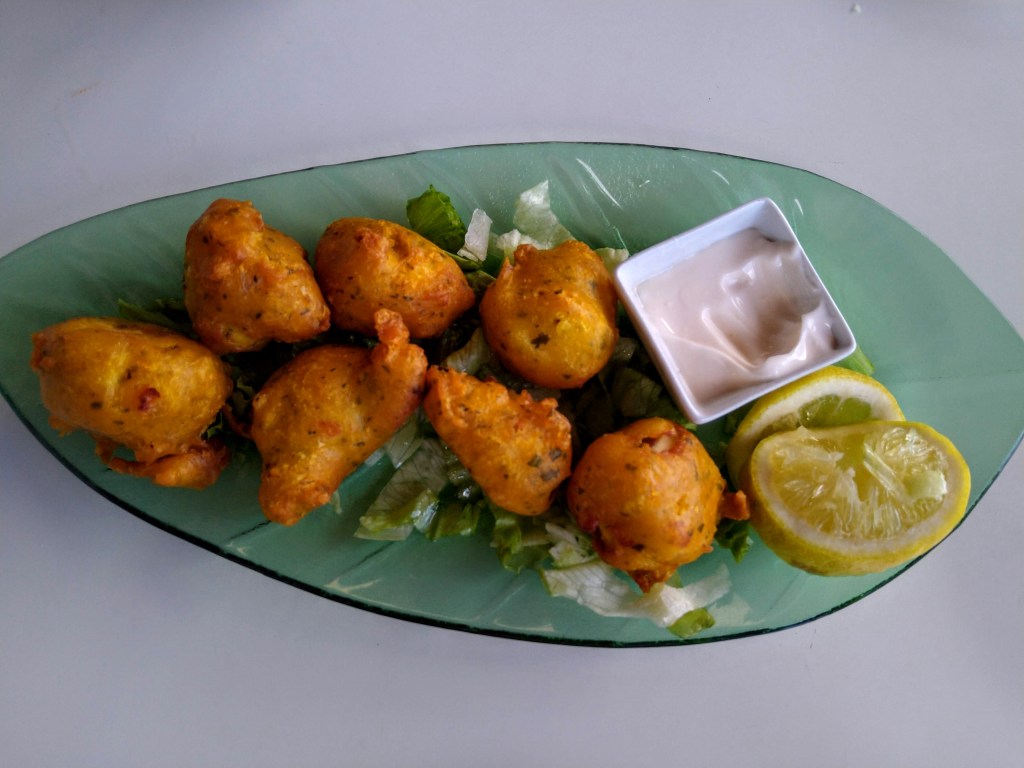
We chose some wrinkly potatoes (accompanied by the best mojo we had all trip), some fried fish balls and a gorgeously tender beef entrecote. This was all priced extremely reasonably as well.

Mirador de Garachico– Garachico

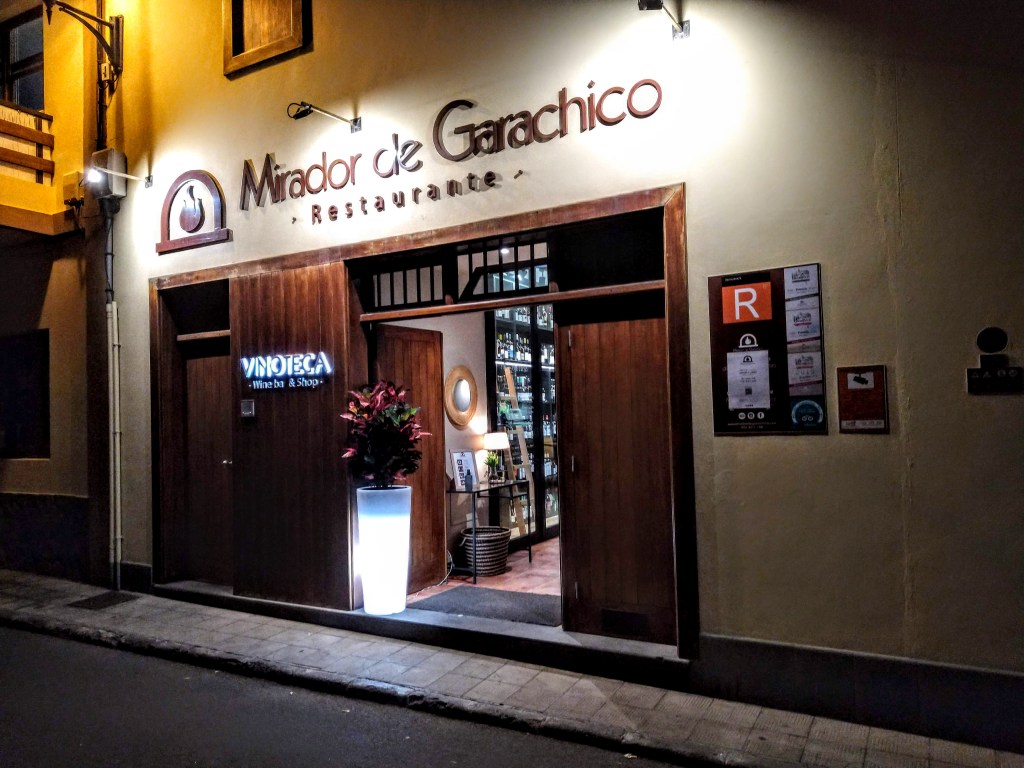
Mirador De Garachico was a much more upmarket affair than the simple tavernas we favoured throughout the trip. If you’re looking for a fancy meal out in northern Tenerife we would certainly recommend this restaurant. It was extremely nice inside; the dining room felt like we were eating in a very posh, flagstone street with two very neat parallel rows of tables along each wall. As well as being a restaurant, Mirador is a wine bar and offers an extensive list of wines, including local Canarian wines and imports.

The food was extremely nice and the chef clearly took a lot of care in his/her presentation of each dish. The tableware was all very extravagant and a big step up in style from everywhere else we had eaten on our trip.

LA PARADA CASA DE COMIDAS – ICOD de Los Vinos

This little gem is on the corner of Icod de los Vinos high street, Calle San Sebastian. We got there at a reasonable time of about 7:30pm when the restaurant was still reasonably quiet and it was a good thing we did; the locals poured in at around 8 o’clock and the place was rocking. We would recommend booking to make sure to avoid disappointment, we were just quite lucky. The restaurant itself has a homely chic to it with tiled floors and wooden paneling; the staff are welcoming and seem to really enjoy their jobs; and the traditional food is hearty and extremely tasty. It’s easy to see why La Parada is so popular with the locals.

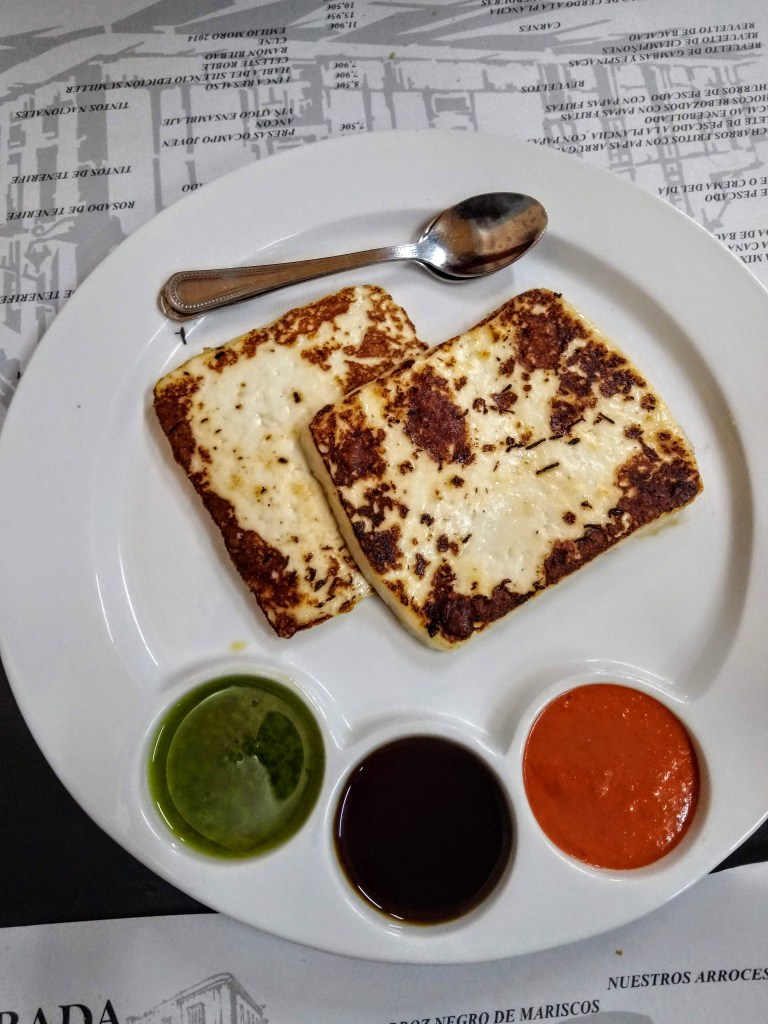
We chose a selection of tapas dishes followed by a couple of main courses, eager to try as many different dishes as we could. Our favourites were some local grilled cheese accompanied by red & green mojo and some delicious sugar cane honey, honey fried aubergines and traditional rabbit stew with wrinkly potatoes.

This was another local restaurant where we got a huge amount of food and ended up pleasantly surprised at how cheap it was.

Local grilled cheese with red & green mojo and honey

La Casa del Drago – Icod de Los Vinos

This gorgeous little cafe under the famous Dragon Tree in Icod de los Vinos is the perfect place for a drink before dinner. We came here on a couple of occasions to watch the sun go down behind the great tree.

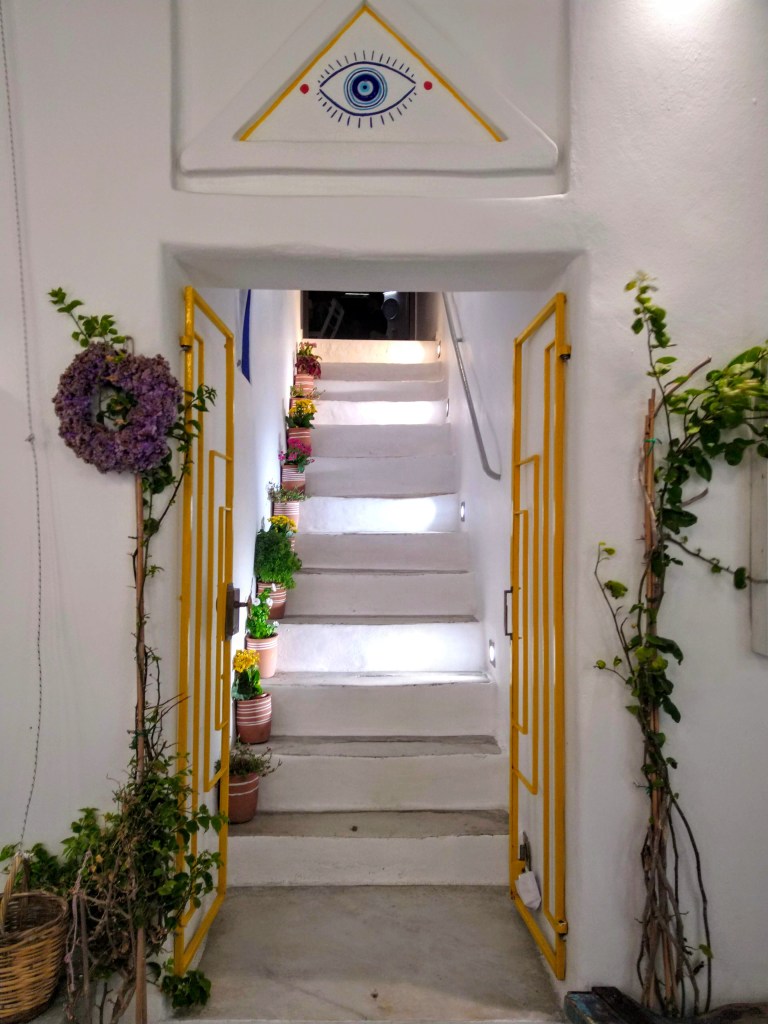
Unless you know this place exists, it’s not particularly easy to find however, as there is no sign on the street indicating that it exists. We hadn’t done our research but luckily stumbled upon it. We thought we were going into a museum as the entrance has some dragon tree mouldings in a glass case and some soft museum-like music playing. We continued down the stairs to a shop stacked with some very nice arts & crafts and artisanal products. Only once we had passed through this shop did we find this quaint little secret garden cafe, with its fushia bougainvillea climbing the wall and the instagramworthy steps which light the way up to the dragon tree.

The cafe does do meals, most of which are targeted at brunchers, but mostly it is a place to come for some cake, wine & cheese or just a casual drink. They have a good selection of local wines and beers and can whip up a Canarian barraquito – which we loved.

Restaurant Tasca Tu Rincón – Alcala

This delightful little restaurant in the main square of Alcala, by the sea front was a great find for lunch. With only a few tables on a parasol shaded terrace, Tasca Tu Rincon is an extremely simple and local dining affair. There are a few different dishes on blackboards in front of the terrace to lure in hungry passers by, but apart from that, the menu is a chefs selection of mixed tapas and that’s about it. The only customisation you can make is to ask to focus the tapas more on meat dishes or fish dishes. The result is that the restaurant cooks a limited number of dishes, but each one is real quality – simple but effective. This also makes it a very reasonable price.

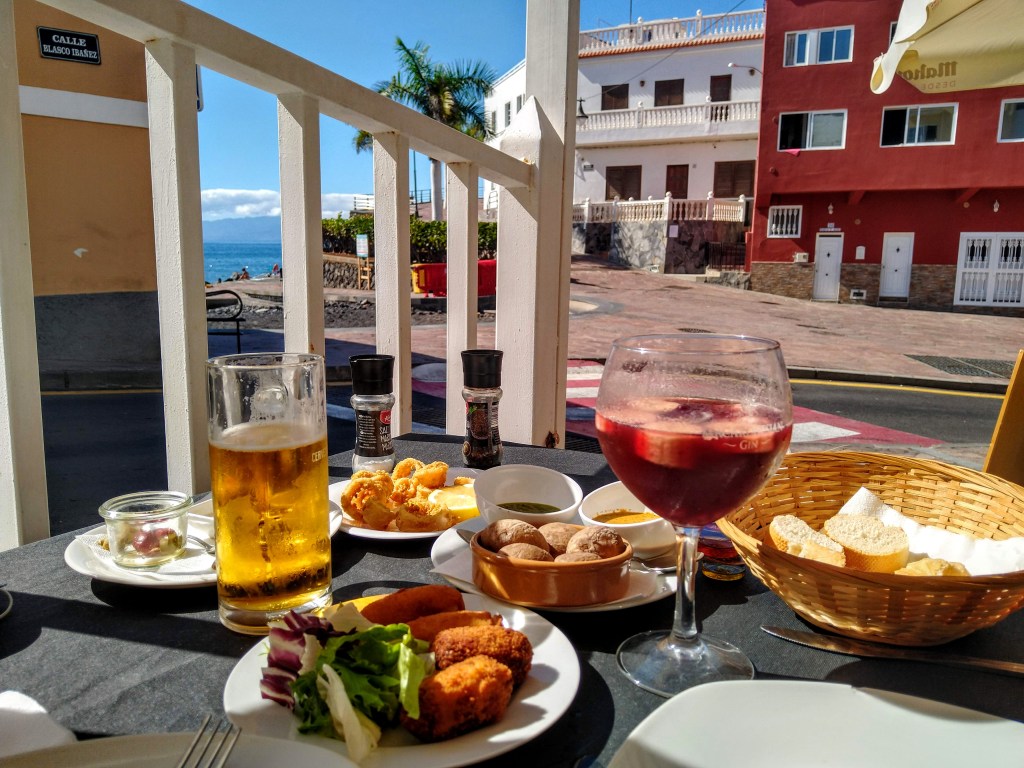
We ordered a mixed tapas and our table got loaded with croquettes, wrinkly potatoes, a skillet of shrimps sizzling in garlic, calamari and a Russian salad.

Restaurant el guanche – Masca

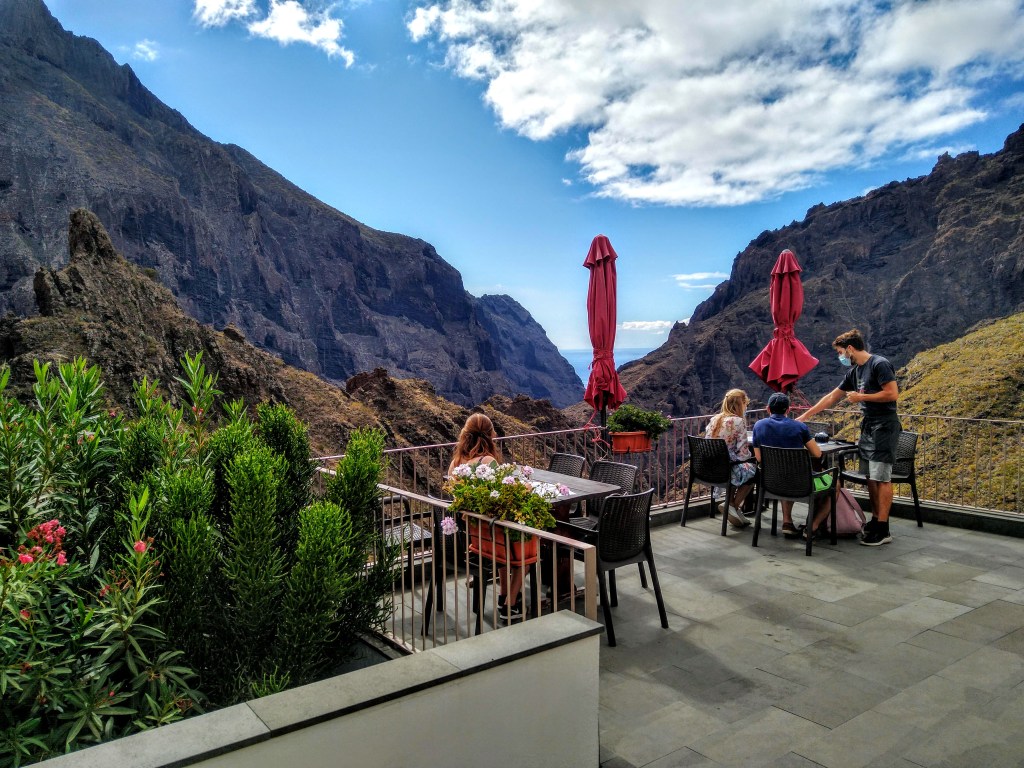
Masca, Tenerife’s answer to Peru’s Machu Picchu , is a little village in the stunning Masca valley of the Teno mountains. El Guanche restaurant is housed in an old school and, perched on the steep mountain side facing directly down the Masca valley it has some of the best lunch time views you can find. The food isn’t bad either. It was our last day in Tenerife when we visited Masca, so we got our last fix of Canarian tapas which included some wrinkly potatoes (obviously), some fried cheese and a Mascan fried omelette. Not the healthiest of meals, but certainly very tasty. The mojo rojo we had here was the spiciest we encountered on our trip, perhaps why they also served us a very nice homemade apple sauce which offset the heat very well.

Where to Stay in Sri Lanka

We visited Sri Lanka for a couple of weeks after we graduated from University (see our two week itinerary in Sri Lanka). Having not started working in the corporate world at the time, we weren’t blessed with bags of cash, so the aim of this blog is to show how easy it is to stay somewhere really nice, on a small budget in Sri Lanka. Of course there were some places where we got it wrong and found ourselves without air conditioning or in the right location, but there were a good number of places we booked which hit the nail on the head.

Panorama Rock Cafe – Rekawa

The main attraction at Rekawa, near to Tangalle in southern Sri Lanka, is to watch the turtles clambering up the beach to lay their eggs and bury them in the soft sand beaches. Because this marvel of nature occurs at night, we wanted to stay near to the Turtle Watch Rekawa site so that could easily get there and back without losing too much sleep.

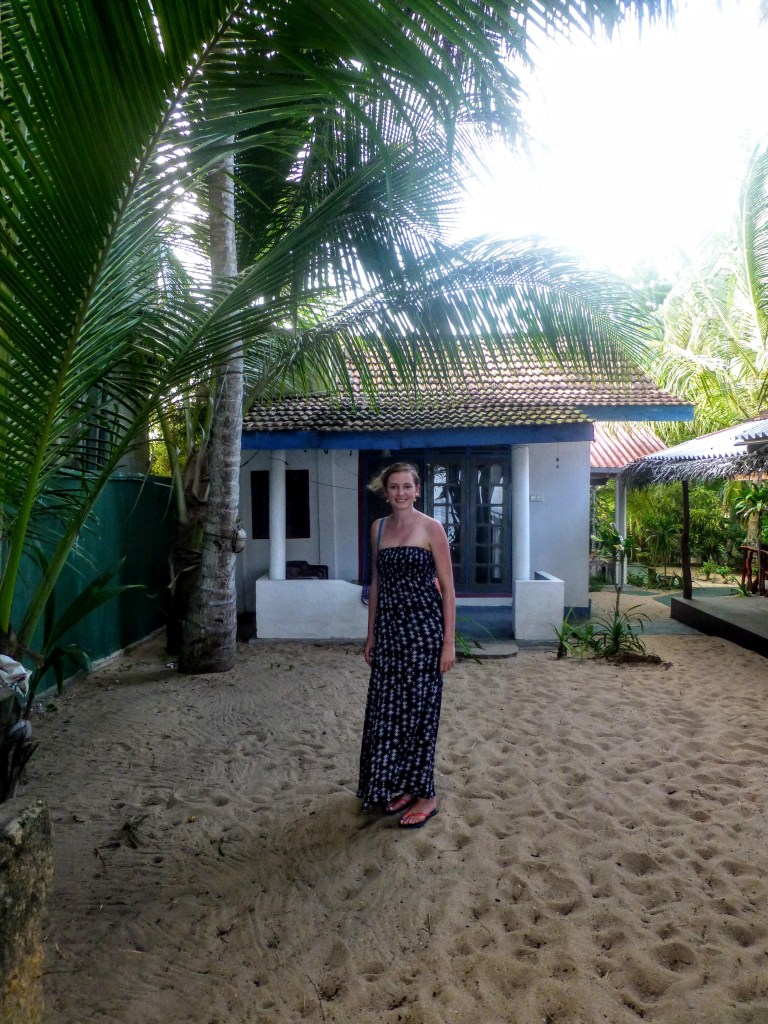
Panorama Rock Cafe is a beautiful little hotel found on the quiet and extremely pretty spit of beach between the sea and Rekawa lagoon. It is made up of a cluster of cute little cabins nestled among the palms right on the beach front. For around £25 a night, you can’t expect luxury, but the cabins certainly do the job and there’s not many places with a better location and outlook.

One thing to bear in mind is that the waves here (and on the south coast in general) are extremely powerful and swimming in this little paradise is not quite so blissful as you might think.

Panorama Rock Cafe

Siraii Village – Wirawila

We based ourselves in Wirawila to visit Yala National Park which is famous for its Leopards. The park itself is a short drive from Wirawila and Tissamaharama, the largest town in the area.

Saraii village was one of our favourite hotels on the trip. This amazing hotel is made up of several thatched tree houses perched high in the trees – it’s every kid’s dream! The bedroom is situated on a large wooden platform, which can be reached by a couple of fairly steep, but pretty secure wooden ladders. It certainly makes lugging your baggage up there quite a challenge, not to mention clambering down in the middle of the night to go to the loo. Each treehouse has it’s own private bathroom on the ground floor which is kept remarkably clean, though as you are staying in and amongst nature don’t be too surprised to find one or two tree frogs hanging out in the toilet!

There is a restaurant onsite which serves some great food for breakfast and dinner, and features regular visitors in the shape of monitor lizards (which we huge but completely harmless).

We managed to bag this beautiful tree top room for only £40 a night – an absolute bargain for such a cool hotel experience.

Little Folly – Ella

Ella is an extremely pretty town in the highlands, just south of central Sri Lanka. A stop here is a no-brainer on your tour of this beautiful island. It is a small town but there are still a fair few accommodation options available, ranging from wooden cabins to some swanky, balconied hotels overlooking Adam’s Peak, Ella’s Rock and with a view all the way down to the sea in the south.

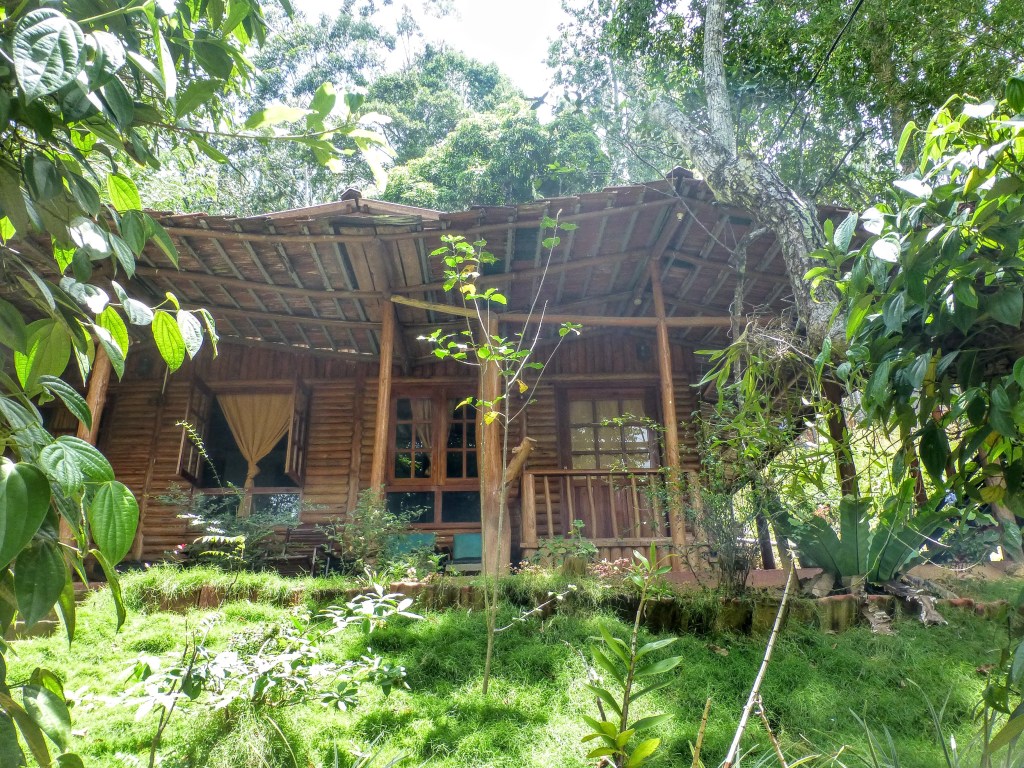
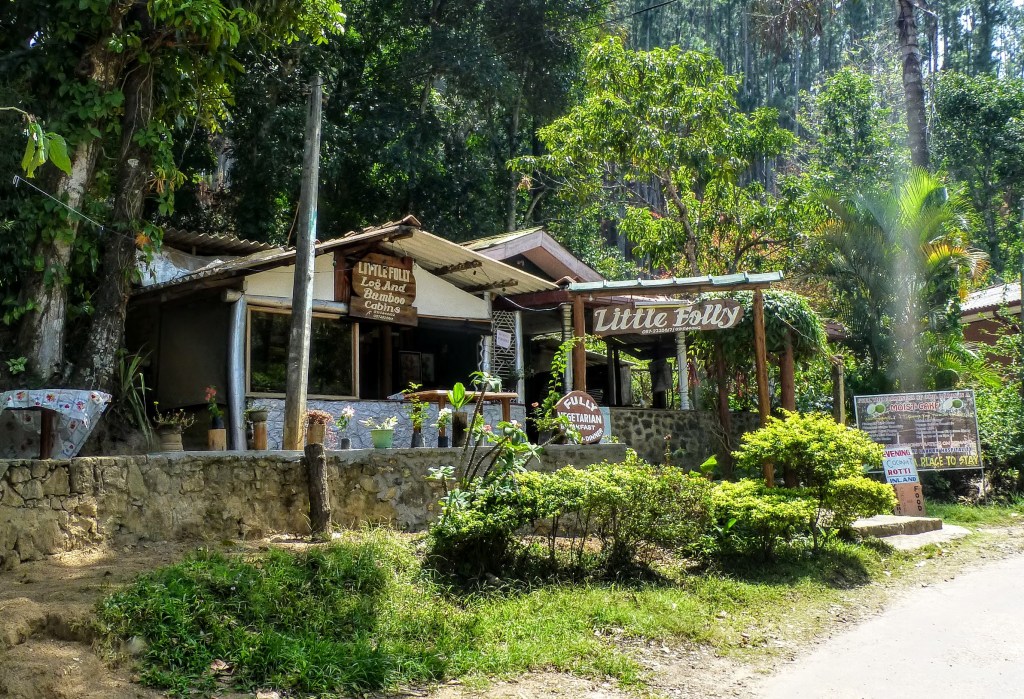
We chose a rustic log cabin just on the edges of Ella, called Little Folly. This bed and breakfast, poking out from a pine forest on the road to Adam’s Peak serves excellent cakes, so even if you aren’t staying here, it is certainly worth popping in for some afternoon tea on the way back from the peak.

For as little as £20, you can get a spacious and rather characterful cabin for the nigh, including breakfast in the morning.

Back of Beyond (Pidurangala hotel)- Sigiriya

Sigiriya is an unmissable stop on your Sri Lanka trip. Basing yourself around here for a couple of days allows you to visit Sigiriya Rock, Dambulla Cave Temples and our favourite part of the whole trip, Minneriya National Park.

We went with our driver’s recommendation for accommodation here – a great perk of having a driver was his knowledge of where to go and where to stay (see our blog Getting a Driver in Sri Lanka for more reasons if you’re not yet convinced it’s worth it). The accommodation was another rustic hotel hidden away in the jungle out in the sticks, called Back of Beyond. The hotel was made up of several thatched, terracotta coloured, mud walled, cabins and some tree houses, joined together by a maze of paths. We opted for a room on the ground this time (though again our bathroom was very popular among the tree frogs). The cabins were extremely well decorated considering how cut off from the outside world they were and how rustic they appeared from the outside.

The Pidurangala hotel is part of the larger Back of Beyond chain of rustic hotels which spans across some of the major tourists hot spots in Sri Lanka such as Yala National Park. This was one of the more expensive hotels on the trip, at £55 a night, but it was certainly worth it and was a great base for the sites in the area.

Unfortunately we were so excited by the Elephants of Minneriya National Park and Sigiriya Rock, that we completely forgot to photograph this lovely hotel.

COlombo COurtyard – Colombo

On our trip we spent a couple of days in Colombo, Sri Lanka’s captial city. Colombo is home to the main international airport and so depending on the times of your arrival and departure flights it may be necessary to stay here.

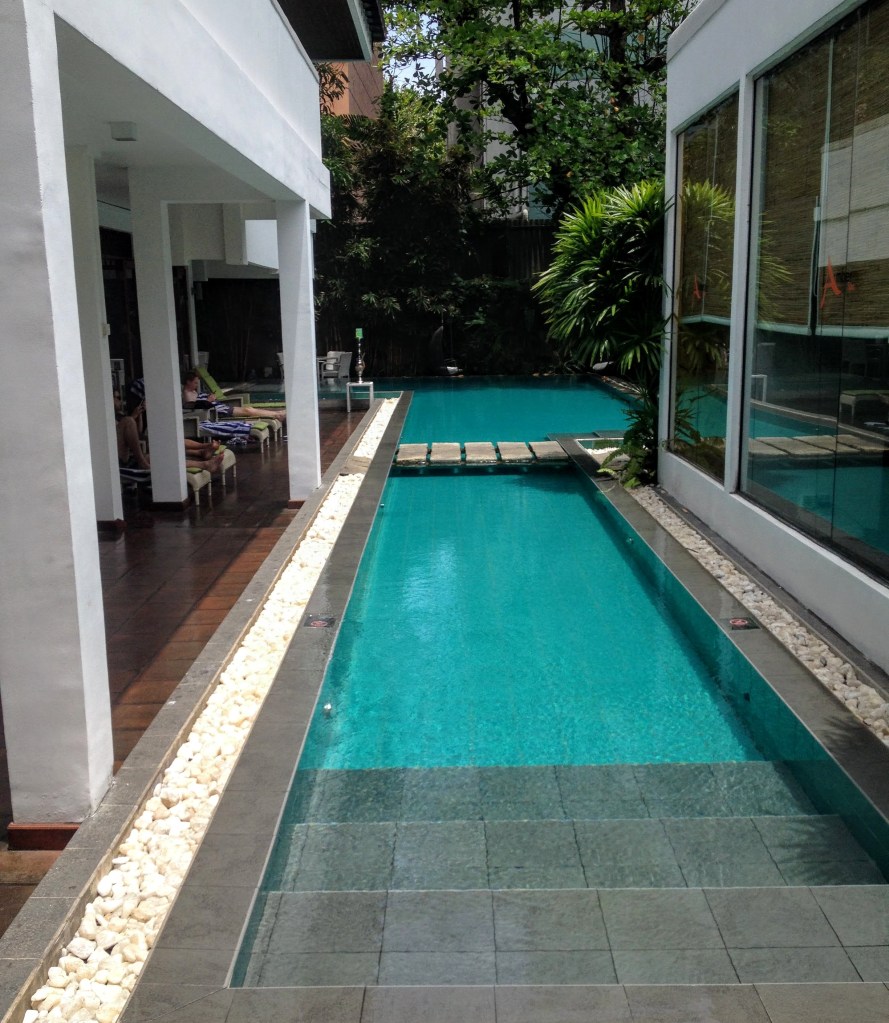
We splashed out at Colombo Courtyard on the last night to end our trip in style. This 4 star hotel in the heart of the city is certified as a carbon neutral hotel and has an extremely contemporary design and atmosphere.

The hotel has a wide range of amenities including a restaurant, a roof terrace bar, a gym & spa and a pool. The pool isn’t particularly large but its good enough for a quick dip and a splash around.

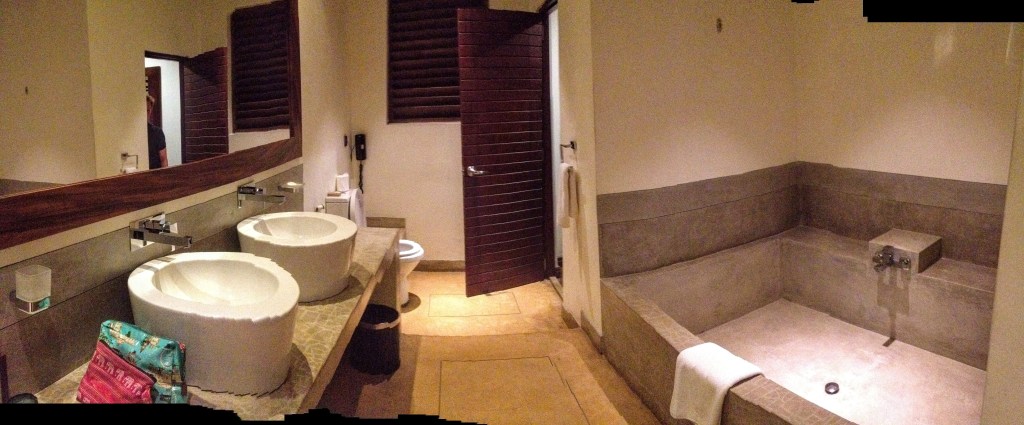
We stayed in a superior deluxe double room which was extremely nice, with a large amount of floor space, four poster bed a bath the size of a small plunge pool. This was only for £75 a night, which we thought was pretty good value. The other perk we cashed in on was the breakfast in bed service on the day of our flight. This was excellent.

Galle Face Hotel – COlombo

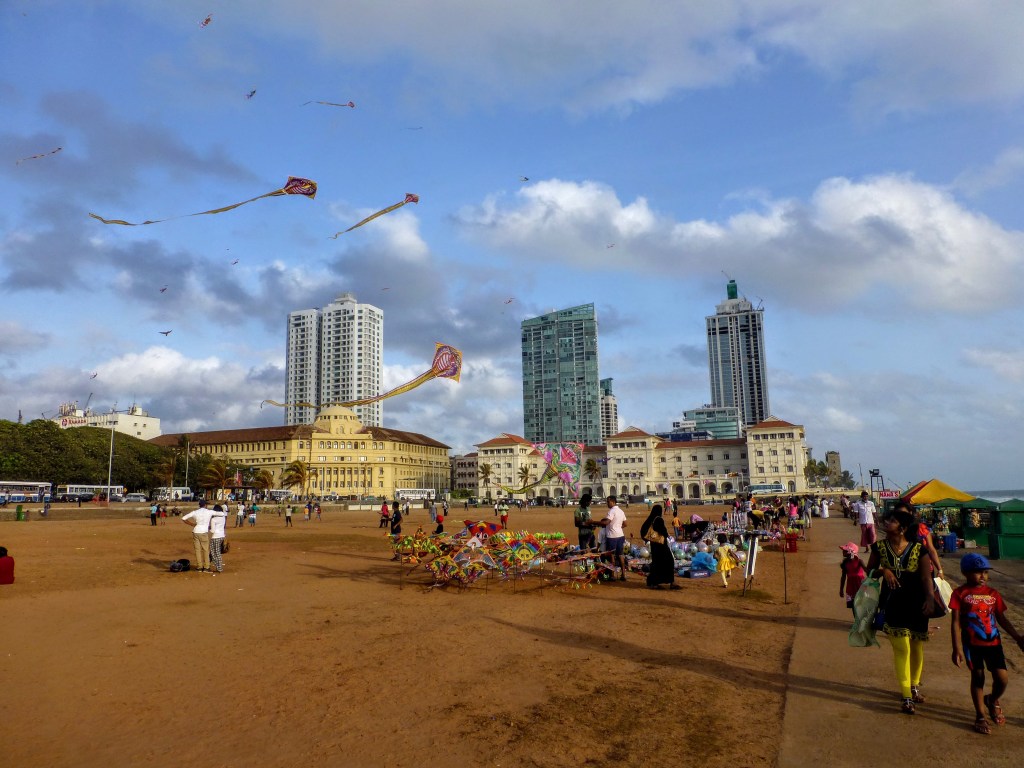
For a more traditional hotel steeped in history we would recommend the Galle Face Hotel in Colombo. The hotel is perceived by many as the most elegant and prestigious place to stay in the city. The building certainly has a sense of grandeur and the decor transports you back in time with its cavernous rooms, its tasseled cushions and its heavily patterned rugs. It sits on the sea front with beautiful views out to sea and across Galle Face Green, the kilometre long stretch of land running parallel to the sea which once was a popular place to go for a walk in Victorian times. Now the green is full of local kids playing football and flying their kites.

The hotel has a very grand courtyard with perfectly manicured lawns reaching down to the sea which make it a very popular wedding destination. It is also very well equipped with a number of facilities including a spa and a decadent wine cellar.

Laos: The Festival of Light

Luang Prabang Dragon Boat Parade

Every October many provinces around Laos light up with fire breathing water dragons. The festival Lai Heua Fai marks the end of Buddhist lent (known as Boun Awk Phansa) which spans three lunar months from the full moon in July to the full moon in October. The festival is second only in scale to the New Year celebrations in Laos. If you’re wondering what time of year to visit Laos, you should seriously consider this magical festival into your decision.

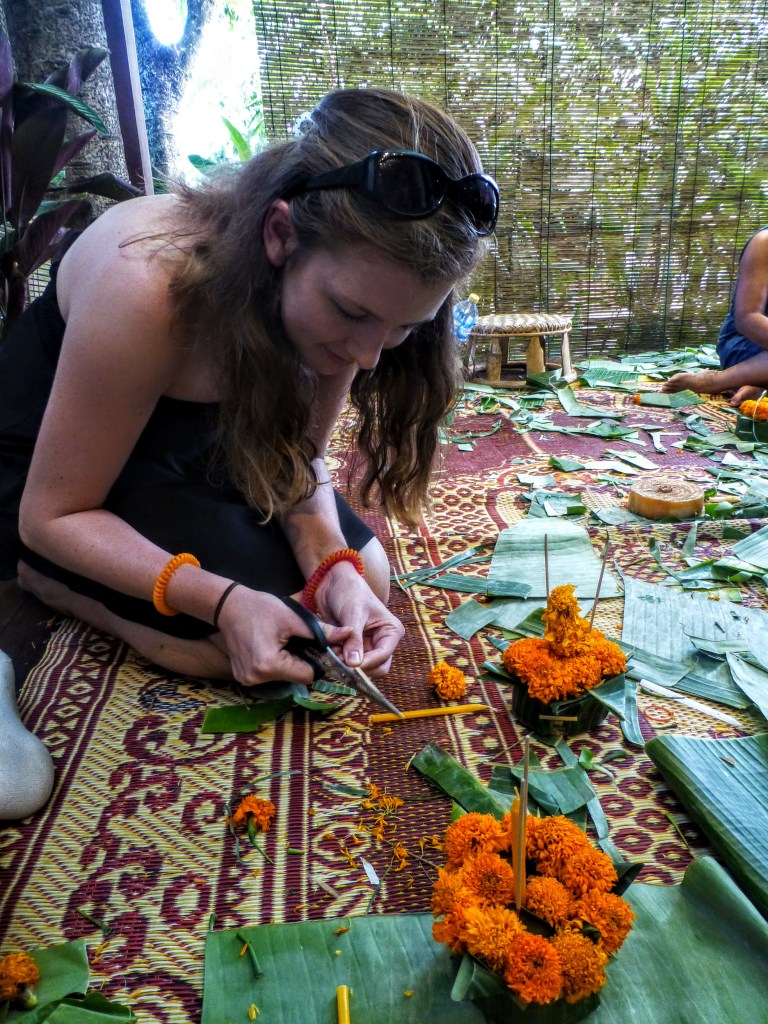
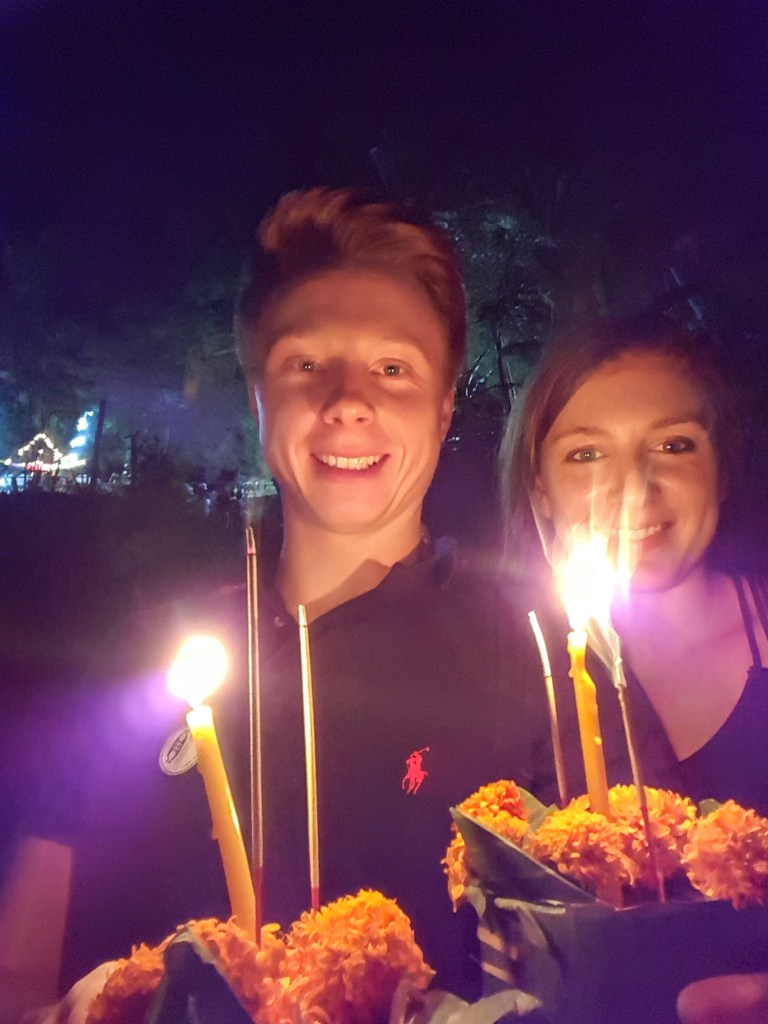
The festival is all about paying homage to the Nagas or water spirits in the Mekong River which will then bring good luck for the year in return. To do this each Laotian builds a little boat called a Krathong by wrapping a piece of banana trunk in banana leaves and decorating it with marigolds, a candle and incense. It is possible to buy Krathongs at many shops and stalls around the towns, but we stumbled across the Traditional Arts and Ethnology Centre (“TAEC”) in Luang Prabang where you could build your own at their arts and crafts workshop. This was a thoroughly enjoyable experience and it was quite straight forward as all the materials were provided.

20,000 of these little boats are launched into the Mekong River every year, each one with a moment of meditation and a wish to bring good luck to its architect. It is said that if both you and your lover’s Krathongs float down the river together you will meet again in your next life – one of ours turned upside down and sank instantly, so make of that what you will.

It is popular for tourists to pay for a boat trip out into the Mekong to launch their Krathongs, but this is not essential. We joined the locals by clambering down the steep stairs on the bank of the Mekong and launching ours from a little platform at the water’s edge.

Luang Prabang Temples during Lai Heua Fai

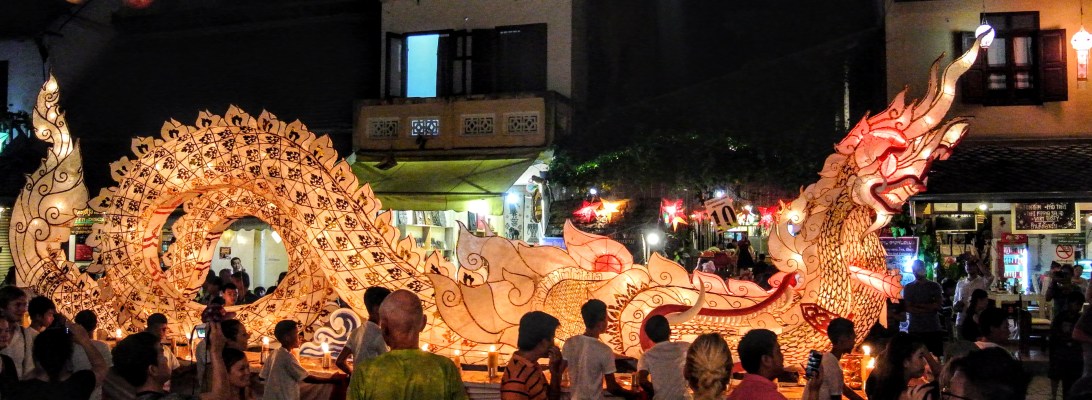
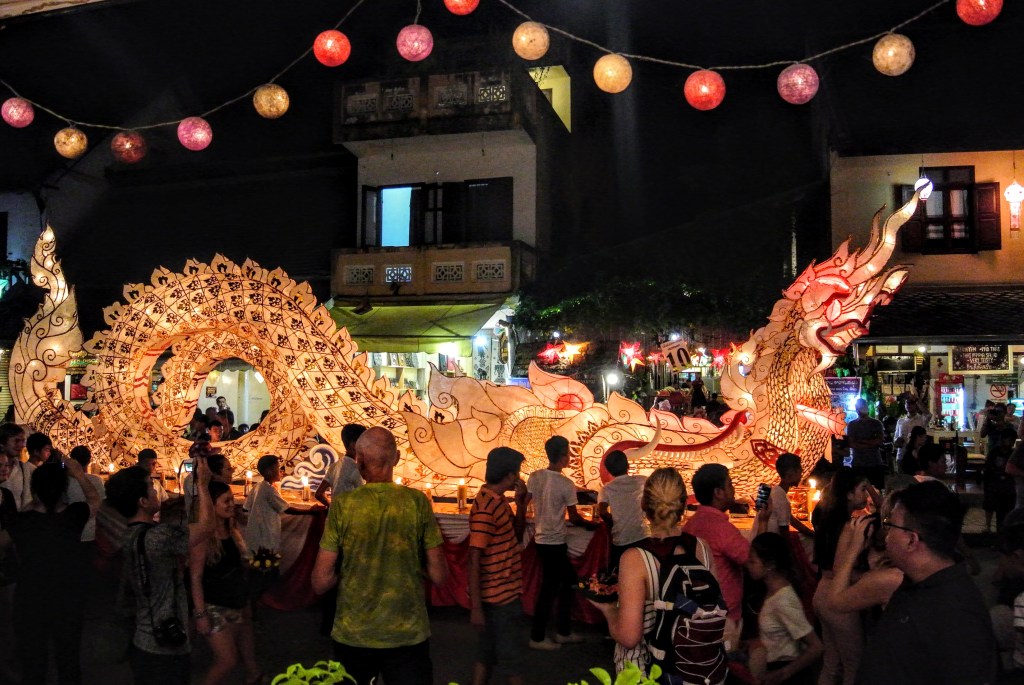
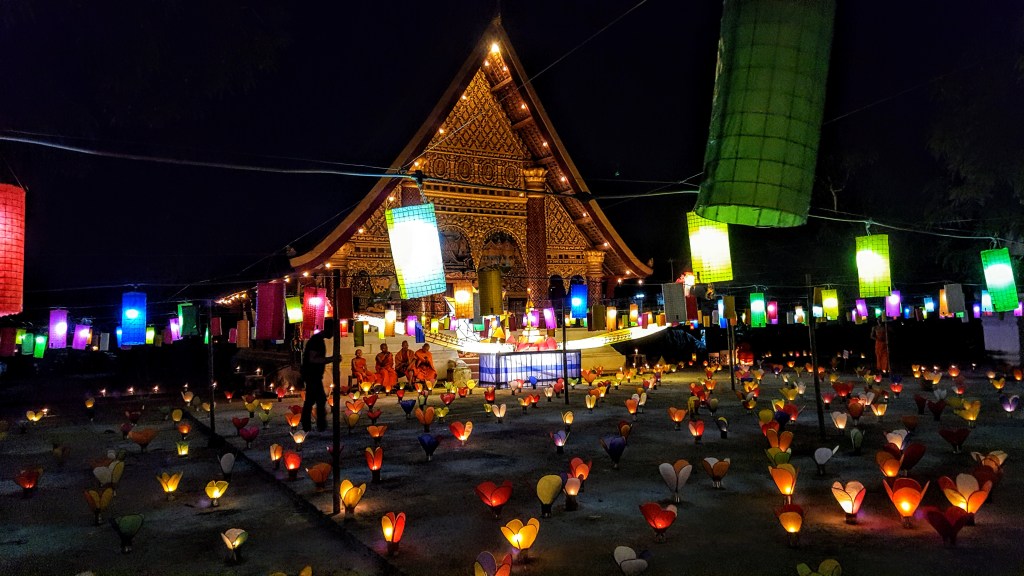
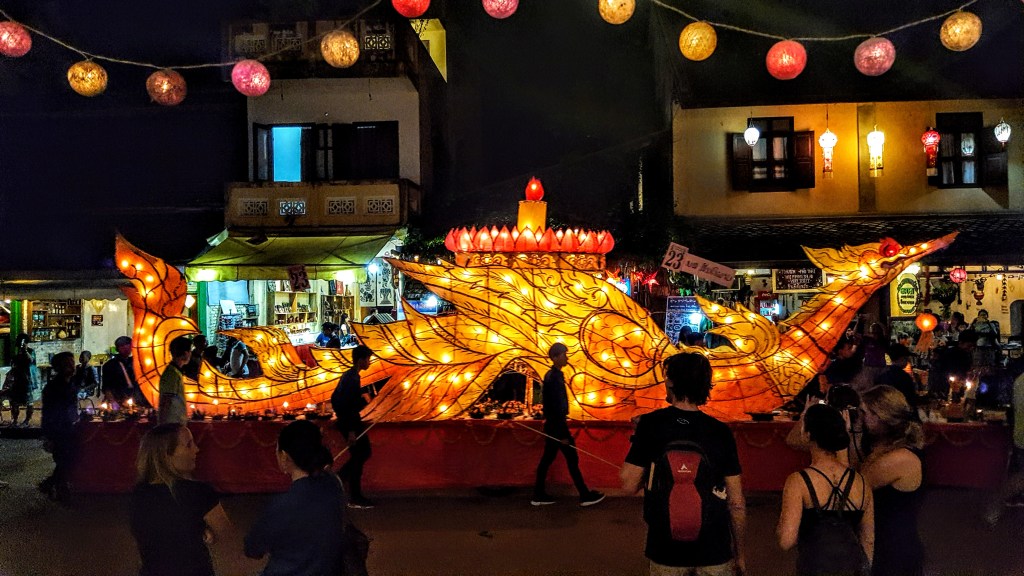
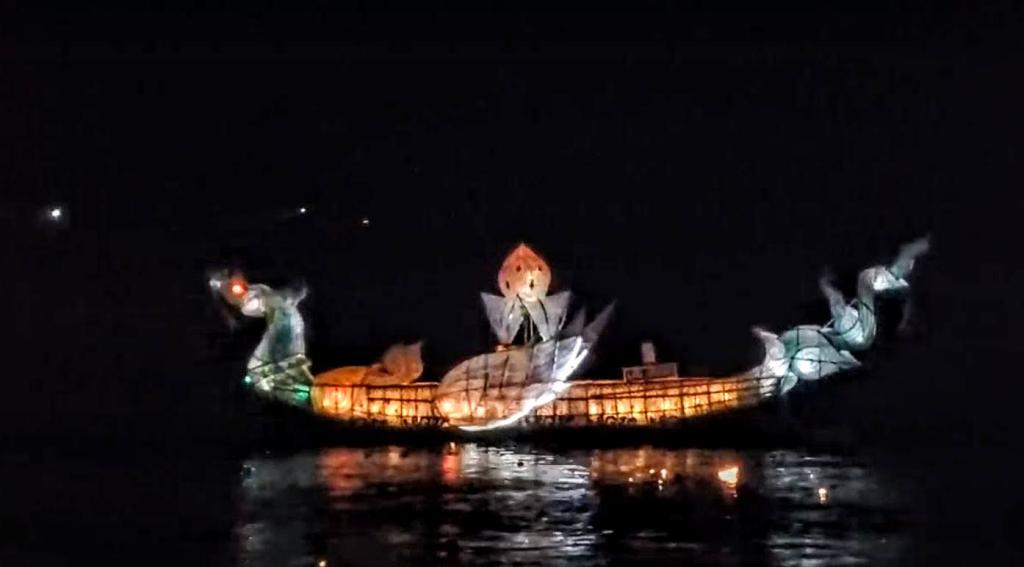
Luang Prabang is a fantastic place to experience the festival, as all the temples are adorned with candles and surrounded by hundreds of colourful paper lanterns throughout the build up to the big day. On the evening itself, all the surrounding villages pour into the town centre wheeling the most magnificent dragon boats. Each boat is made primarily from paper layed-up over a wire frame which is bent into intricate curves to form the head, body and tail of the dragon. The dragons glow brightly with hundreds of candles placed inside each one.

Watching the parade of dragon boats from Novelty Cafe

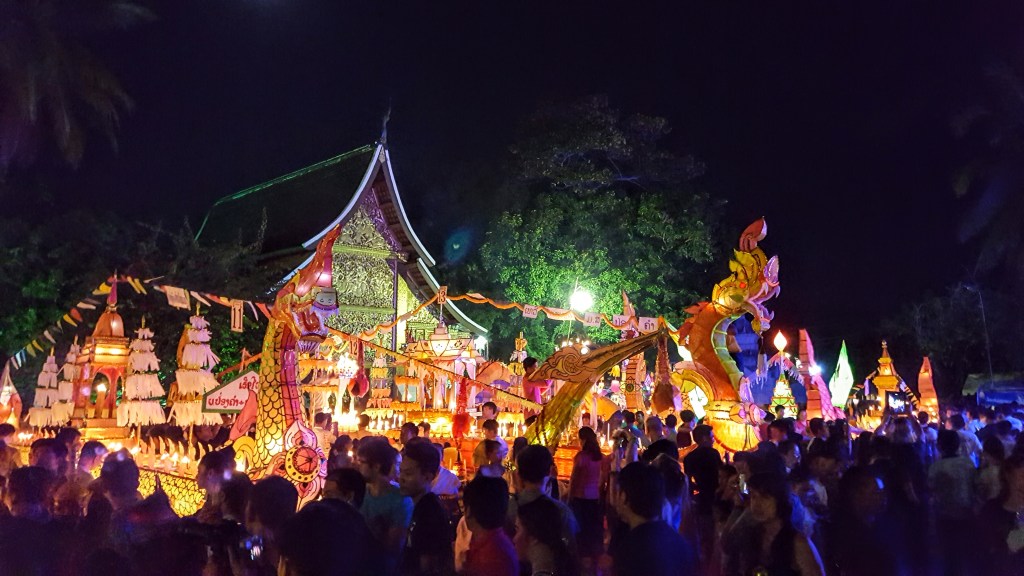
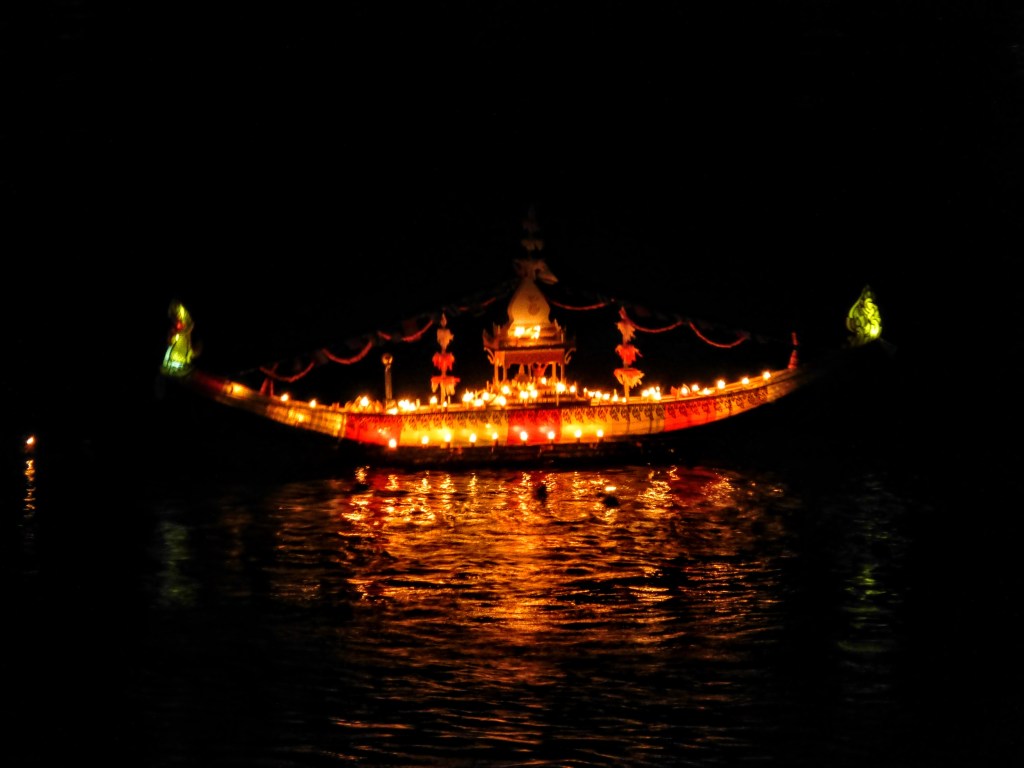
The dragon boats form a line and parade slowly up the main street of Luang Prabang accompanied by music, dancing and singing. The parade works its way up the main street and culminates at Wat Xieng Thong temple. Here the best dragon boat is crowned and at about 9pm they are all launched into the Mekong River creating one of the prettiest boat races you will ever see. The huge shining dragons navigate between the thousands of tiny flickering lights of the Krathongs, already bobbing down the Mekong, bringing good fortune to all.

The line up of the dragon boats at Wat Xieng Thong

Here is how we recommend taking part in the festival in Luang Prabang.

  1. Build your own Krathong at the Traditional Arts and Ethnology Centre (“TAEC”)
  2. Hunker down on the terrace of Novelty Cafe and have dinner while watching the magical parade of dragons pass
  3. Catch up with the parade as it turns into Wat Xieng Thong for the finale
  4. Watch the launch of the dragon boats into the Mekong
  5. Launch your little Krathong (and don’t forget to make a wish)

If you are interested in reading more about travelling in Laos, please have a look at our 10 Day Itinerary in Laos. It was certainly one of our favourite trips so far, and we’d recommend it to anyone.

Getting Around Java

Java is a beautiful Indonesian island to travel round (see our Java itinerary for more info), and there are many public buses which take backpackers up and down the island, making travel from hub to hub relatively cheap and straight forward. You will most likely want to combine a trip to Java with some of the other Indonesian islands such as Lombok, Sumatra, Flores, Komodo and Bali, in which case flying from Jakarta or Yogyakarta is your best bet. Combining buses with a ferry from island to island is also an option which would work quite well.

Many of the local tour operators will have minibuses in which they will organise pick up and drop off to your accommodation. Travelling about by road is generally quite pleasant as the roads in Java are in decent condition and some of the views across the countryside, carved into thousands of rice terraces, are excellent. Around Jakarta the traffic is horrendous however, as the city population doubles during the day with commuters travelling to and from the city to work.

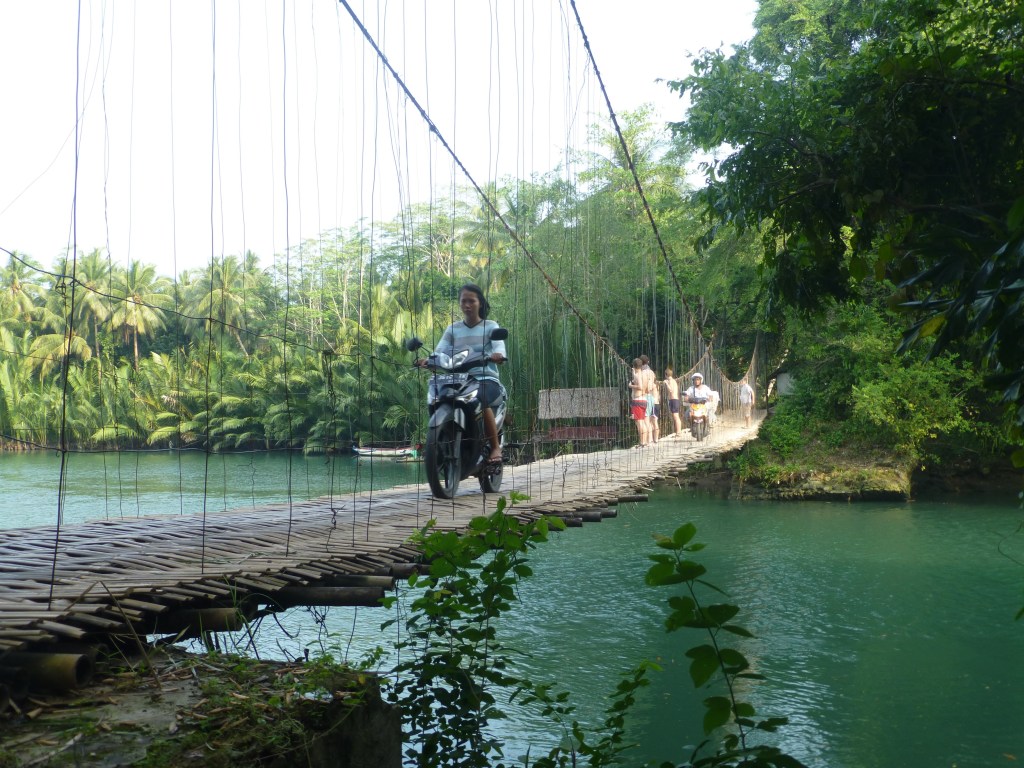
Bamboo bridge near to Pangandaran