
Jordan
WHY WE LOVED JORDAN…
Remarkably safe and easy to explore (thanks to its size), Jordan, a country not necessarily on everyone’s radar as a holiday destination, has so much to offer. Whilst Petra is still the main attraction for most visitors (and rightly so), explore further than this and be rewarded with experiences such as sand boarding in the desert dunes of the wind torn Wadi Rum, floating in the Dead Sea and cycling through the green, blossoming fields of Umm Qais on Syria’s border.

Adventure
Chill
Culture
Nature
Our two week itinerary
Hire a car for this itinerary, and embark on a road-trip through awe-inspiring landscapes all the way from Aqaba in the South to Umm Qais in the North. You can also do this trip in reverse if flying into Amman is preferable. You can shorten this trip to 7-10 days by just hitting the main highlights of Wadi Rum, Petra, the Dead Sea and Amman.
☆ Don’t miss: A night in a Bedouin goat hair tent in Wadi Rum.

Day 1: Aqaba
Fly into Aqaba and pick up your hire car from the tiny airport (which we found was surprisingly seamless).
Aqaba is a small city on the Red Sea with plenty of hotels and restaurants. Many use this as a base for visiting the diving and snorkelling clubs further south. We weren’t overwhelmed by the city or the snorkelling – perhaps we were unlucky with the sea conditions – so we would recommend using Aqaba as a stop over before heading to the spectacular Wadi Rum desert the next day.
Once you have settled into your accommodation, take an evening stroll around the town and the beachfront, grabbing a pre-dinner drink at the Royal Yacht Club on the harbour. Head back into town to choose from a variety of food options – Syrian Palace is a casual alfresco spot with delicious kebabs and flatbread.

Day 2: Wadi Rum
Rise early and grab a quick breakfast at Al Mohandes – trust us, it may not look that special from the outside, but there’s a reason it’s so popular with the locals. The freshly cooked falafel and hummus is the perfect start to the day.
The drive to Wadi Rum is scenic and blissfully short (just over one hour). Wadi Rum desert, with its bright orange sand, blue cloudless skies and majestic towering sandstone mountains was once used as the filming location for Lawrence of Arabia – and when you get your first glimpse of it, you will understand why. For us, visiting Wadi Rum was an unforgettable experience, and the absolute highlight of our trip.
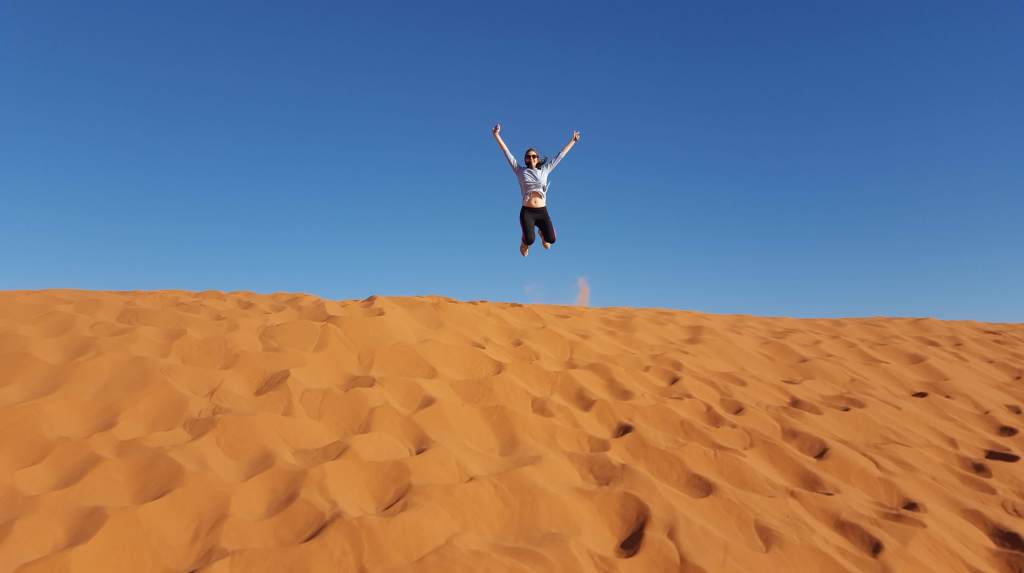
There are various options for visiting Wadi Rum, but we would definitely recommend opting for at least a 2 night, 2 day itinerary. This amount of time gives you the opportunity to properly explore the desert further than just the main touristy spots, any less is not enough in our opinion!
There are a number of different tour companies offering packages that include all activities, meals and board. We went with Rum Stars, and chose their Jabel Al Hash Tour, which we would highly recommend and will describe fully in this blog.

Day 1 of the tour will be similar whichever tour group you opt for. After being met in Wadi Rum village (where visitors can park their cars for the duration of the trip), we embarked on a full-day 4 x 4 jeep tour through the desert as part of a small group. Ploughing through the desert valleys was an adventure in itself (especially when we had a go at sitting on top of the jeep). The stop offs throughout the day included:
- Lawrence’s Spring – a natural spring, we climbed to top for the first of many soaring views across the desert.
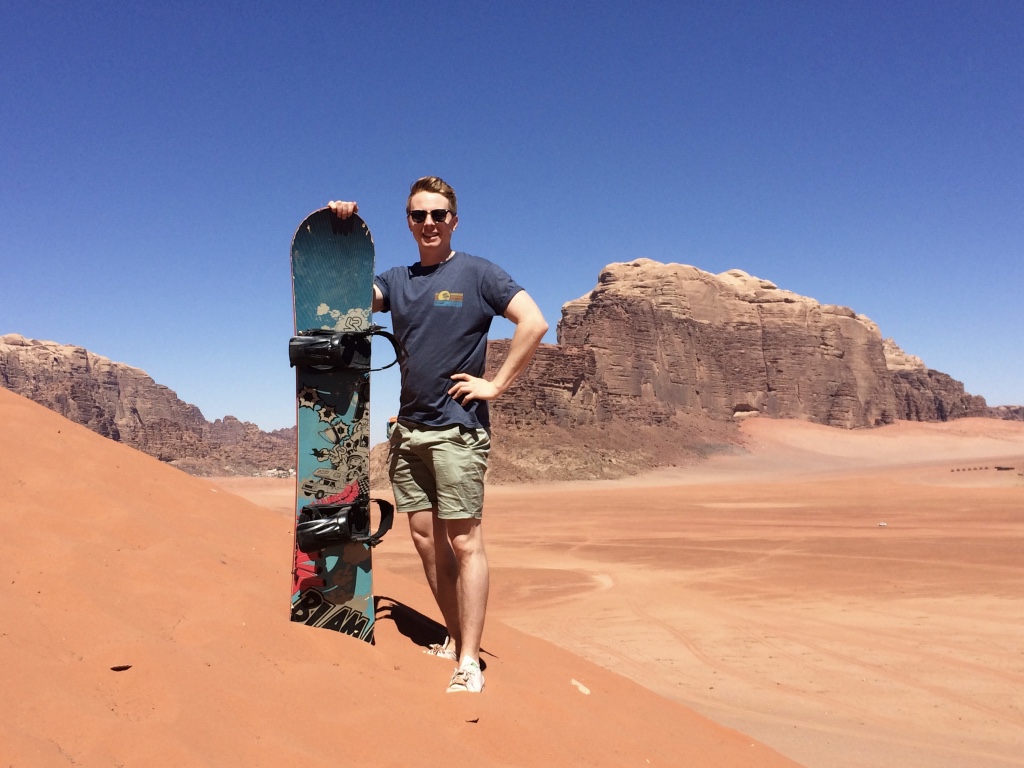
- The red sand dunes of Wadi Um Ishrin – we raced to the top of up the incredible blood red dunes and sand-boarded back down. Amazing.
- Abel Khazali Canyon – we clambered through the rocky canyon, marvelling at the canyon walls adorned with ancient rock inscriptions and paintings by the Nabateans and Thamud people.
- Jebel Burdah rock bridge – the highest natural bridge in Wadi Rum which you can climb up to and walk across.
- Al Maham Canyon – A towering canyon which we hiked all the way through (we were thankfully picked up at the other end).
The adventure-packed day was polished off with a traditional Bedouin mint tea at a sunset spot on a mountain edge, watching the sun go down.
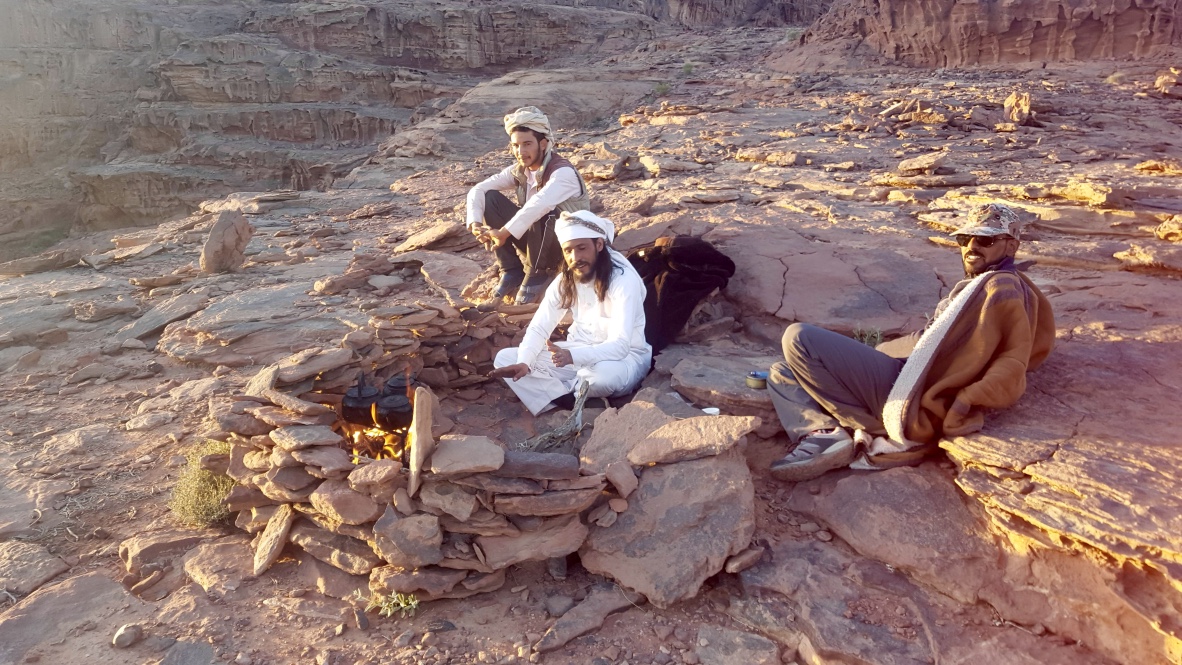
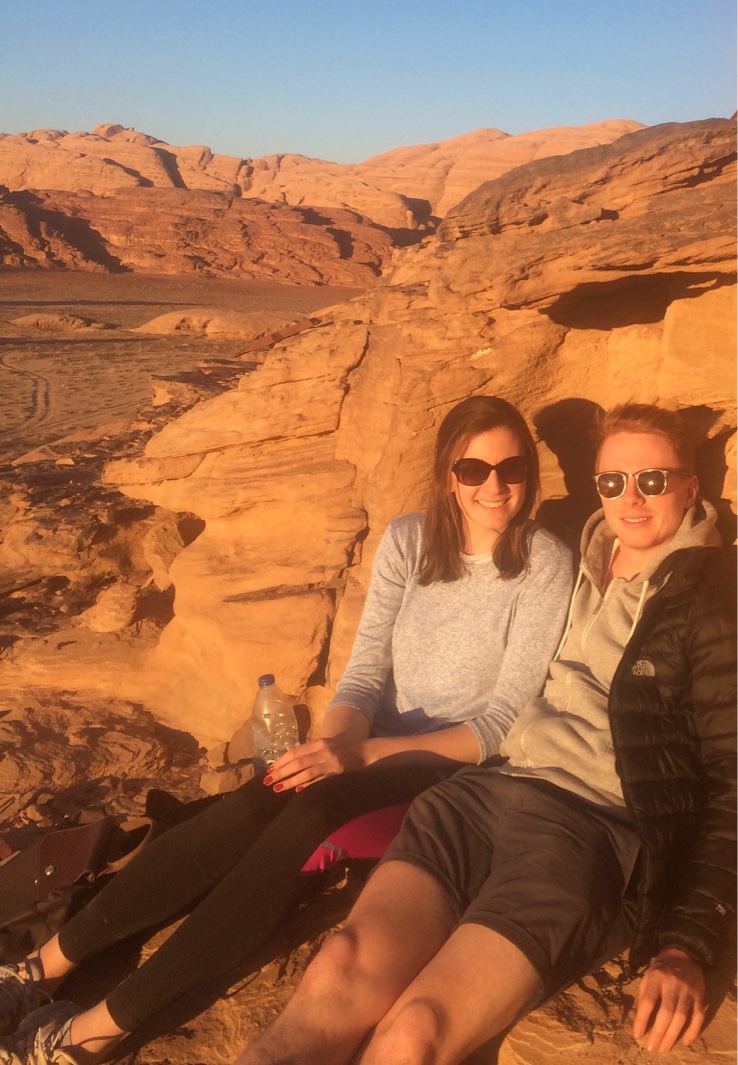
Our guide making mint tea (left) as we wait for the sunset (right)
Finally, we headed to the camp. Set in a secluded area in the desert, the cosy camp was lined with traditional goat hair tents (but with the added luxury of a double bed and electricity). Dinner was served in the central communal tent and was a spectacle in itself. The “Zarb” – a sort of Bedouin-style roast dinner that is cooked underground for hours – was slowly lifted out from the ground to the accompaniment of live music.
After dinner, we did some stargazing under the beautifully clear sky.

Day 3: Wadi Rum
Wake up and take a peak out of your tent window, taking in the surreal view encompassing the striking sandstone mountains in the distance.

Whilst our first day in the desert started off with a bang, it was this second day, where we were taken deeper into the desert until there wasn’t another jeep or person in sight, that was truly special.
We spent the morning hiking up Jebel El Hash (from which the tour gets its name). This was a gentle hike with a few areas to climb/scramble up that rewarded us with panoramic views, as far as the Saudi Border.
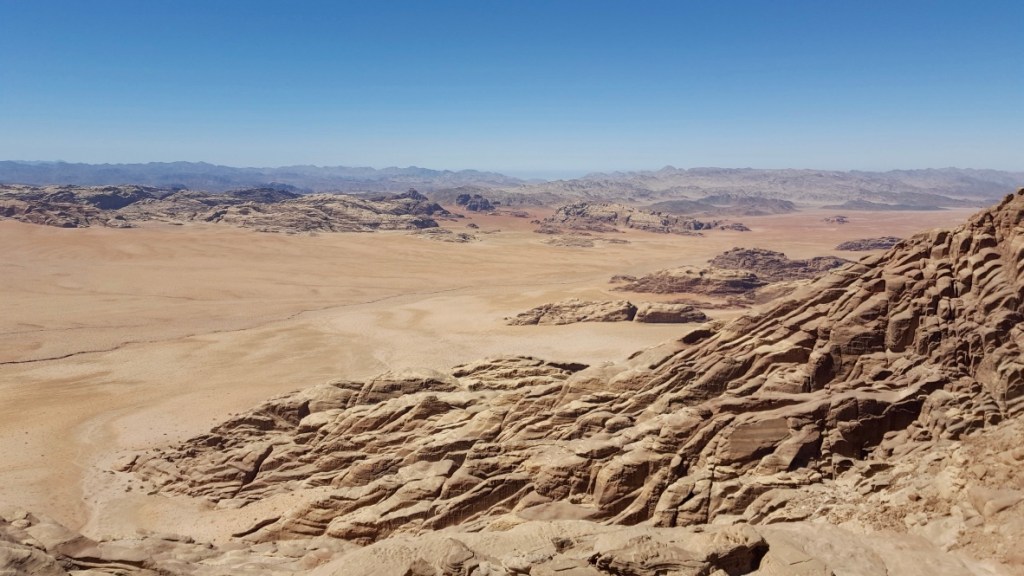
We then continued on our jeep tour deeper into the south of the desert, adventuring through sand dunes (and stopping to jump off them – and the jeep – along the way). We were even given the chance to try driving the jeep along the sand ourselves.
Our guide took us to a number of aptly named rocks in peculiar shapes – including Mushroom Rock, Chicken Rock and Elephant Rock, before finding us an even more stunning sunset location than the previous evening – perched high up on the rocks of a standalone canyon.

Day 4: Wadi Rum / Petra
Safe to say we were very sad to be leaving Wadi Rum. Finish off your visit in style with a morning camel trek across the desert back to Wadi Rum village (be warned: this is a remarkably uncomfortable mode of transport).
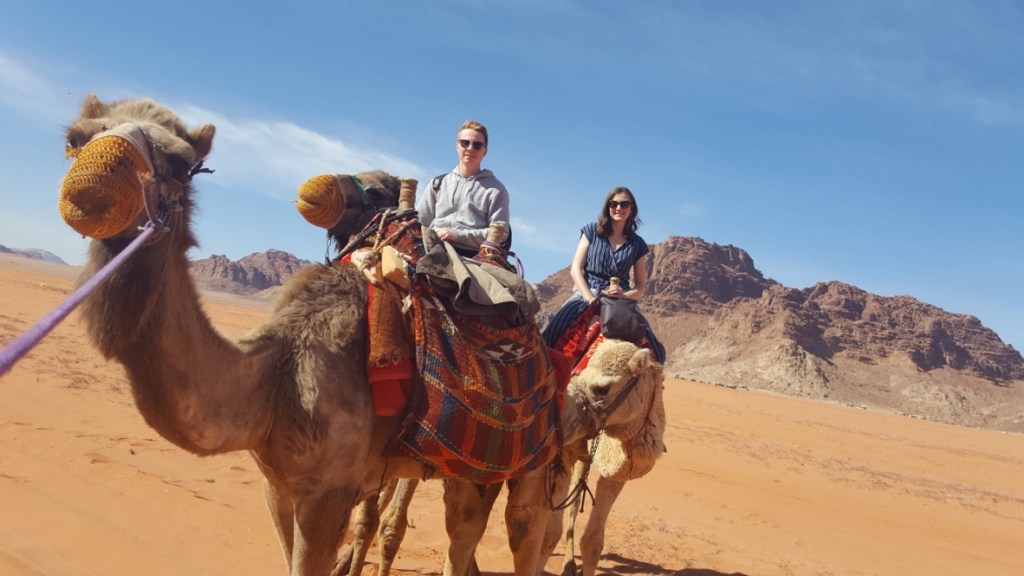
From one spectacular destination to another, start the short, winding drive to Wadi Musa, the home of the ancient sandstone city of Petra.
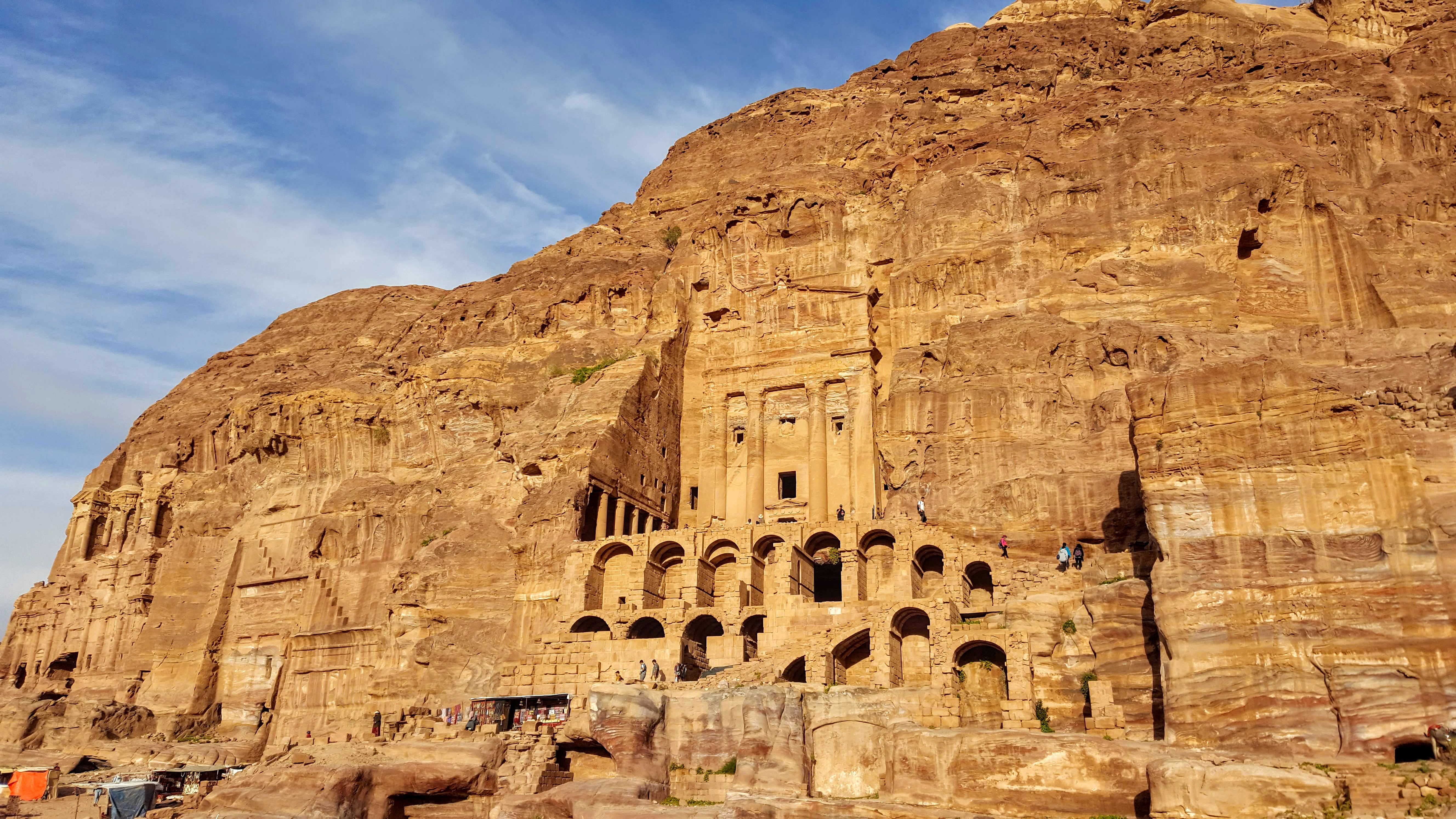
The infamous Petra – or Rose City – is usually at the top of peoples’ list to see on their trip to Jordan. The city is one of the Seven Wonders of the World and a Unesco World Heritage site and it’s easy to see why. Like many we were not prepared for the sheer size of the place: the Treasury is the most photographed part of the site by far, but there is so much more to explore. There are hundreds of other Neobatean structures, including the remains of Roman streets lined with temples and colonnades. To visit the entire site would take weeks, but there are some great hikes which take you past the main sites and also off the beaten track to some of the lesser known spectacles.
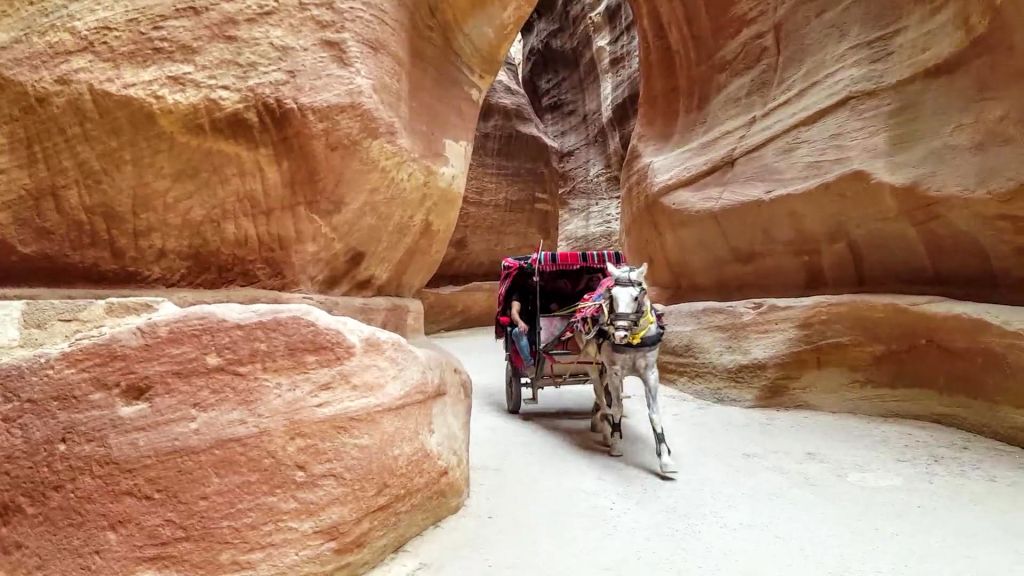
You can buy a multi-day pass into Petra online or from the visitors centre, depending on how long you have allotted to spend here. We would recommend to spend no less than two days. The sprawling site certainly requires some form of physical fitness as the walk from the visitors centre to the Treasury (the closest part of the site) is around 2km and much of the site is best reached by a series of hikes. If you aren’t up for the walk to the Treasury there many locals loitering up and down the path who will try their very best to get you into a horse and cart for a small fee.
For the last kilometre of the walk to the Treasury, the path descends into the Siq, a narrow gorge at times no wider than 3m from wall to wall. This is one of the only ways into the city, its first line of defence. At the end of the Siq you’ll emerge to the spectacular view of the Treasury carved into the cliff opposite.

Once you have finished admiring the most famous part of the site, turn right and head into another narrow pathway. This emerges at the Street of Facades, an old Nabatean street where the houses are carved from the cliff walls on either side. This opens up further to reveal an amphitheater, a structure added by the Romans when they moved in after the Nabateans. Here the cliffs are littered with facades everywhere you look and the tremendous scale of Petra really begins to sink in.
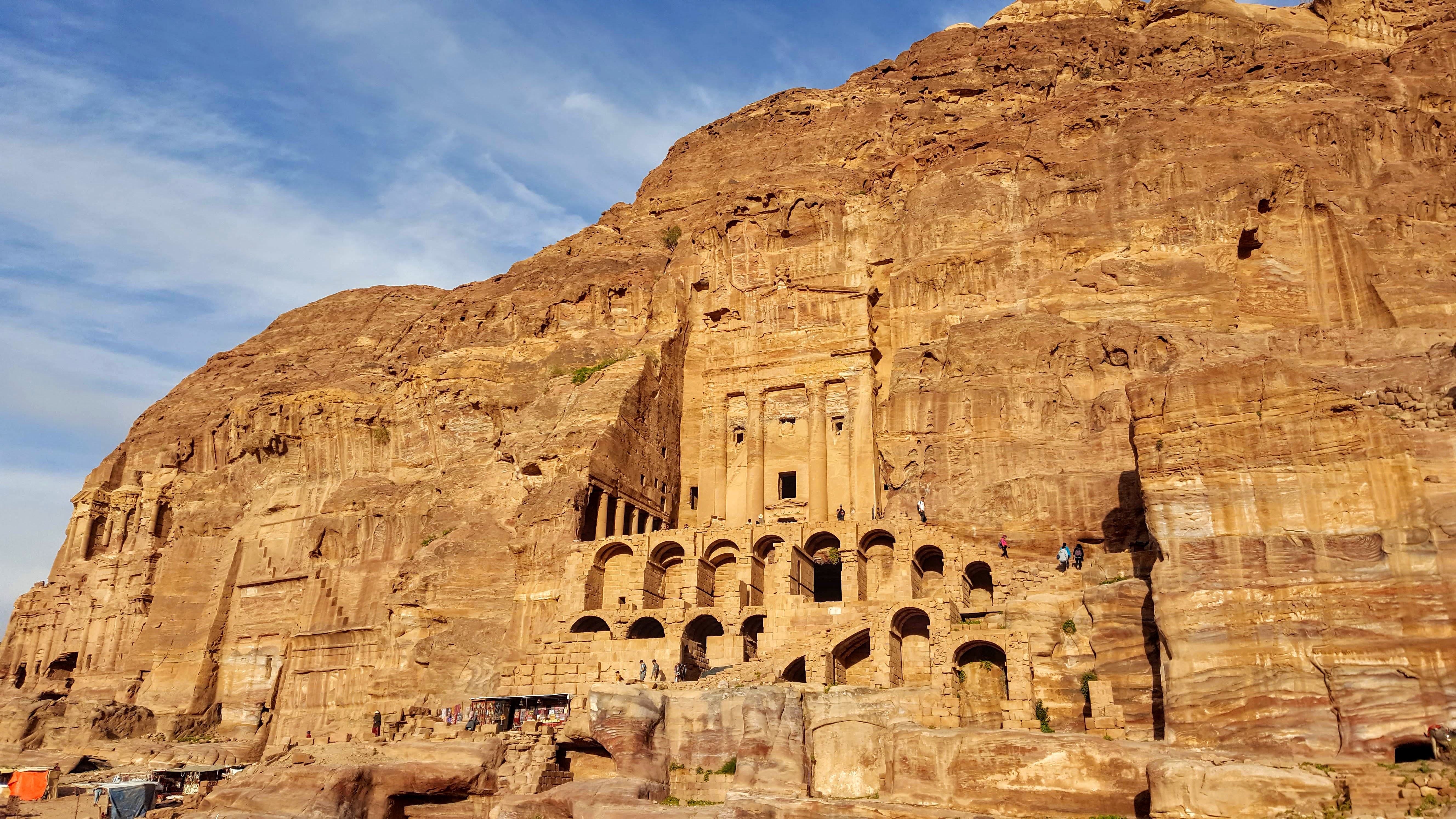
Finish off your first day in Petra by exploring the Royal Tombs, a collection of impressive facades standing side by side which collect the evening sun revealing the true brilliance of the sandstone’s colours. Watch the sunset over these tombs before heading back up through the Siq to Wadi Musa.

Day 5: Petra
Spend the day exploring the tangle of trails which are laced across the site, discovering the lesser known treasures Petra has to offer.
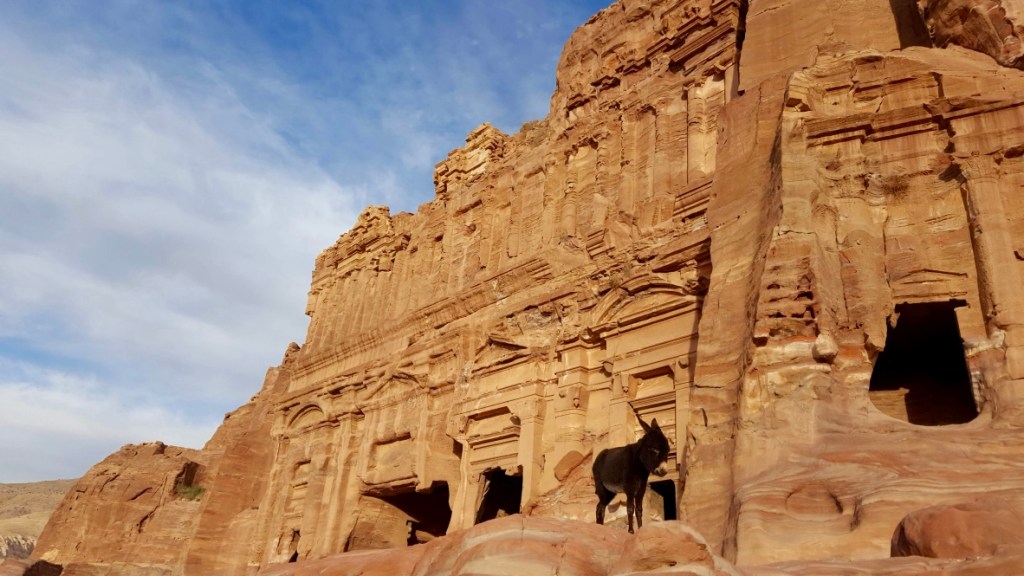
First up is the Monastery trail. Start early to avoid the crowds, following the route you took the day before. Turn left at the Royal Tombs and join the paved Roman Road lined with colonnades and Roman temples, albeit a little worse for wear after the earthquake of 363AD. Head straight down the paved highway, dipping off to the side to explore the Great Temple, Qasr Al Bint and the Temple of the Winged Lions. The 2.5km (there and back) trail to the Monastery begins by the Basin Restaurant. Ignore the Bedouins offering donkey rides, the walk is an hour on foot to the top and despite their claims it is not much faster by donkey. The route is paved and well trodden so once you have found the beginning, it’s pretty much straight on all the way.

You will know you’re almost there when bric-a-brac stalls selling Petra snow globes and the like start popping up along the side of the path. At the top you will be rewarded by the sight of the mighty Monastery, one of the largest and best kept examples of Nabatean handiwork. You can also get a refreshing drink at a cute little cafe opposite.

Head back down the 800 stairs to the Colonnaded Street and have lunch. You’re not blessed with options inside Petra, the only real restaurant is the Basin which serves an overpriced and pretty average buffet. We managed to find a decent shack off the Roman road which served fresh orange juice and sandwiches which was much less crowded. Otherwise, we would suggest packing a picnic.
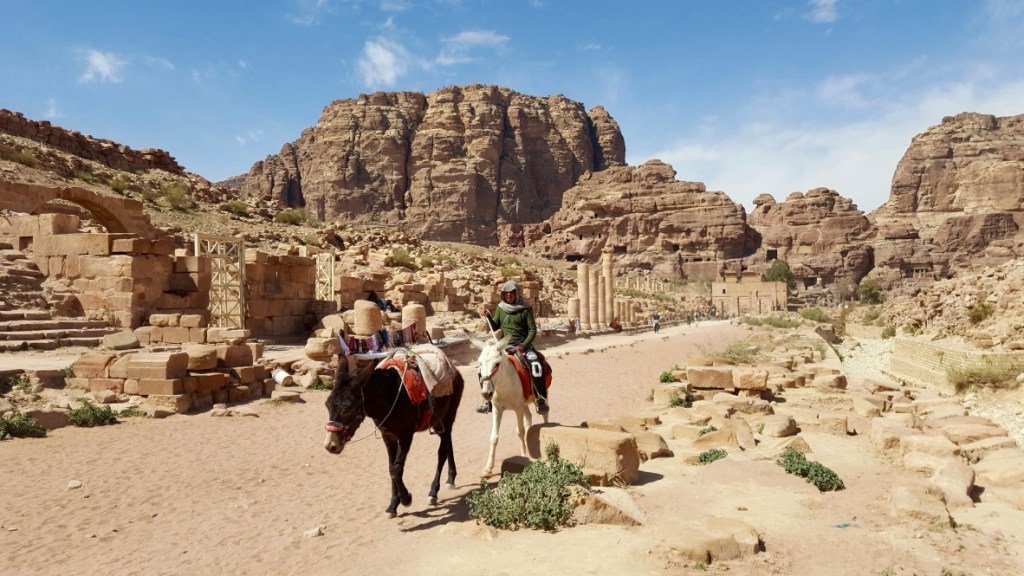
Spend your afternoon hiking the Wadi Farasa Trail – our favourite hike in Petra. The trail begins behind Qasr Al Bint and takes you up to the High Place of Sacrifice and back down to the Street of Facades and the amphitheatre. We would recommend starting the trail here as the climb is much more gradual compared to the never ending flight of stairs from the amphitheatre to the High Place of Sacrifice. The route is a sandy path which twists its way gradually up from the Wadi floor past many different caves and tombs up to the Tomb of the Roman Soldier with its three figures carved into niches in the facade. Beyond this is the Garden Temple. Both structures offer the rare opportunity to go inside them.

From here, the route climbs up to the High Place of Sacrifice on some narrow stone steps, worn away by millions of feet over the last two millennia. Pass by the Lion Fountain on the way up, its head has been damaged, but the body is more than recognisable. The High Place of Sacrifice affords fantastic views over the Royal Tombs and the whole basin within which Petra is built. If you can peel your eyes off the view for a moment to look carefully at the ground, you can see the channels cut into the rock to drain the blood away from the sacrifice. From the High Place of Sacrifice the decline back down to the amphitheatre is short, but very steep, with a lot of stairs. Join the main trail back to the Siq at the bottom of the stairs.

Day 6: Petra
If you have time, it is worth spending a third day at Petra, either continuing to gawp at the main sites or following one of the many other trails such as the Al Kubtha trail for a view over the Treasury.
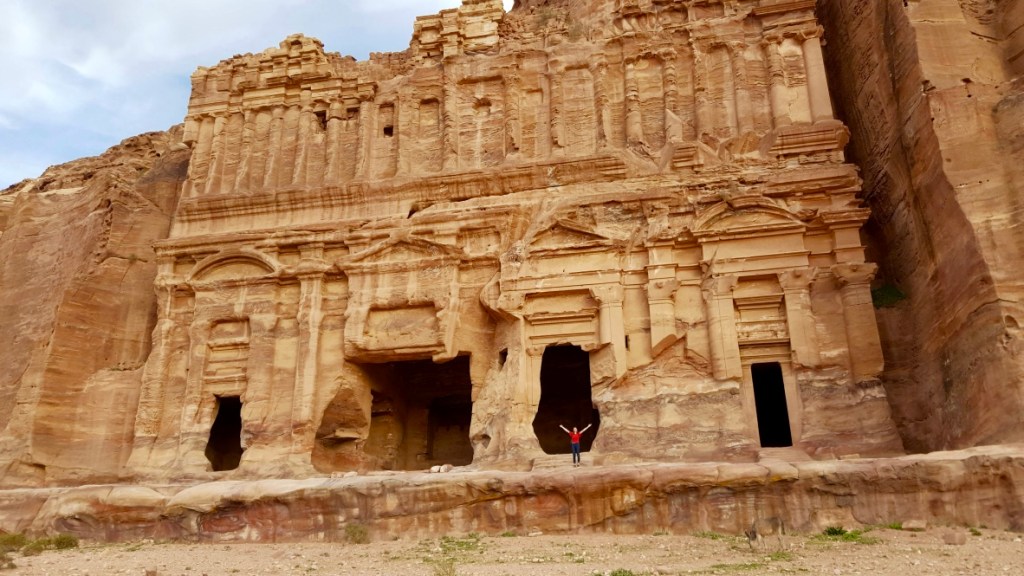
Otherwise, a little way north of Petra and Wadi Musa is Little Petra, and as the name suggests, it is like the main Petra site with Nabatean buildings carved from the rose coloured sandstone, just smaller. The entrance to the site is free and it is worth spending some time exploring.
Petra by Night is also a lovely evening experience only available on Mondays, Wednesdays & Thursdays each week. Take a torch or a well charged phone and head to the visitors centre for 20.30 when they re-open the site. It is worth getting there a little early to be at the front of the queue. Although no one will admit it, the walk down and through the Siq to the Treasury is a race. A race to get the best seats for the show. You will be sat down on the floor in orderly rows amongst hundreds of flickering candles, looking up at the Treasury which dances in the light of the candles and some large coloured spotlights. Here you will drink mint tea as you listen to a Bedouin folk story about Petra and a traditional flute-like instrument play. It is quite a magical, otherworldly experience.

Day 7: Dana
Now for a change of scenery. Drive the one hour or so to Dana Biosphere Reserve, Jordan’s largest nature reserve comprising sweeping mountains and Wadis, numerous hiking trails through canyons and local villages, and abundant wildlife.

Accommodation options are limited. We stayed at Feynan Ecolodge, and our itinerary is based around the lodge and the activities they offer (which are included as part of your stay).
The lodge itself is in a remote setting, seated amongst Feynan’s rugged landscape and at the heart of the area’s Bedouin community. As an ecolodge, it is entirely solar-powered – making it particularly atmospheric at night when the lodge is entirely candle-lit. The lodge has a rotating schedule of activities on offer, all led by local Bedouin guides.

The activities will vary depending on when you visit, but they include:
- hikes and cycling trips of varying lengths (including sunrise/sunset hikes)
- cooking classes
- visiting a Bedouin shepherd
- learning how to make kohl (Bedouin eyeliner)
- visiting a Bedouin family
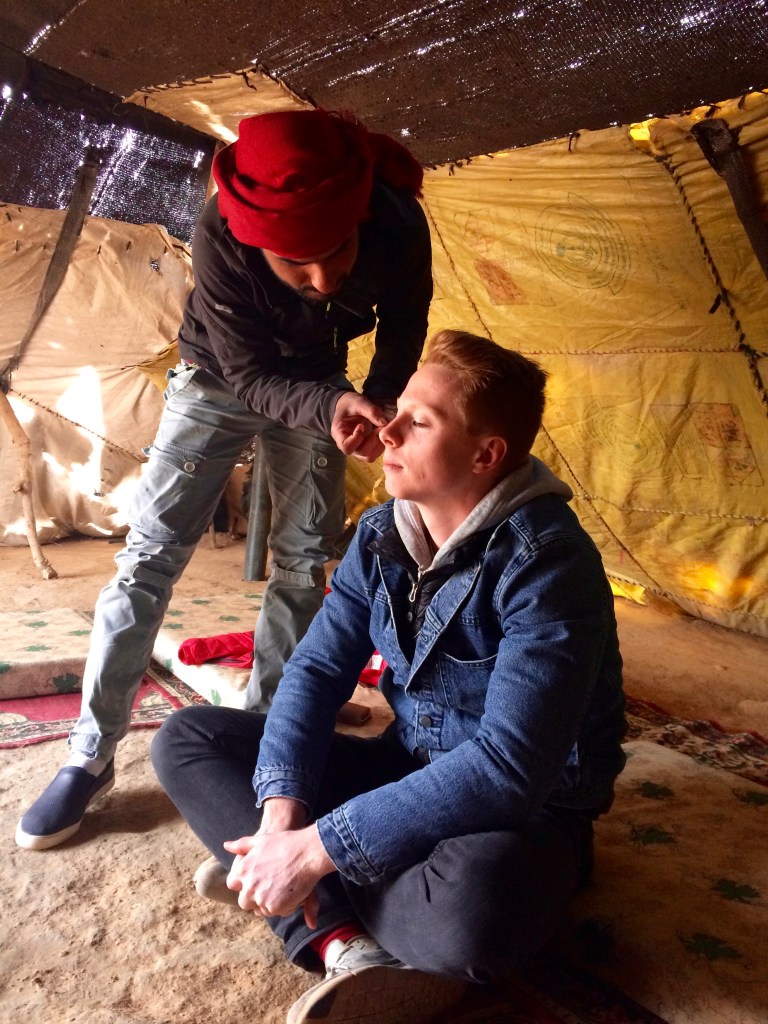
In the evening, after dinner, you have the chance to stargaze on their rooftop with their telescope, and drink mint tea by the fire.
Day 8: Kerak / Dead Sea
Drive to the Dead Sea, stopping at Kerak Castle en route. The crusader castle perched at the top of Kerak towers over you as you approach, and the sprawling ruins are well-worth stopping off for a quick exploration before carrying on to the Dead Sea.

Arrive at the Dead Sea – at 430m below sea level, it is the lowest point on earth. Because of this, the bright blue water is intensely salty, and is thought to have powerful healing properties (it served as Cleopatra’s go-to healing resort). The blue expanse of water contrasting with the bare landscape makes for bizarrely stunning scenery.

Visiting the Dead Sea is a must, but you need to do it right. Despite the stunning landscape, it is an odd area – the sea is lined with a few large (mostly 5*) hotels and not a lot else. You can do this as a day trip to one of the public beaches from Amman or Madaba but it won’t be the full experience. With limited budget options, this is the time to splurge and stay at one the fancier establishments with direct access to the salty waters (we opted for the Movenpick Resort and Spa and were not disappointed).
Arrive at your hotel and get into chill mode (especially after a couple of fairly full-on days in Dana). Most hotels have an infinity pool overlooking the sea, so have a splash and chill out before the main event – the Dead Sea itself.
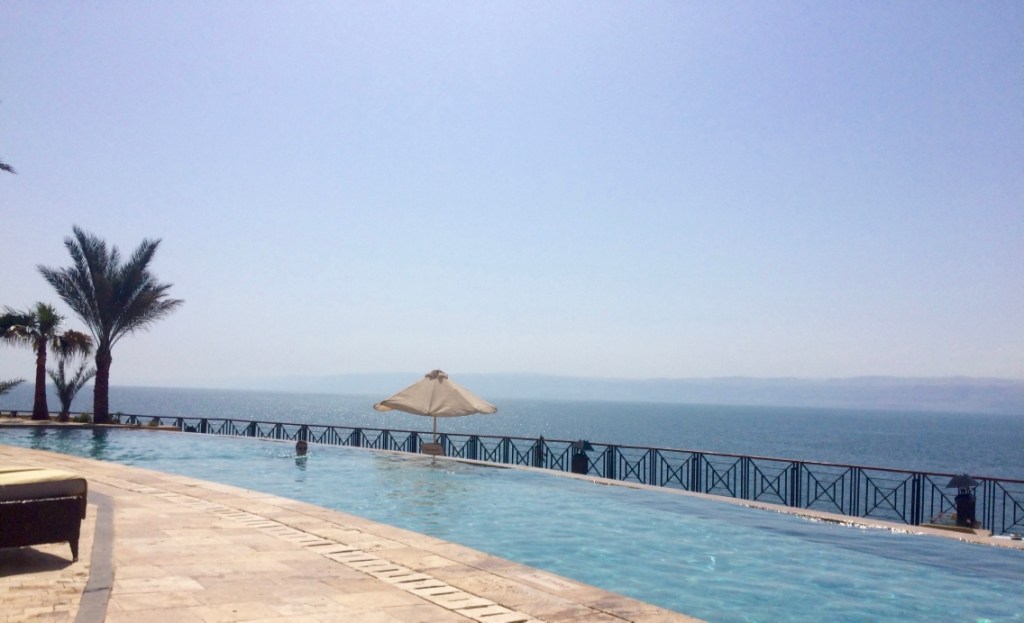
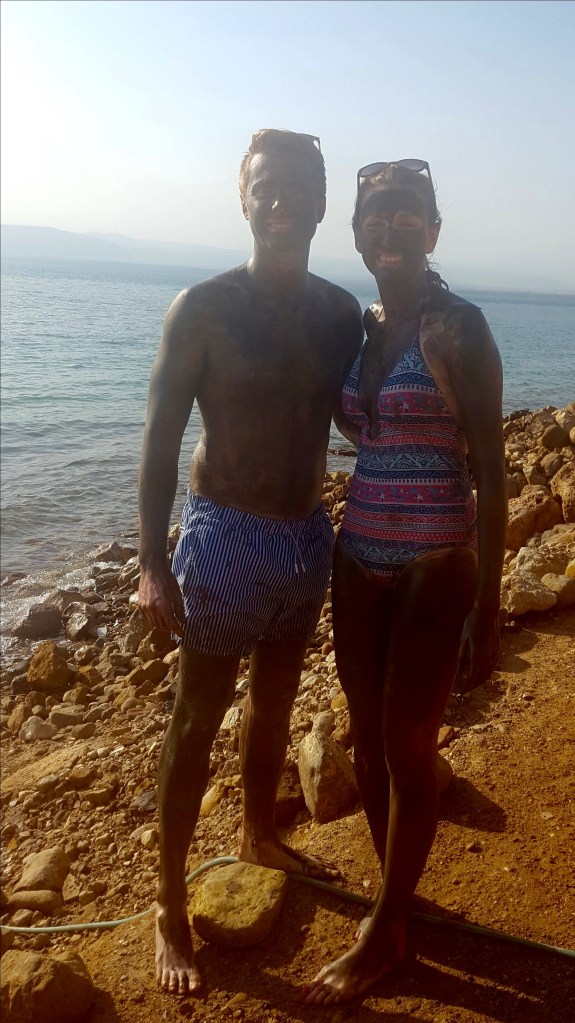
Your hotel will likely have a good set up with easy access to the sea and fresh water showers nearby. Swimming in the Dead Sea was a strange experience, which you won’t fully understand until you try it yourself. The high salt content means that the water is exceptionally buoyant, giving you a weightless, floating sensation (in fact it is pretty hard to properly swim as you almost lie on top of the water). Top tips: resist the urge to taste the water (it is extremely bitter) and make sure not to get any water in your eyes or cuts where possible – it will seriously sting!

At the waters’ edge you will find thick mud which is permeated by the salt, making it the perfect body mask (many of the hotels have fashioned a more convenient mud dispenser for their guests). Don’t be shy – slather yourselves in the stuff, let it bake in the sun, then wash it off in the sea, leaving your skin feeling silky smooth.
Before grabbing dinner – most likely in your hotel as there aren’t really many other options, take some time to watch the sun go down over the water. You may be sick of sunsets by now, but the rose tinted skies at dusk were some of the best we saw on the trip.
Day 9: Dead Sea
It’s another day in paradise, and we advise an itinerary much like the day before’s – Mud, Float, Repeat.

Day 10: MOUNT NEBO / Madaba
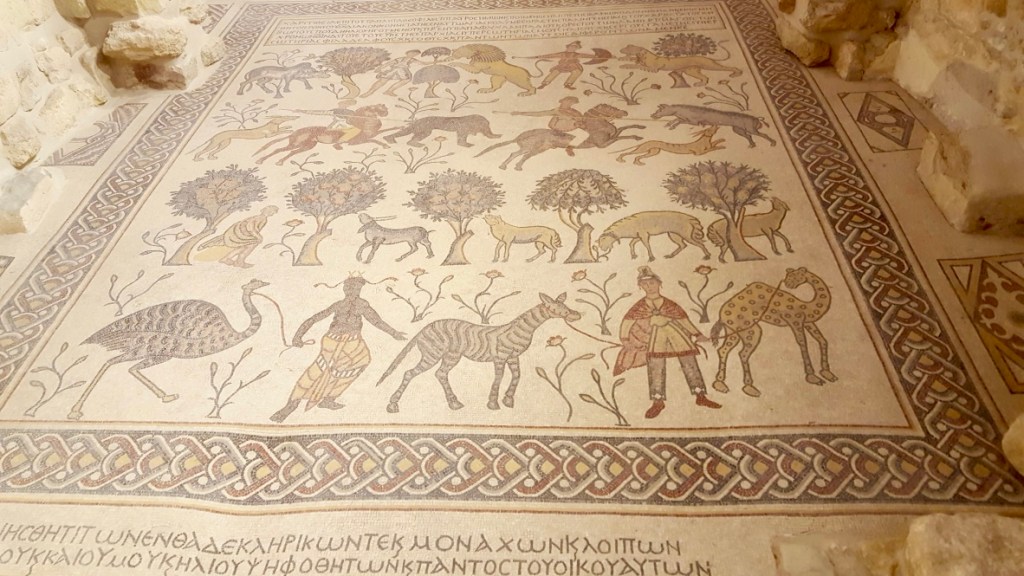
Drive the short distance to Madaba, stopping off at Mount Nebo on the way. One of the most revered religious pilgrimage sites in the world, Mount Nebo is the place where Moses is said to have seen the Promised Land (and he is believed to have been buried in the area). Take some time to explore the monastery at the top, which displays the results of years of excavation works, including archaeological remains and 1400 year old mosaic flooring. Take in the panoramic views across the Holy Land. If you are lucky, on a clear day you will see the Jordan River Valley, the Dead Sea, Bethlehem and the Hills of Jerusalem.
Next, drive to Madaba. “The city of mosaics”, Madaba is a historical city famous for its Byzantine mosaics. It is worth spending the rest of the day on a (guided or self-guided) walking tour hitting the main spots including:
- St George’s Church: home to the oldest known map of the Holy Land and Jerusalem covering the church’s floor
- Church of the Beheading of John the Baptist
- Church of the Apostles
Finish off with a casual dinner at the friendly Al Mandi’s who serve one dish and one dish only – Al Mandi, a huge feast of crispy roast chicken on a bed of three types of spiced rice.
Day 11: Umm Qais
Drive further north to the windswept village of Umm Qais, with its sloping green hills and sweeping views over the Jordan Valley and the Sea of Galilee.
The main attraction is the ruins of the Decapolis city of Gadara (now Umm Qais), where you can wander through an abandoned Ottoman village, a colonnaded street, and sit in the basalt amphitheatre perched up high with views across the countryside (with the Sea of Galilee in the distance). Stop for a bite to eat at the Umm Qais Resthouse, a cafe right in the ruins with a terrace boasting fantastic panoramas and serving delicious baba ganoush.
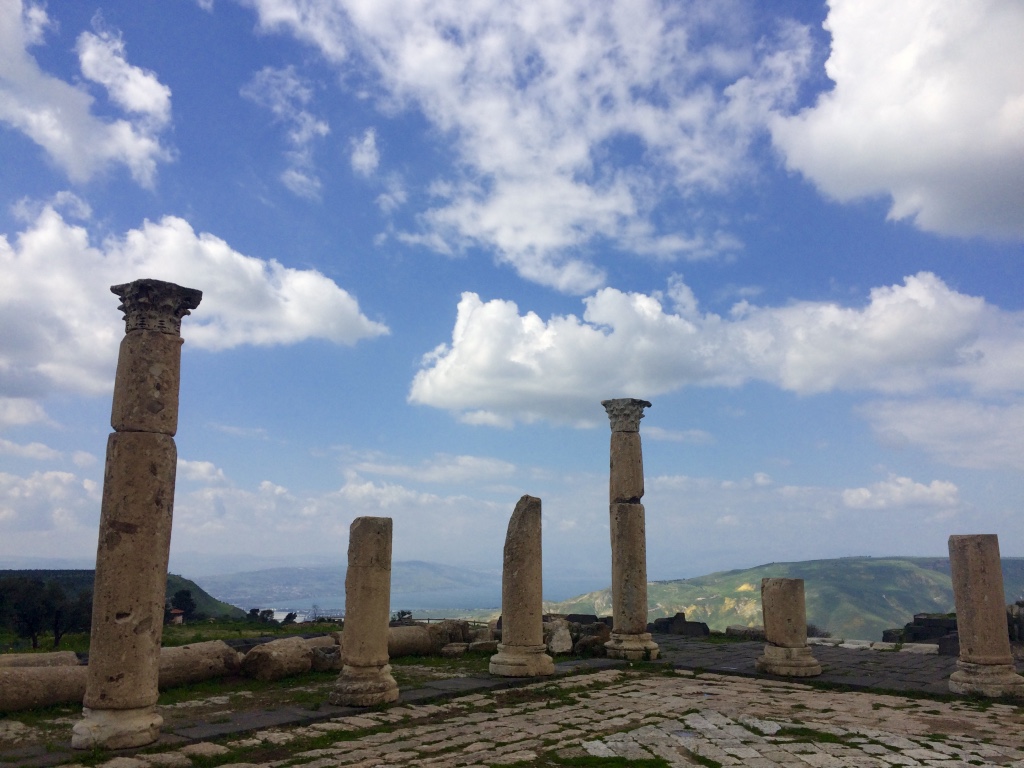
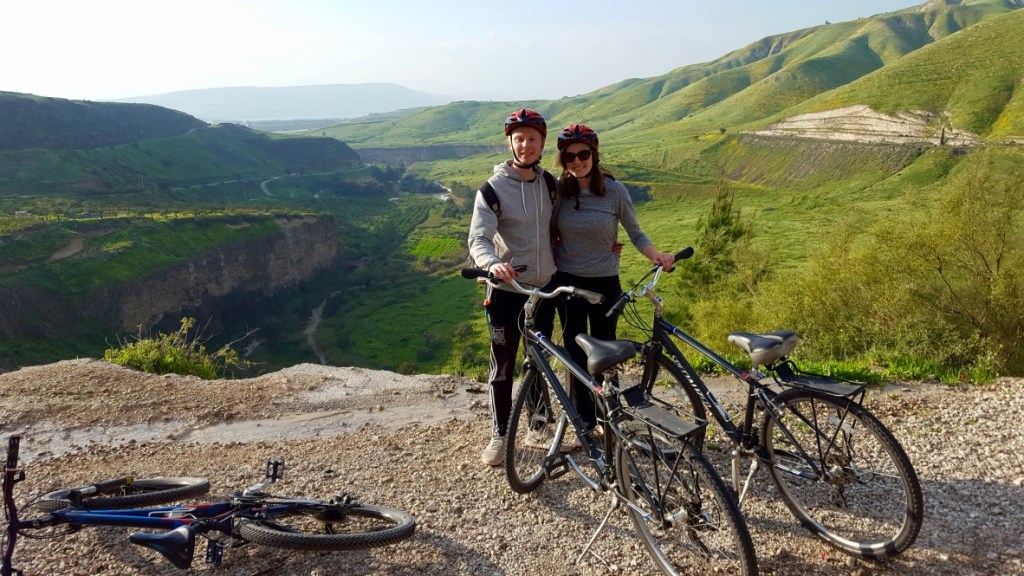
Umm Qais receives plenty of daytime visitors exploring its ruins, but far less people choose to stay the night. If you have the time, we highly recommend that you do, as you will have the chance to enjoy the other activities the village has to offer. This includes an unforgettable cycle ride through the area’s hilly terrain. You can rent bikes from a local shop right by the ruins – the owner offered to be our guide and took us down the steep winding hill leaving Umm Qais, passing the River Yarmouk which marks the border between Jordan and Syria. We carried on along the Syrian border and ended the ride close to the Sea of Galilee. Happily, our guide even arranged for a lift all the way back up the steep hill to Umm Qais.
End the day with a cooking class at Galsoum’s Kitchen. The friendly Galsoum will welcome you to her home and take you step by step through a number of authentic Jordan dishes. We were even asked if we had any special requests beforehand, so we learnt how to make lamb mansaf – our favourite dish on the trip so far.
Day 12: Jerash / Amman
Break up your journey from Umm Qais to Amman with a day trip to the unmissable Jerash.

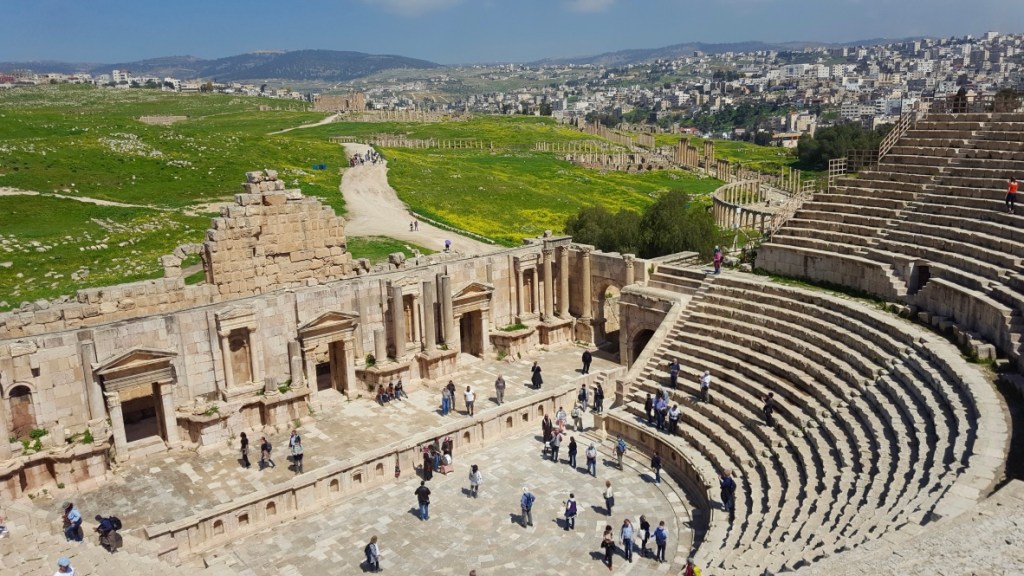
Jerash, home to Jordan’s largest Roman ruins (and one of the world’s best preserved Roman sites), is said to have risen to prominence under the rule of Alexander the Great, and was re-discovered in 1806. An impressive show of Roman imperialism, the site is huge, so definitely make sure to spare a good few hours exploring the colonnaded streets, theatres, and hilltop temples. Make sure to climb up to the Temple of Zeus and look down on the almighty Oval Forum, an unforgettable sight. Top tips for your visit: arrive early to beat the crowds and the heat, and take food supplies as the dining options are basic.
Once you have finished up in Jerash, jump back in the car and be prepared for the only really challenging part of the Jordan driving experience as you head towards Amman.
Jordan’s capital is a vibrant, hilly city steeped in history. You will likely spend most of your time in the bustling downtown area. Hopefully you will arrive in Amman just in time to watch the buildings turn pink as the sun sets over the city (grab a drink at Wild Jordan or the rooftop bar Canteloupe for picture-perfect views).
Dine at the popular Sufra for authentic Jordanian cuisine – their lamb mansaf was top notch.

Day 13: Amman
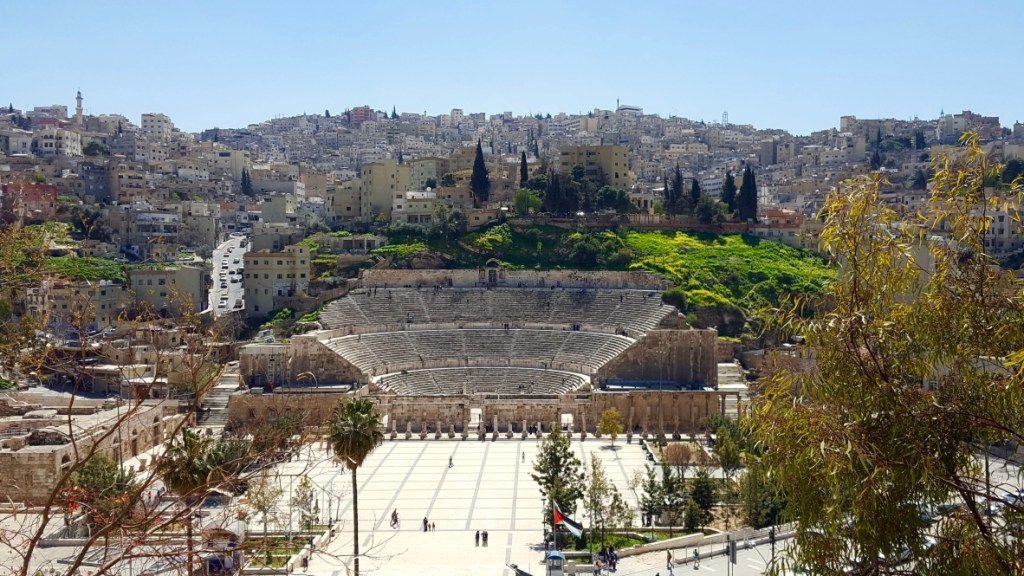
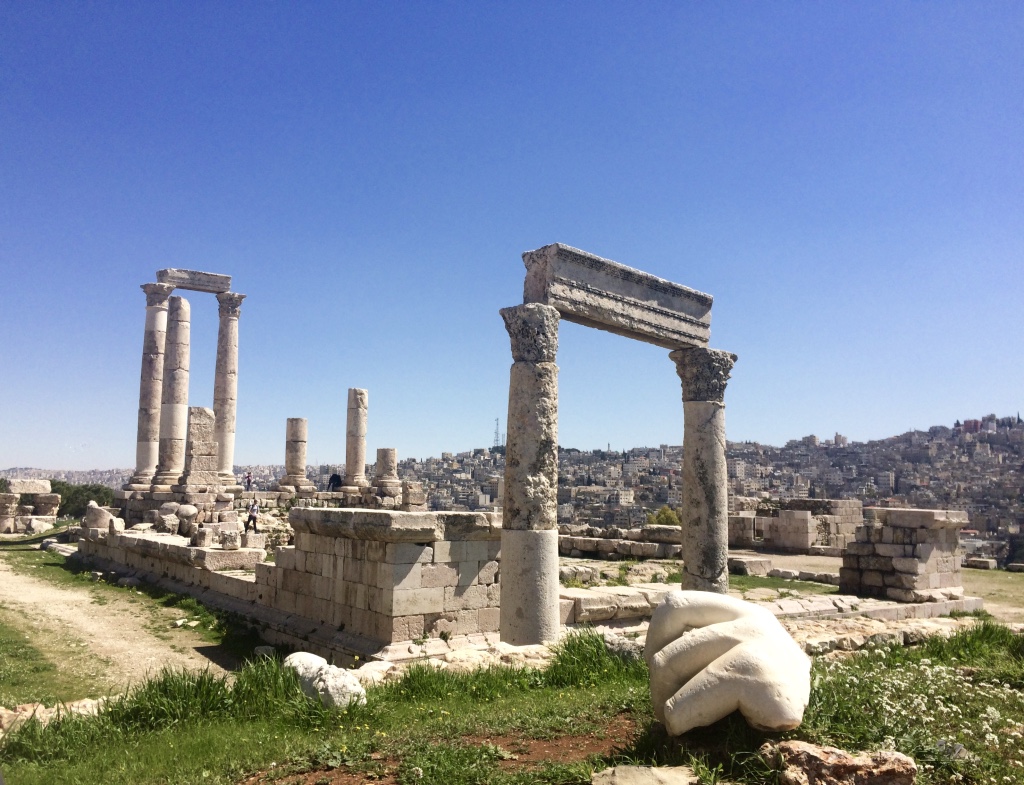
Rise early to tackle Amman’s historic sights (if you are staying downtown these can all be reached on-foot). Start with the Roman Theatre, built into the hillside and dating back to the 2nd century. Next, brace yourself for a steep climb (but only 20 minutes max.) up to Citadel Hill where you can explore the Umayyad Palace, the Temple of Hercules and the Byzantine Church, all with downtown Amman as an impressive backdrop.
After all that walking, it’s time for a mini food tour in the afternoon. Hashem is one of oldest restaurants in Jordan, and its falafel and hummus is infamous. Avoid peak lunch time as the queue will be down the street with locals and tourists alike (though the slick operation means they are able to get people in and out at incredible speed). Leave some room to visit Habiba, the go-to place for the sticky desert “Knafeh” which you can take away to eat in a nearby courtyard.
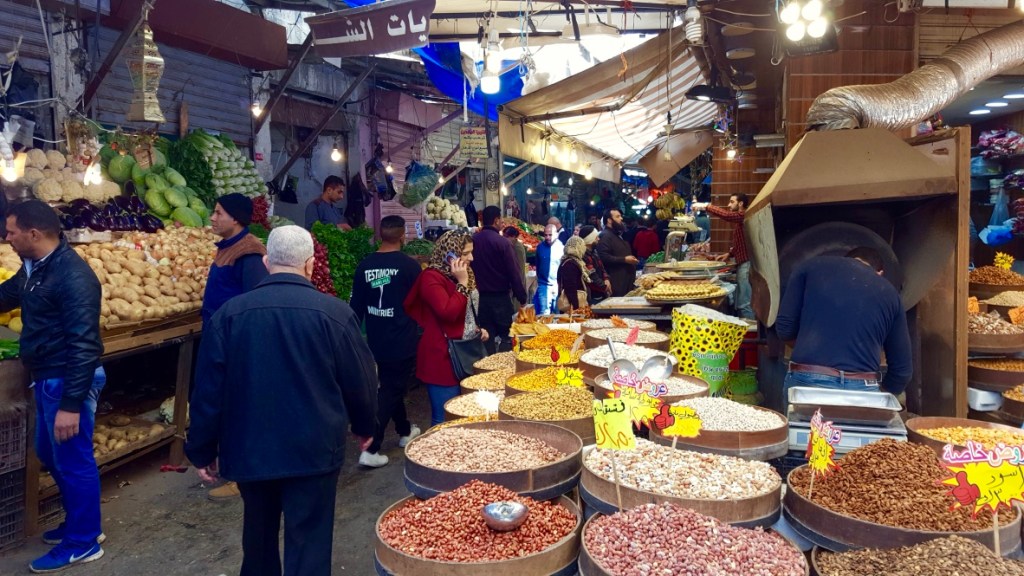
Spend the evening losing yourself in the maze of downtown souks.
Day 14: Amman
On your final day, wander through the trendy Rainbow Street dotted with cafes and art galleries, picking up breakfast (fresh falafel flatbread wraps) at the friendly kiosk of Al-Quds.
Hop in a cab and head to the Jordan Museum, featuring strikingly modern and engaging exhibitions that will take you through Jordan’s rich history and culture.
Spend any spare time you have picking up some final souvenirs in the souks, and have your last meal in Zajal, which offers traditional fare on a terrace overlooking the busy streets below.
Head to the airport for your flight home!
 Sunburnt Zebra Travel